
In a first for my journal I have asked my friend and fellow-traveller Rob to guest-post an article on the ‘bizarre social experiment’ that I talked about in an earlier post as one of the rationales for this adventure. Since this ‘new socialist utopia’ was created and peopled by a group of intrepid Australians it seemed appropriate that Rob should be the one to document it.
However before I turn things over to Rob, we are presently in Asuncion, the capital of Paraguay, a country once described as ‘an island surrounded by land’, an apt characterization as I hope you’ll come to see in the next couple of posts. A portion of this morning was spent in the former House of National Congress, now a museum, where we noticed a chart listing all the nationalities whose citizenry have at various times emigrated en mass to Patagonia. Of course the Australian group was listed but I had confidently assumed that I would not see Canada represented. Surprisingly there were a couple of waves of emigration in the 1940’s and 50’s by large groups of Mennonites from Manitoba and Saskatchewan who were, I guess, seeking a more accommodating climate either political or climactic. A fascinating insight.
Now over to Rob…
Drawing on contemporary international interest in ‘Utopias’, William Lane – an Anglo-Australian labour leader and journalist – marshalled discontent from the failed shearers’ strike and depression of the 1890’s to establish a socialist utopia outside Australia. But where? Well, Paraguay. Where Gerry, Hugh and I are (somewhat metaphorically) following in the footsteps of Francisco Solano Lopez, the President who unwisely engaged his country in the War of the Triple Alliance, 1864-1870 against Brazil, Argentina and Uruguay, resulting in the death of, it seems, over half the Paraguayan population, including 90% of adult males.
So, a country ripe for an influx of – obviously male – Australian sheep-shearers, farmers and ‘tradies’. Some 240 set off from Sydney in 1893 to take up a generous offer of land for this new socialist Australia.
Lane, quixotic and authoritarian, established ‘rules’, including teetotalism, life marriage, and a white-only colour bar. Need we say that by the time of the arrival of a second ship, the settlement was rent asunder by non-compliance. The venture split, set up a second colony, and disintegrated. The full story would challenge Monty Python or Fawlty Towers.
This is not a history blog but it is noteworthy – and Gerry has already foreshadowed this in his earlier October 23 entry – that among the many plots and characters – a ‘second fleeter’ was 31 year old (later Dame) Mary Gilmour, Australian socialist, feminist, poet and ‘national treasure and public intellectual’ before such existed. Shown is her face on the current $10 note.
The entrails of this socialist experiment do include a few direct descendants in Paraguay, not necessarily called Bruce or English-speaking but with Australian features and ‘loyalties’, as illustrated in various (available) Youtube clips.
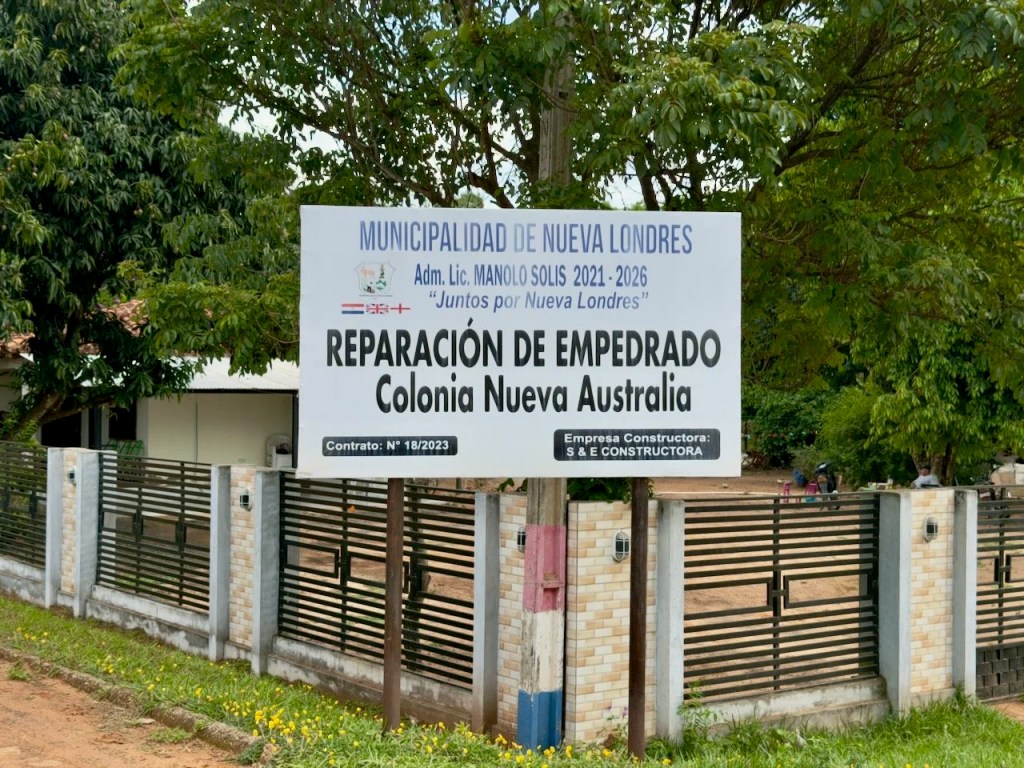
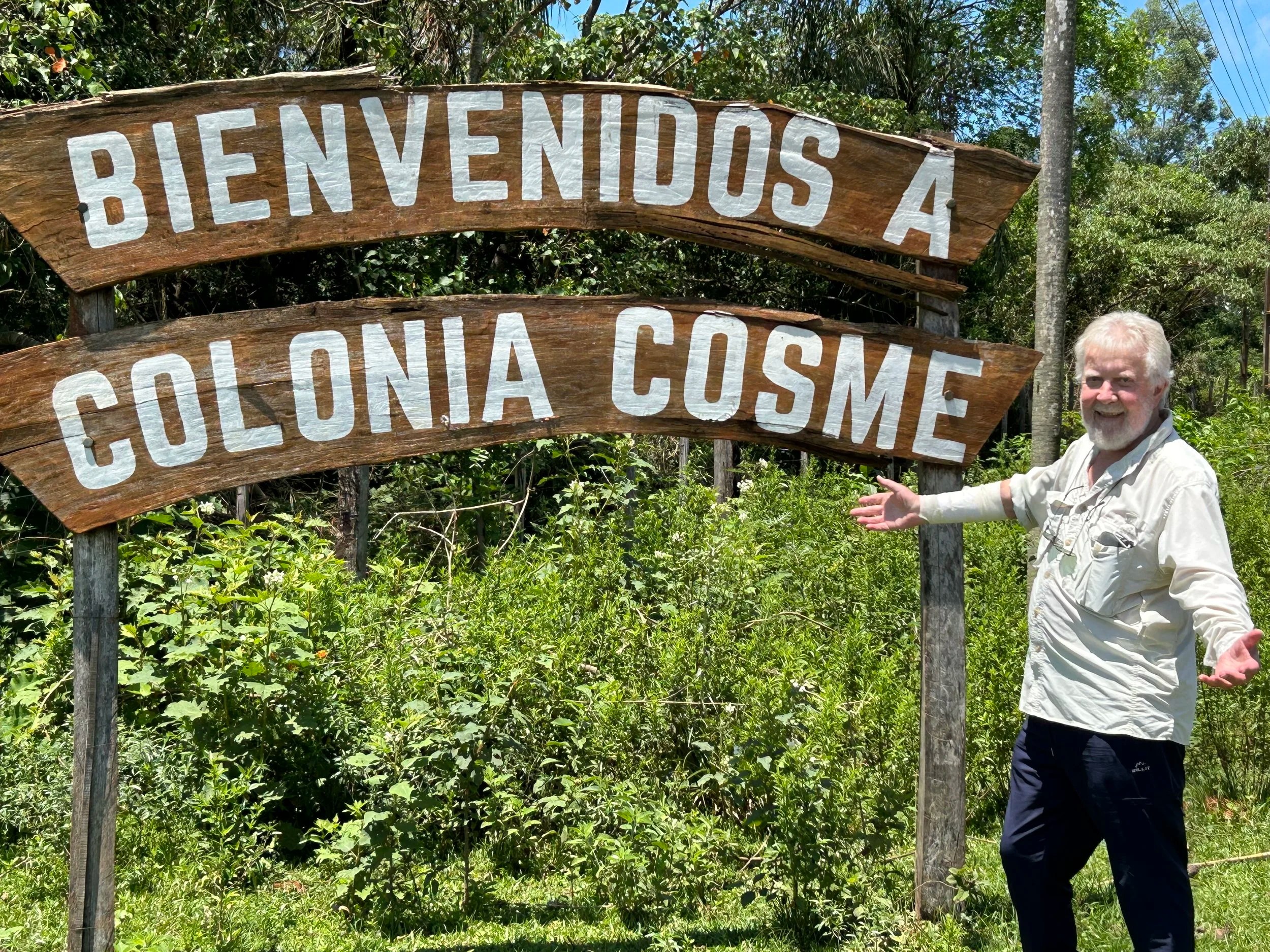
We approached Asuncion from the south, having left northern Argentina and crossed the enormous Paraná river, part of the ‘territory’ of landlocked Paraguay’s Navy. And we looked for the two settlements. And lo, we found both, not least because although isolated and unremarkable, each was signposted, as shown below.
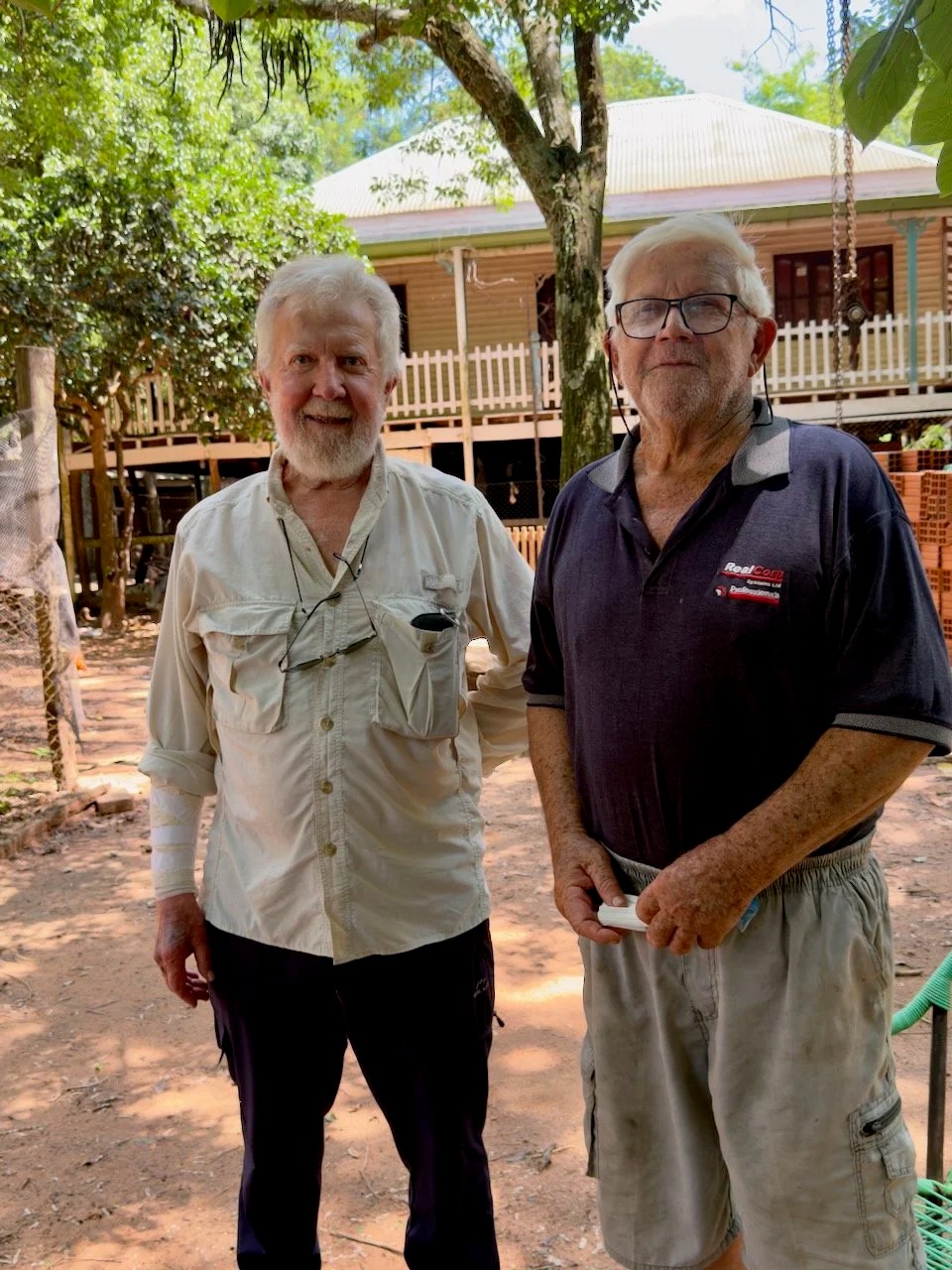
First was Colonia Cosme where we, on a chance, were able to meet the delightful Francisco Wood, grandson of founders, who was happy to chat via Hugh’s simultaneous Spanish translation. A lovely encounter.
And then 70 km to the first established Colonia Nueva Australia, now called Nueva Londres (partly because the Australian government apparently showed little interest in a suggestion to rename the colony ‘New Canberra’).
So there ends our personal homage to what has been described as “one of the strangest episodes in Australian history”. For Lane, it seems sacrilegious to say that we will toast the ‘Colonia Nueva Australia’ venture tonight, but I rather think we will. The shearers would approve.
Now we are off to explore Asuncion for three nights. In part, we follow Lopez and his extraordinary Irish courtesan, Eliza Lynch, briefly the richest woman in the world. For Gerry and me, we also follow the footsteps of Graham Greene, over whom we bonded 55 years ago, aided by jugs of beer, schnitzel and various substances. Greene’s ‘Honorary Consul’ and ‘Travels with my Aunt’ take us to a seedy, dubious Paraguay with its distinctive ability to entrance and de-rail. We have hopes of finding a more impressive restaurant than in Greene’s Hotel Gran del Paraguay in Asuncion, which according to a 2006 review in the Independent is “a fading colonial relic which manages the undemanding achievement of having the best restaurant in Paraguay.”
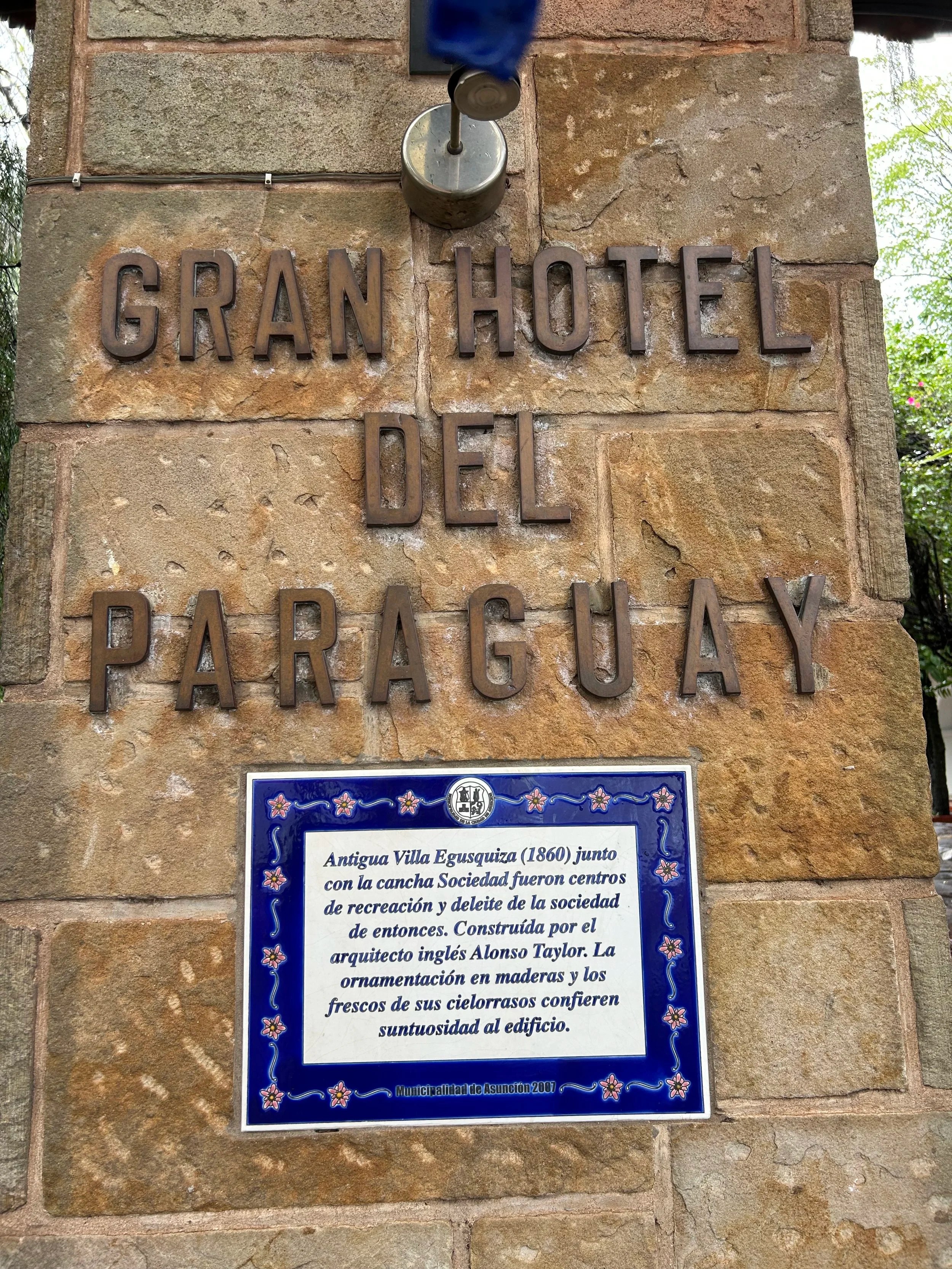
And in fact, as we compile this blog a day after the above was written, we have just lunched with our local guide at the Gran Hotel del Paraguay where Greene stayed. And we had a gin and tonic in salutation. Strangely and fittingly, it transpires that Eliza Lynch had previously owned and lived in this hotel. But our hotel is the ‘Factoria’ and that’s a story in its own right, and for Gerry to tell.


 Site Title
Leave a reply to John Baker Cancel reply