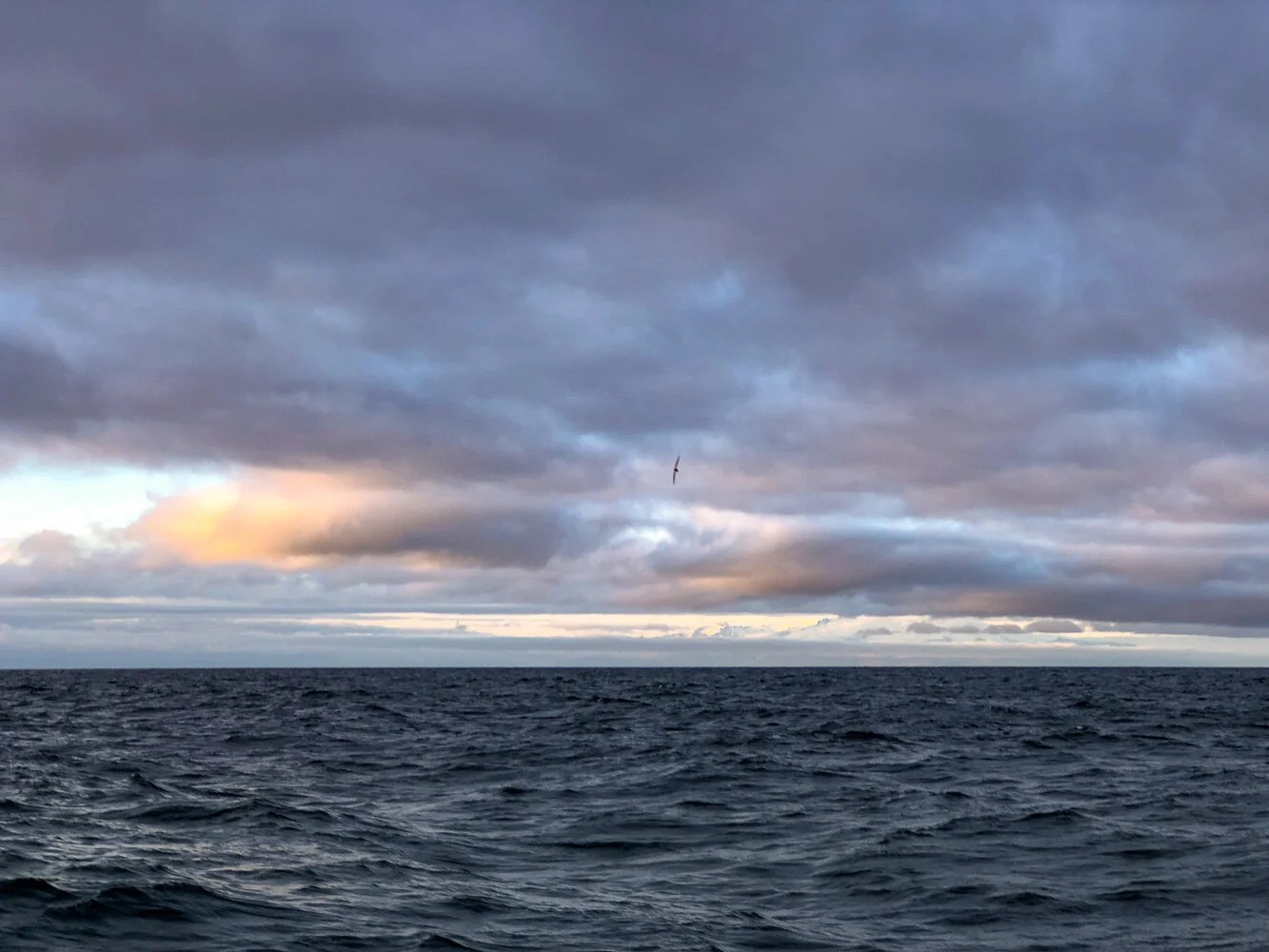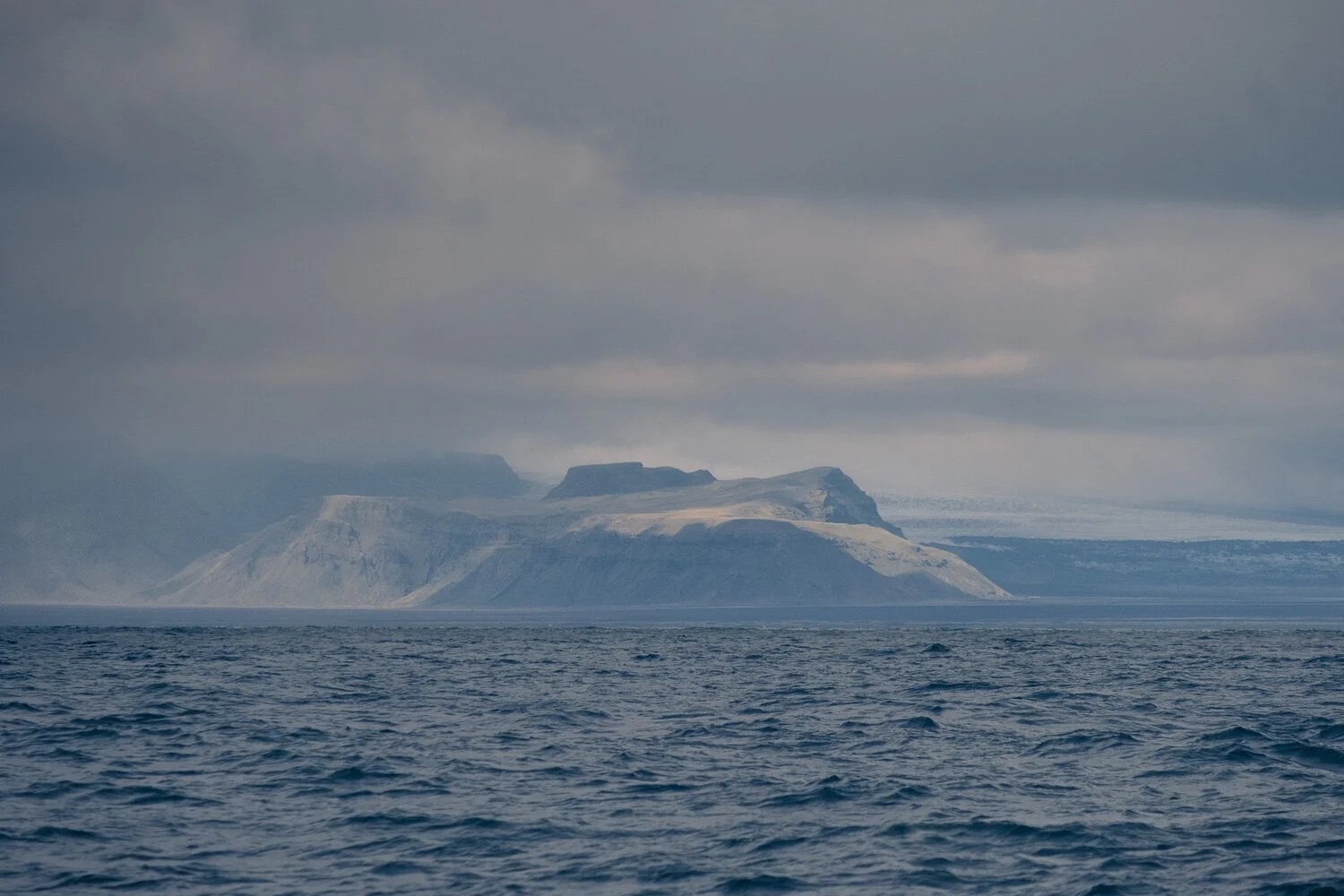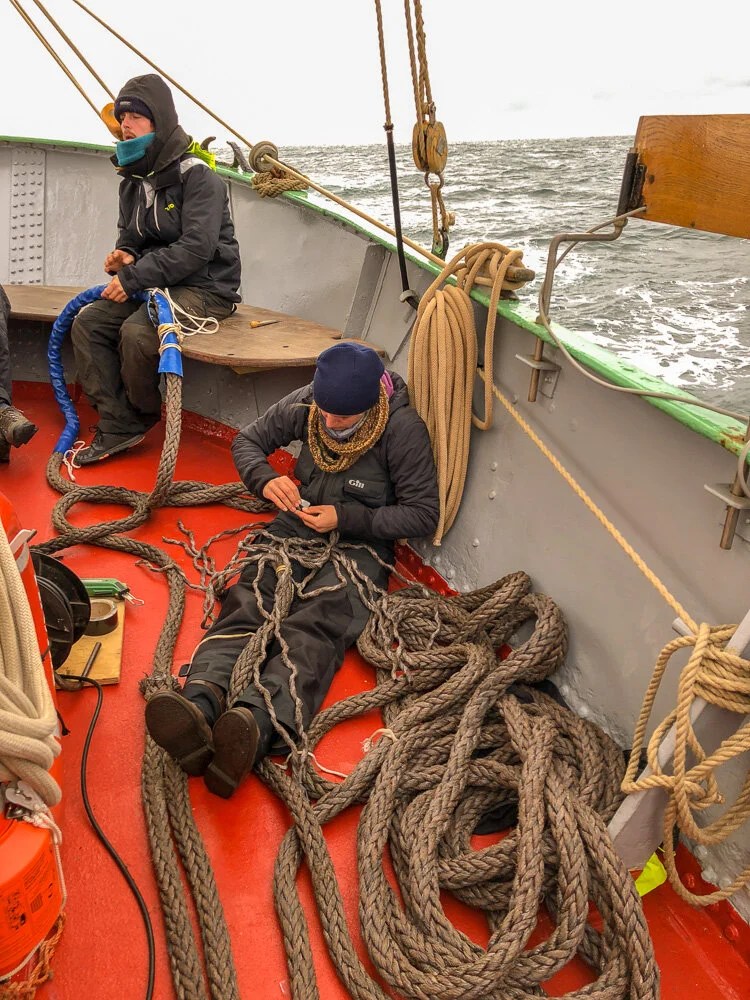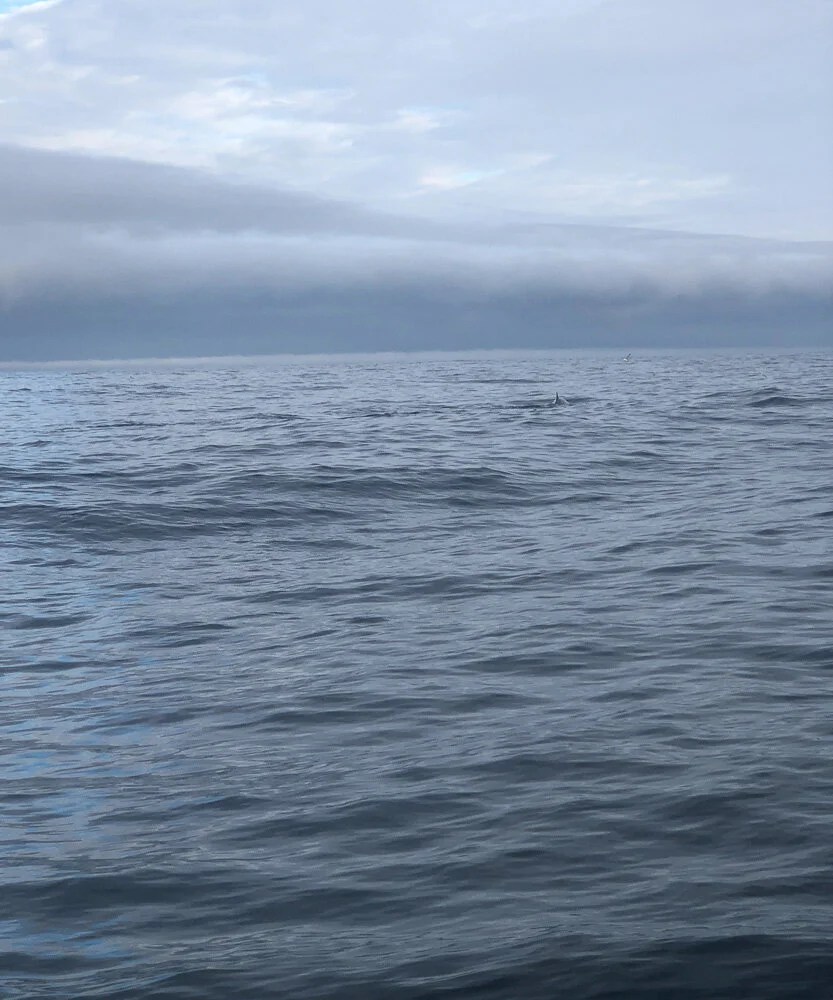
• Shetlands to the Orkneys, Tuesday Sept. 18

    Tuesday afternoon and we’re moored at the dock in Kirkwall, Orkneys and battoned down tight with extra lines at the bow and stern. Tell you why in a second.

    We spent Sunday in Lerwick, a cold, wet day with nothing open. I had looked forward to finding a laundromat and getting my two week backlog washed and dried and on doing a Google Maps search discovered that while there was only one laundromat to serve the town, nonetheless there was a laundromat. I took a taxi from the docks with my bag of laundry, making sure to keep the taxi window open! and arrived at my destination only to discover that it was closed on Sundays. Fortunately I had kept the taxi so back we went to the ship to find that Gijs had asked everyone to make a small pile of essentials only and they would be washed in the ship’s only washing machine. Reprieve! We also were given fresh sheets to change our bed linen, our current set having been used since we left Iceland so all round, a day to celebrate. I was able to make a small dent in my unwashed clothes with the ship’s washing machine but since its been wet and rainy since Sunday I have been trying to get them dry on the little radiator in my cabin which is only on for brief periods at night and they were finally dry enough this afternoon that I can start using them.
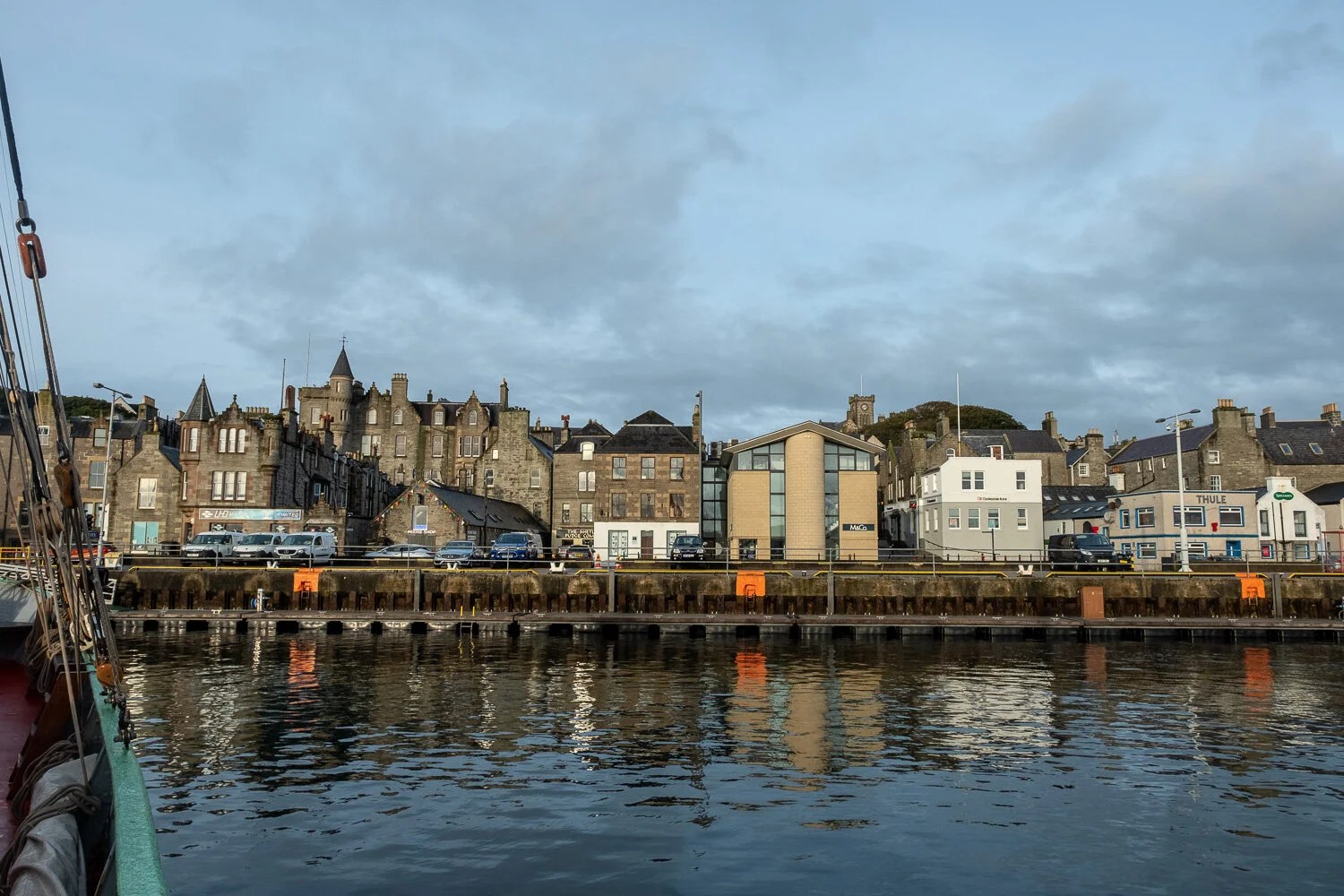
     Lerwick Harbour, Shetlands
    Lerwick Harbour, Shetlands

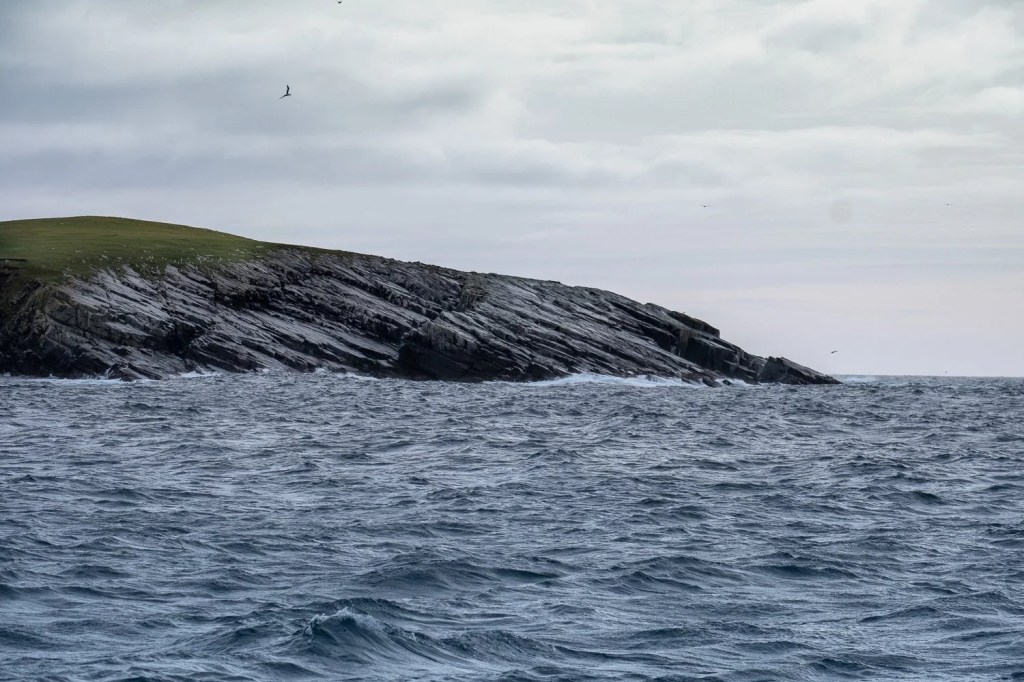
    We left Lerwick on Monday morning after breakfast and since the wind had shifted into the south, the direction we needed to sail, we raised only the staysail and the mizzen and motor sailed to Fair Isle, our mooring point for the night. The weather seemed to be brightening and we left Lerwick under bright, clearing skies but once past the harbour mouth the weather closed in with high winds and little intermittent squalls which brought rain occasionally mixed with sleet. It was quite cold and the sea was filled with an endless succession of two metre swells coming from the south west so they passed under us from our starboard side causing the ship to roll and wallow along at about 6 knots. I have not needed my Kwells since the first night of the trip but I had to resort to them on Monday morning’s passage. It was perfectly fine on deck during our watch, being able to see the next swell coming and rolling with the roll of the ship, but below decks it was a different story. Under sail, the motion of the ship feels much more measured and predictable, but running with with the engine the motion just feels much more random and unpredictable and everything seems to be swaying in a circle, not a happy thing to watch! Additionally, walking is difficult, and one hand for the ship and one hand for yourself really is the operating principle. In the galley of course, managing hot pots on a stove that is reeling from side to side is treacherous for the cook as is serving yourself and trying to carry a plate filled with hot food from the stove to the table. It’s hard not grab a burner when you instinctively try and reach for something to stop yourself from falling when the ship lurches. You really have to plant yourself and wait for the roll and then use the very small breathing space at the top of the roll to take the couple of steps necessary to move. Navigating any distance is a series of timed bursts between rolls.

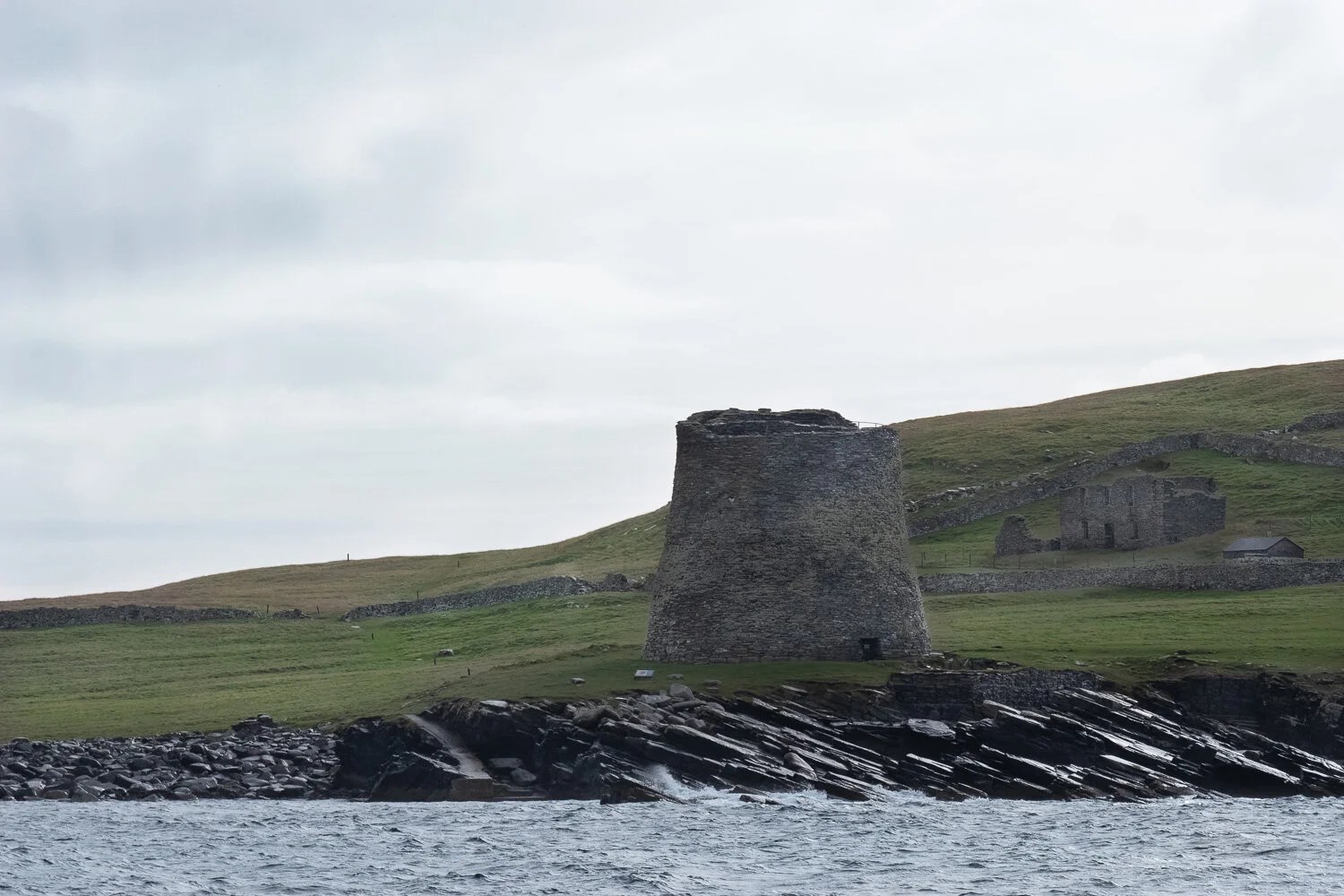
     Ruined manor farm, Shetlands
    Ruined manor farm, Shetlands
     Ruined manor farm, Shetlands
    Ruined manor farm, Shetlands

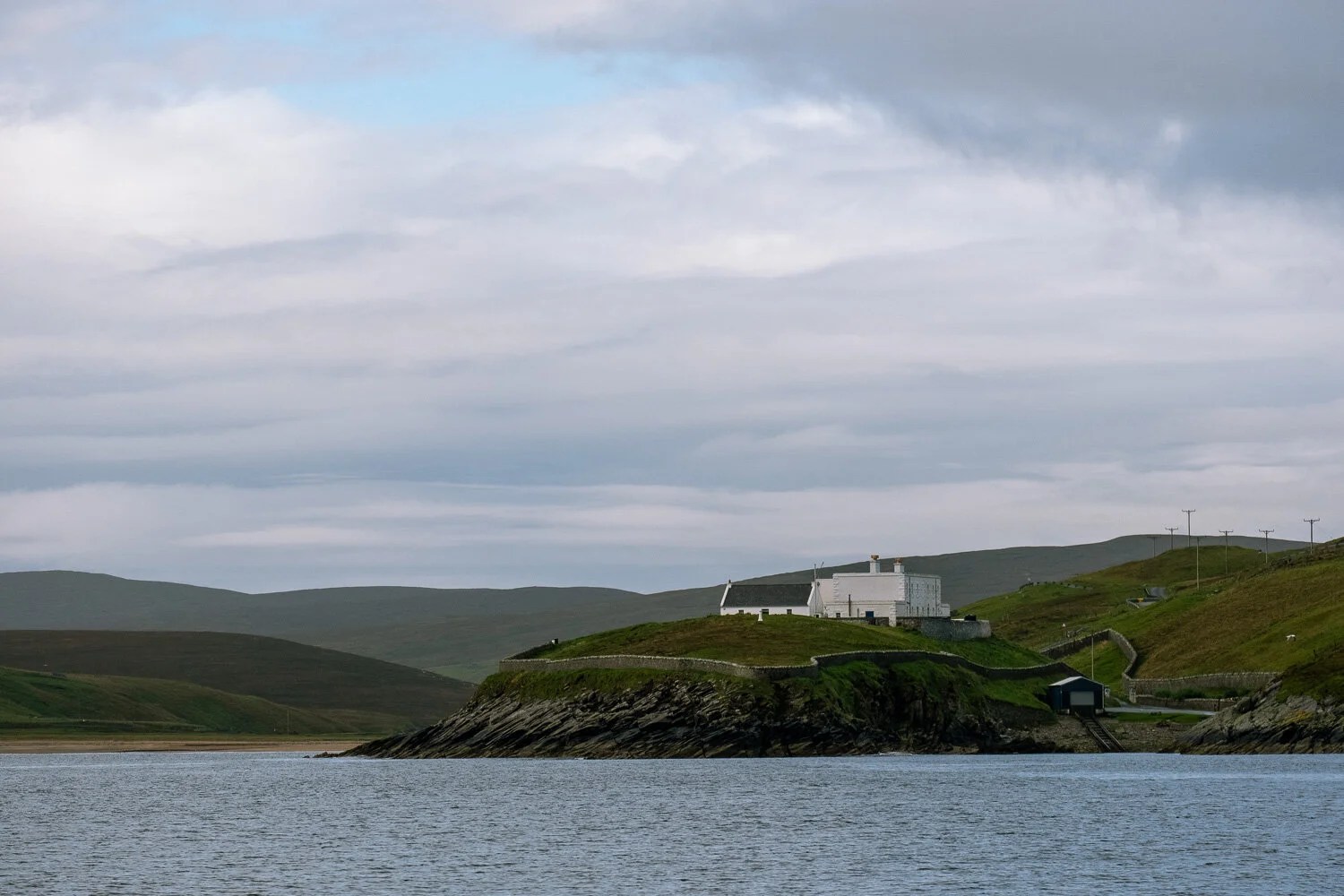
    We arrived in Fair Isle in mid-afternoon and moored at the only dock on the island big enough to take our ship, in a very small, protected harbour, about 4 kilometres away from the only village on the island. On the cliffs above the little harbour is a large wooden building, the Fair Isles Bird Conservancy, which I’m convinced is the location that was used in Anne Cleeves book in the Shetlands series where Jimmy Perez’s fiancé was murdered. The Conservancy does a lot of avian research and there there is accommodation for scientists who live on site while carrying out their research just as it was depicted in the book.

    Because we were docked at the islands only mooring we were up at 5:30am to unmoor and head to sea, the Island’s ferry was going to be docking at 6:00am and we had to be well clear. Gijs motored off-shore and put the ship downwind while we raised all sails except topsails, and set off at about 6:30. The wind had shifted westerly in the night and he was hoping that we would be able to sail down to our next port of call, Kirkwall in the Orkneys. However the wind wouldn’t serve, too shifty and swing back to the south and so at 7:30 it was down with all sails bar the staysail and the mizzen, and back under engine power, really too bad. Quick breakfast and back on deck at 8 for our watch and once again we were entering the same wind and wave conditions as on the previous day, wallowing, pitching and rolling. We had fifty nm’s to cover and today there was some urgency. There is a gale forecast for our area arriving some time later in the day and continuing through tomorrow so we needed to get to Kirkwall, beat the storm and prepare for the coming weather.
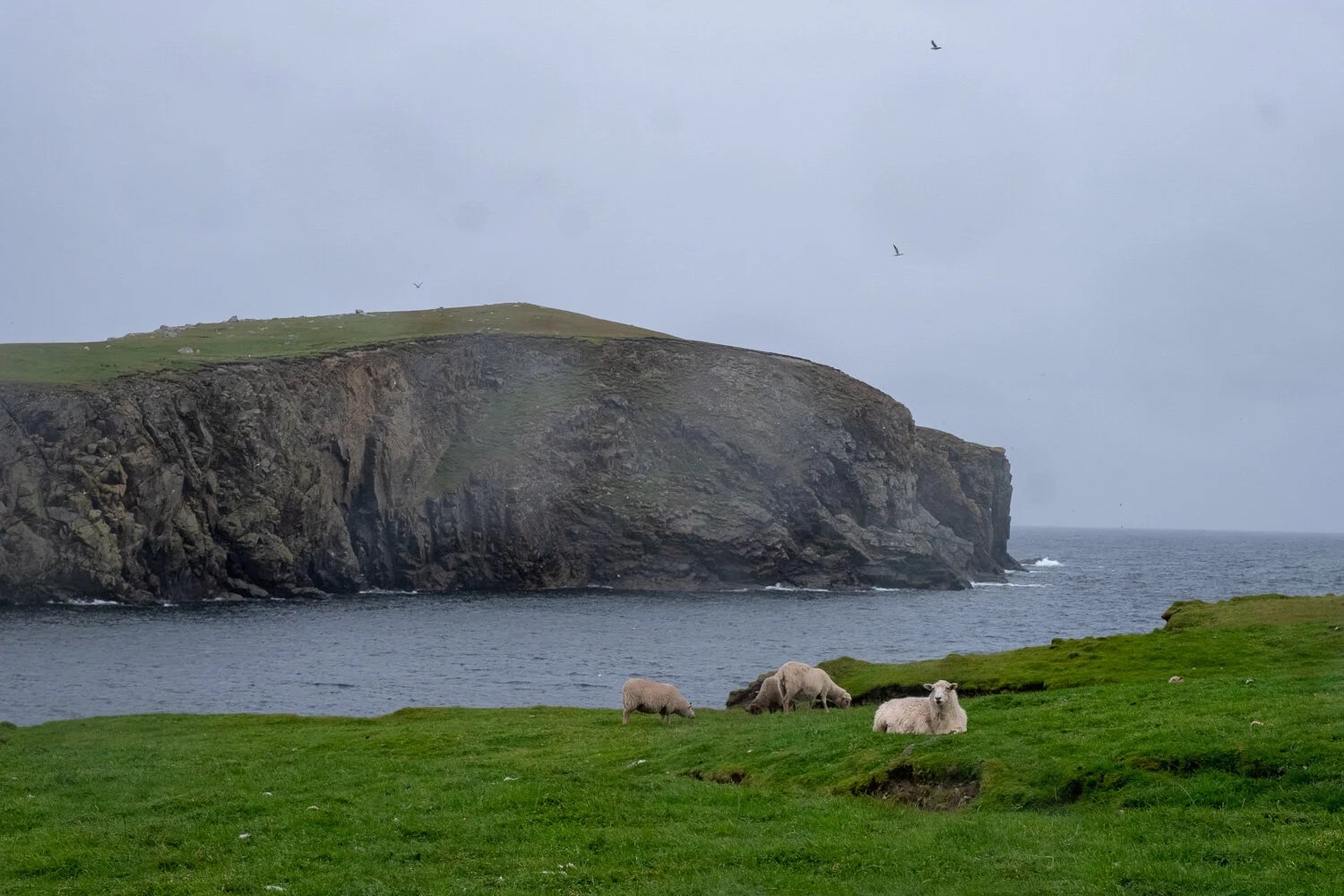
     Fair Isle sheep. The bright smears on the cliffs are raindrops on the lens. Impossible to keep the camera dry.
    Fair Isle sheep. The bright smears on the cliffs are raindrops on the lens. Impossible to keep the camera dry.

    The first two hours of our watch matched the prior day’s sail but at about 10 the wind dropped significantly, the swells flattened and the sailing motion became very much easier, cheers all round.

    One interesting event occurred during our watch. I had noticed, when we were about 3 hours into our watch and out of sight of land, a small brown bird fluttering around the boat, disappearing out of sight for minutes at a time and then circling the boat again. I was sure that he did not belong out there, certainly in current weather conditions, and wondered if he had been caught in the wind and being so small had been blown offshore. He clearly wanted to land on the ship but was too nervous to do so. This continued for about 20 minutes and then, I imagine, being too exhausted to fly any longer, he dropped onto a length of electrical cable running flush along the top of the chart room roof and about 1 metre away from the three of us on watch and on the helm. Our visitor turned out to be a little wren who perched on the cable for about 5 minutes, fluffing its feathers, taking deep breaths and getting itself sorted out. It then flew off and was not seen again, really hope that it gathered enough strength to get itself back home, brave little creature.
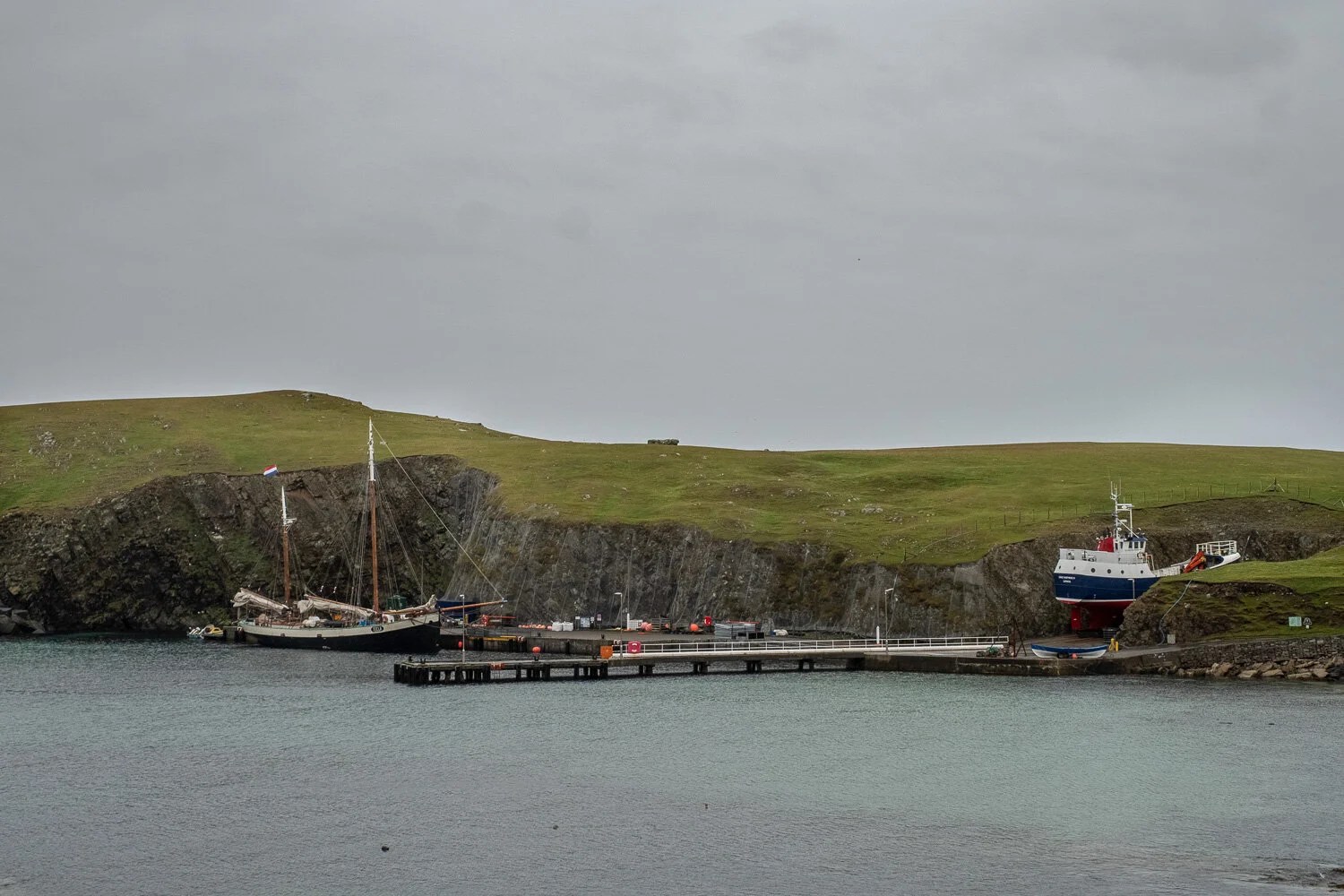
     Tecla moored at the only dock on Fair Isle. Ferry in dry dock waiting to get to its mooring. Tiny black dots to the bottom left are seal heads watching our activity.
    Tecla moored at the only dock on Fair Isle. Ferry in dry dock waiting to get to its mooring. Tiny black dots to the bottom left are seal heads watching our activity.

    We arrived in Kirkwall at about 4 and immediately put out extra mooring lines as we await the storm. We expect that we’ll be here for the next two nights while we wait out the weather.

    Let you know how things turn out in my next post.
  • Into the Shetlands, Saturday, Sept. 15

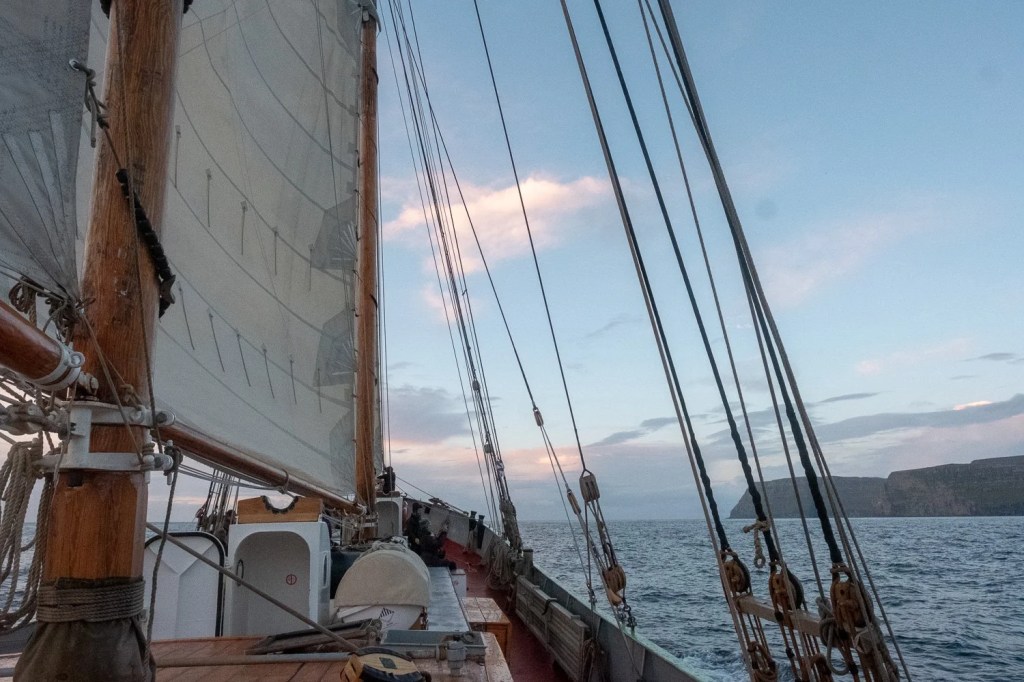
    Left Norddepil, Faroes at 6am, all hands on deck to raise sails. Very fresh westerlies but a change coming in the next 36 hours so Gijs wanted to get to sea early to have a clear run to the Shetlands before the winds changed. All sails raised, a quick breakfast and on watch at 8. Breeze very fresh from the West and as our course was roughly East South East down came the normal jib and up went the large jib as well as the main and mizzen topsails, Tecla then carrying her full suit of sails; large jib, foresail, main and mizzen sails and main and mizzen topsails. It was a downwind run and the ship blasted its way through the swells and waves at between 8 and 9 knots all day.

     Norddepi Harbour, Faroes
    Norddepi Harbour, Faroes
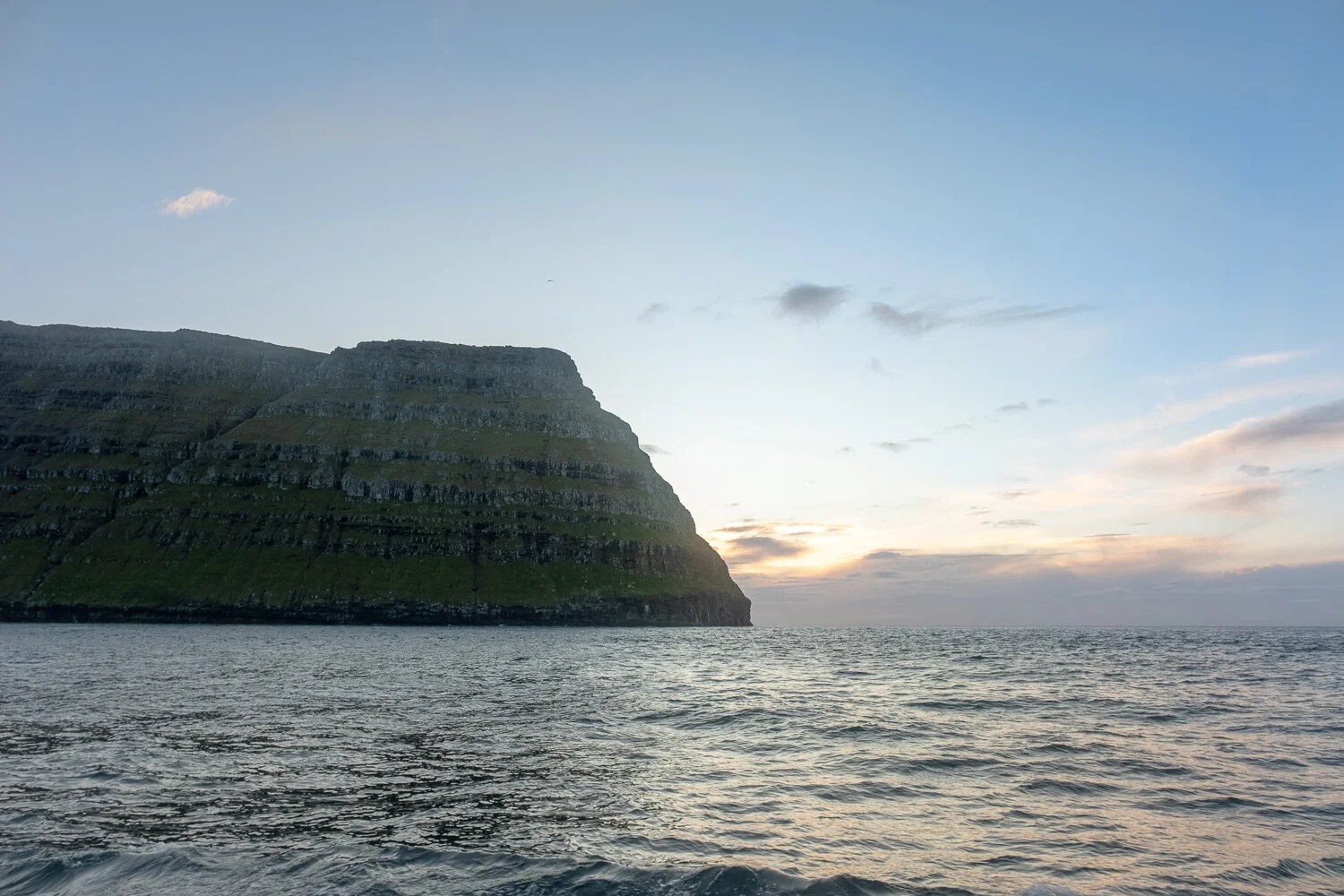
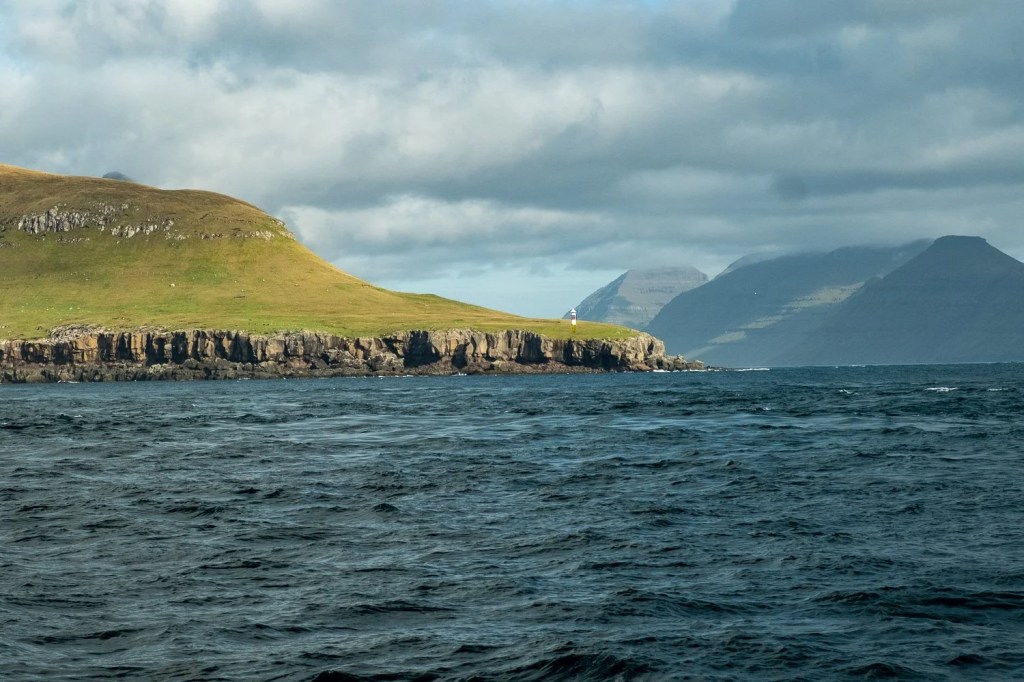
     Clearing the headland to leave the Faroes
    Clearing the headland to leave the Faroes

    Saw whales in the afternoon, two who appeared only momentarily a couple of hundred metres to starboard, fin whales I think, whose broad backs were almost a purple tan colour, who followed us briefly then submerged and were not seen again.

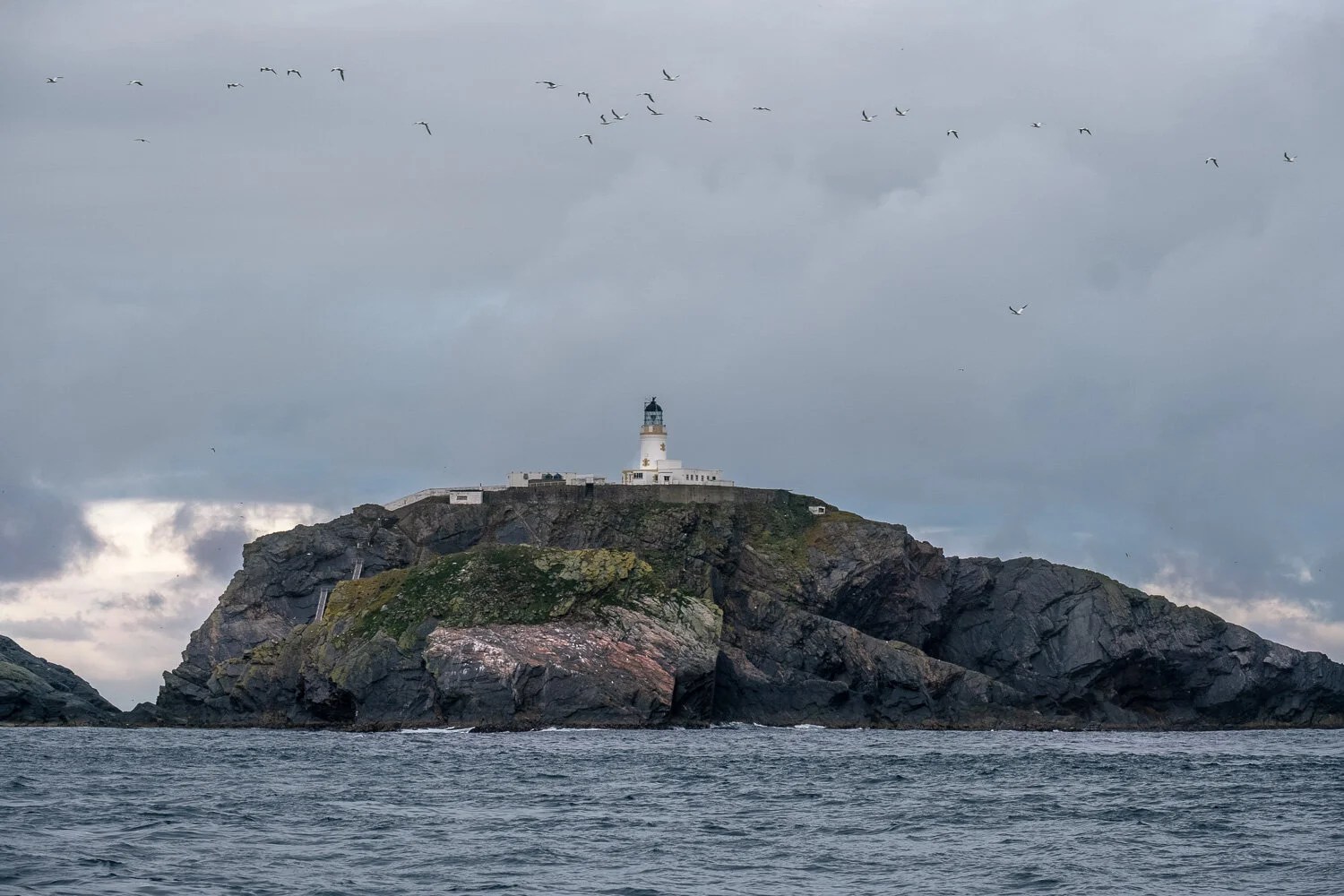
    The distance we had to cover when we got underway at 7am was about 180 nautical miles and we had been plowing steadily ahead all day. After a bouncy, rolling dinner, back on watch at 8pm with the wind slowly dropping in intensity. Our passage was much smoother with the reducing wind but by the end of our watch we still had about 44 miles to go. Gijs started the engine to help us on our way and when I came on deck for the 8am watch we were clearing the lighthouse which is on the most northerly point of the Shetlands and which marks the most northerly point in the UK.

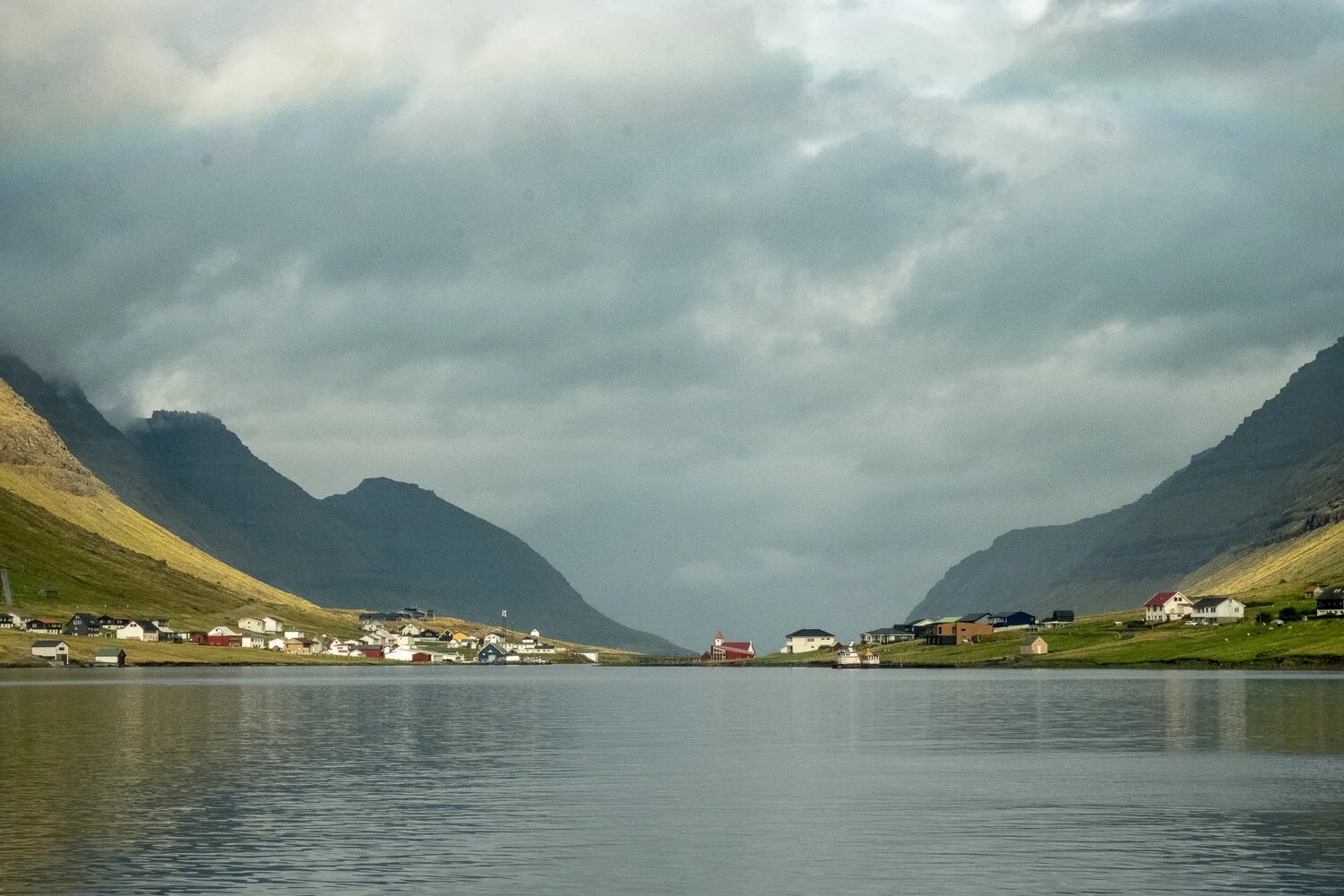
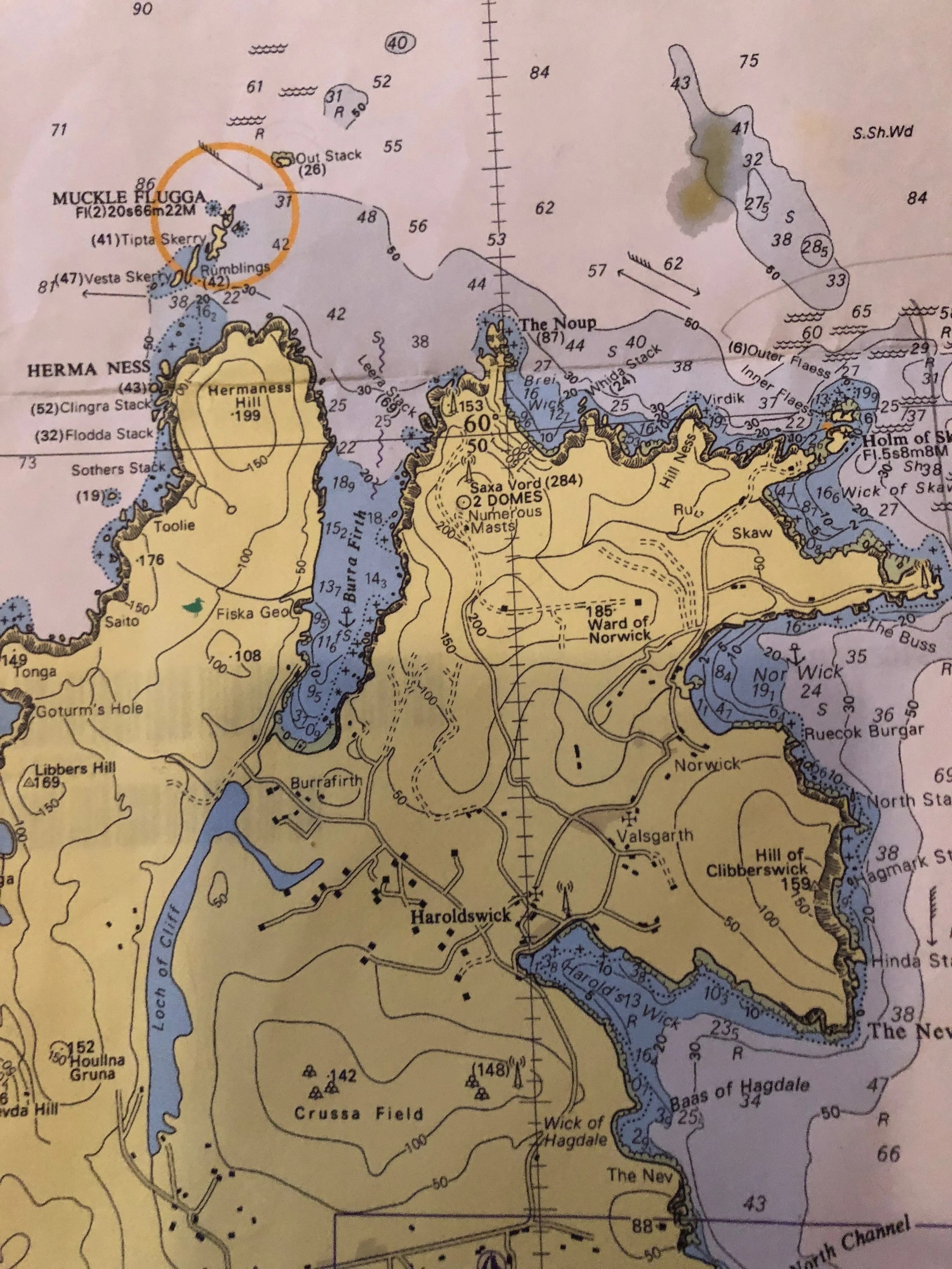
    We anchored at the bottom of a narrow inlet, Barra Firth which can be seen at the top of the pictured map, where we were to spend the night. Most of the people aboard took our zodiac to the shore and planned to spend the afternoon hiking the landscape, the weather mixed rain and sun and quite windy. Predictably, I stayed aboard and worked on the blog and on some pictures. Not the weather nor time of day for any kind of photography so I didn’t feel as if I was missing anything by remaining on board. My emphasis on this trip has been shooting the land from the ship; there’s no shortage of shots out to sea from the land but I’m enjoying turning the tables on the usual images of these islands particularly as it’s how they would have been seen by the Vikings and since we’re tracing their wake on this trip, it’s entirely in keeping.

     Burra Firth at the top of the island
    Burra Firth at the top of the island

    Once more a stable dinner table and bed but an early start to the following day, Saturday, since we were up at 5 to raise sails. There is a gale forecast which might be coming into our area later in the day with the winds, still from the west, switching from the south and in our teeth, hence our early start.

     Northernmost point in the UK. If you look closely to the left of the lighthouse you can see two ladders on the side of the island. Climbing these plus the lower one you cant see is the only way to get to the lighthouse from a boat for people and supplies.
    Northernmost point in the UK. If you look closely to the left of the lighthouse you can see two ladders on the side of the island. Climbing these plus the lower one you cant see is the only way to get to the lighthouse from a boat for people and supplies.

    We had about 50 nm’s to cover and spent the day banging our way south under jib, foresail and reefed main and mizzen, and listening to weather radio but fortunately the gale did not make its presence felt. Arrived in Lerwick, the capital of the Shetlands at about 5, tied up, secured the sails and lines and relaxed. I set off into the town about 7, walked around, interesting old town but not quite the set of the Shetlands tv series and found a steakhouse. A very large, rare ribeye steak, a salad, a couple of glasses of good red wine and a long phone chat with V and peace was once more restored to the kingdom.

    Tomorrow being Sunday, we start the final week of our trip.

     Anchorage at Burra Firth
    Anchorage at Burra Firth
  • Leaving the Faroes, Thursday Sept. 13

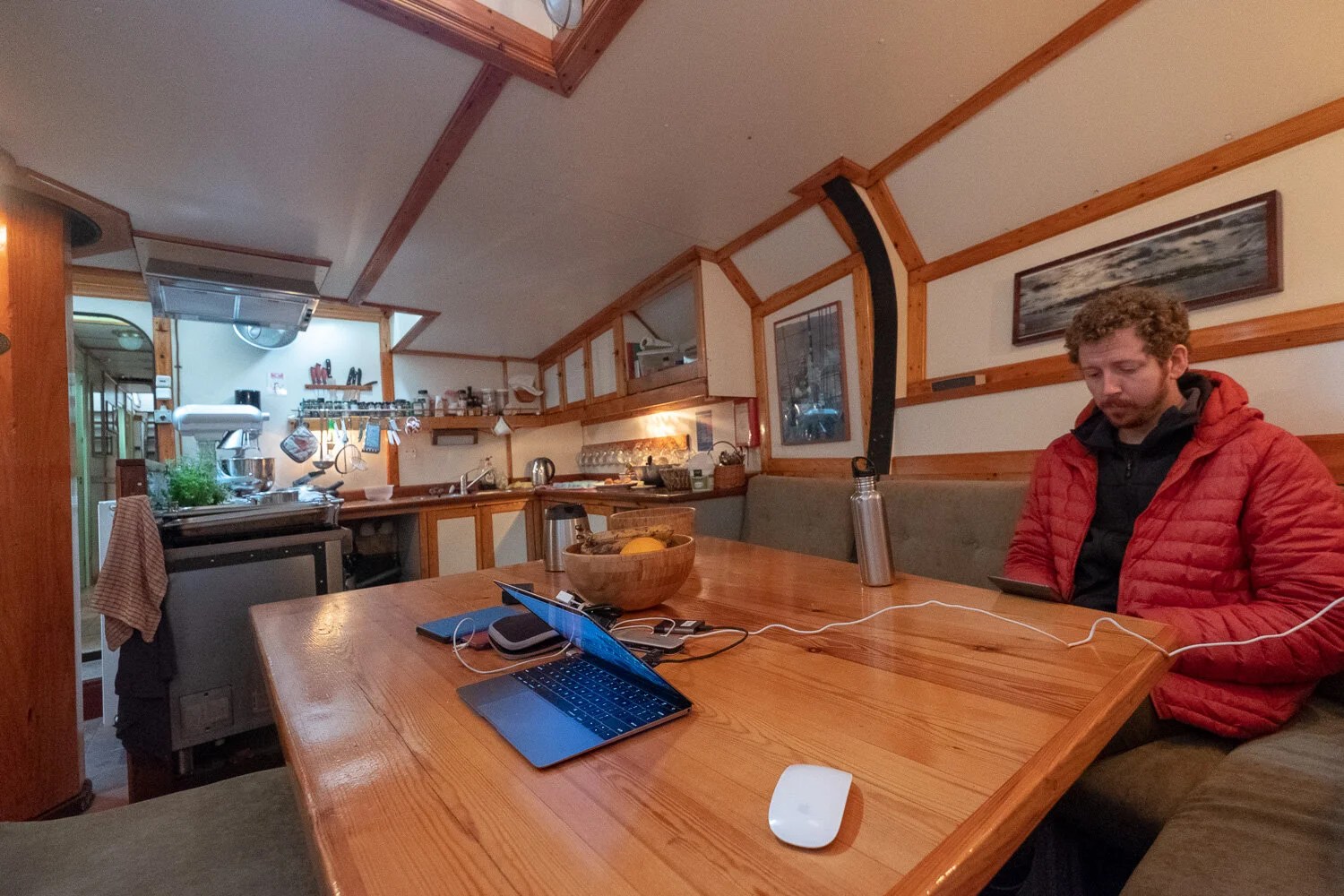
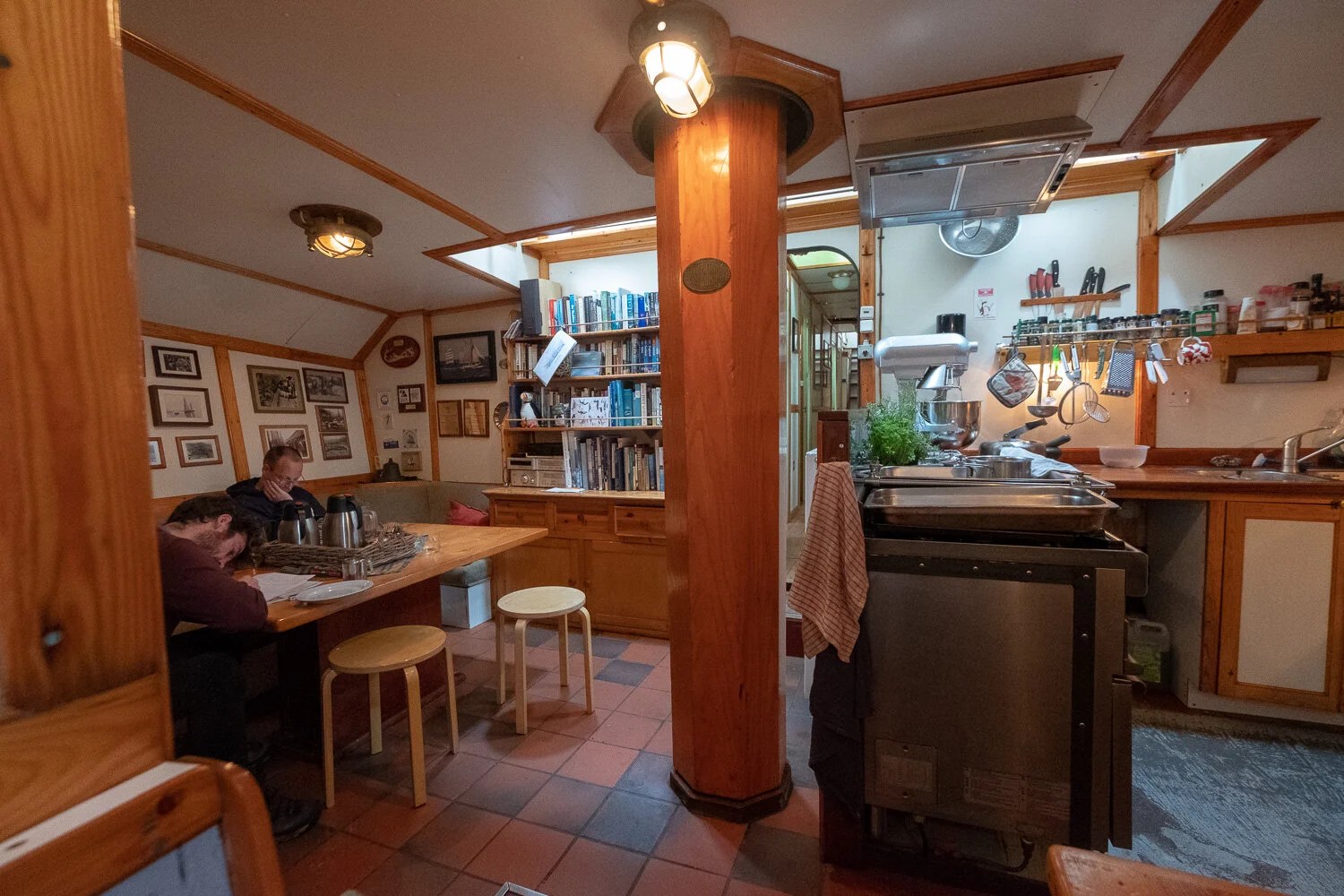
    I’ve had some email question asking about the ship, requesting some pictures of the interior and some more about the daily routine.

     Port side of the galley and dining area
    Port side of the galley and dining area

    You need to know that we are not on watch when moored but only when at sea. Breakfast is usually around 7 so that the 8am watch can eat before their watch. The 4am to 8am watch also eats then with a couple of permanent crew standing watch in their place and then switching before the 8am watch comes on. Breakfast is done by 8 and if you’re not on watch and sleep in, you lose. Same rules apply when moored, sleep in and go hungry. Breakfast is Dutch cheese and salami, hot porridge, freshly baked bread that has risen overnight, fruit and something hot, pancakes or french toast. There’s always a jug of tea and of coffee and cookies and fruit available all day and all night when at sea.

    Lunch is at 1pm and is leftovers from a previous dinner reconfigured into something hot and/or hot soup. Cheese, salami and bread also feature, as they do at every meal. The 12pm watch switches with permanent crew for their lunch and then switches back so that the permanent crew can eat.

    Dinner is 7:30 and is a stew with rice or mashed potatoes, or pasta; two pot meals plus a salad.

    There is no alcohol served when at sea but when moored there is beer or wine available for dinner; interestingly very little is consumed, a beer or glass of wine with dinner being the norm. The usual switching occurs so that the watch on duty can eat when at sea.

    Food is good but institutional and runs to Dutch comfort food, no bad thing when you’re cold and wet. Since we have four vegetarians on this trip, every meal has an option available for them.

     Starboard side of the galley. It’s amazing to think that in this relatively small space food for 15 people is prepared and served.
    Starboard side of the galley. It’s amazing to think that in this relatively small space food for 15 people is prepared and served.
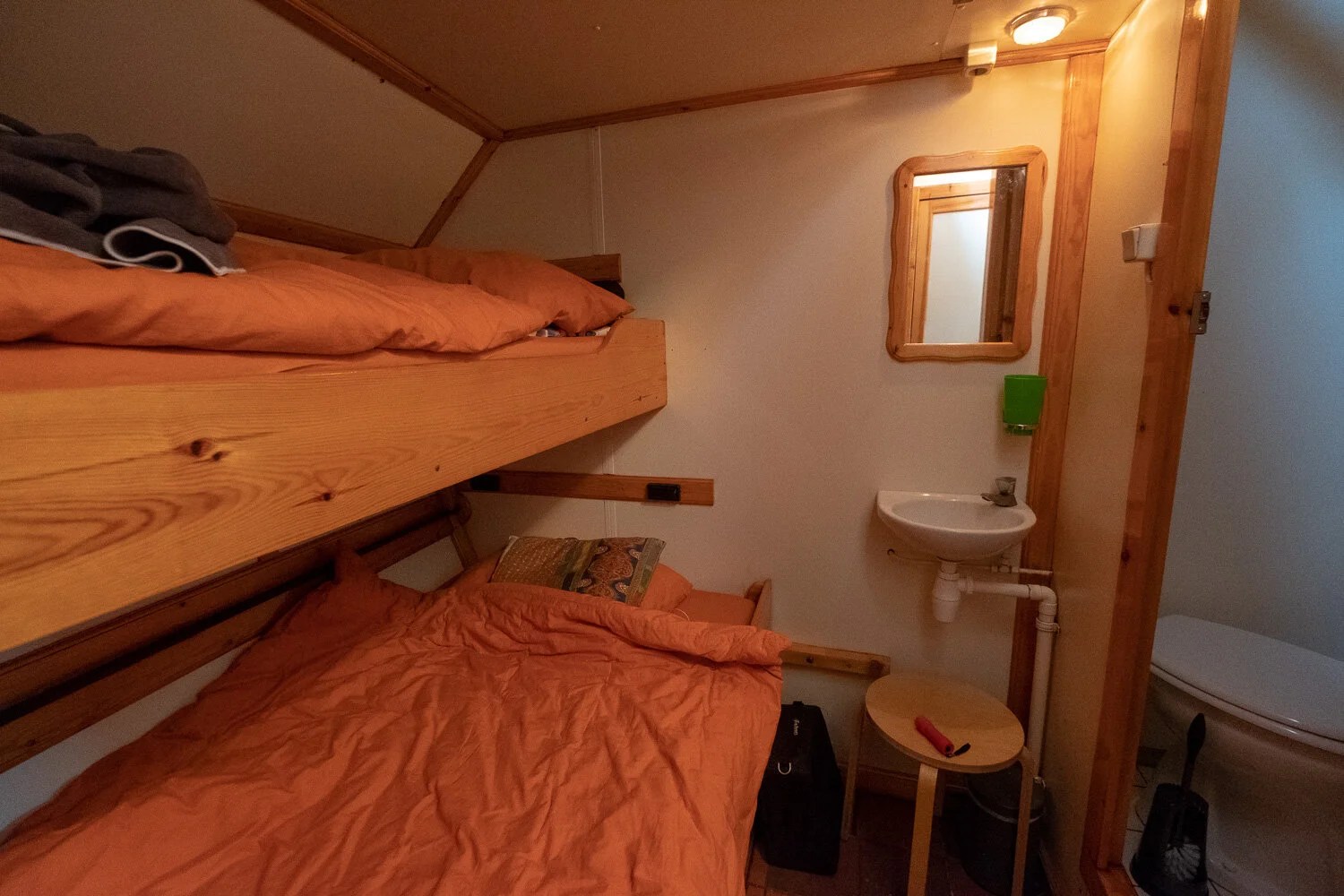
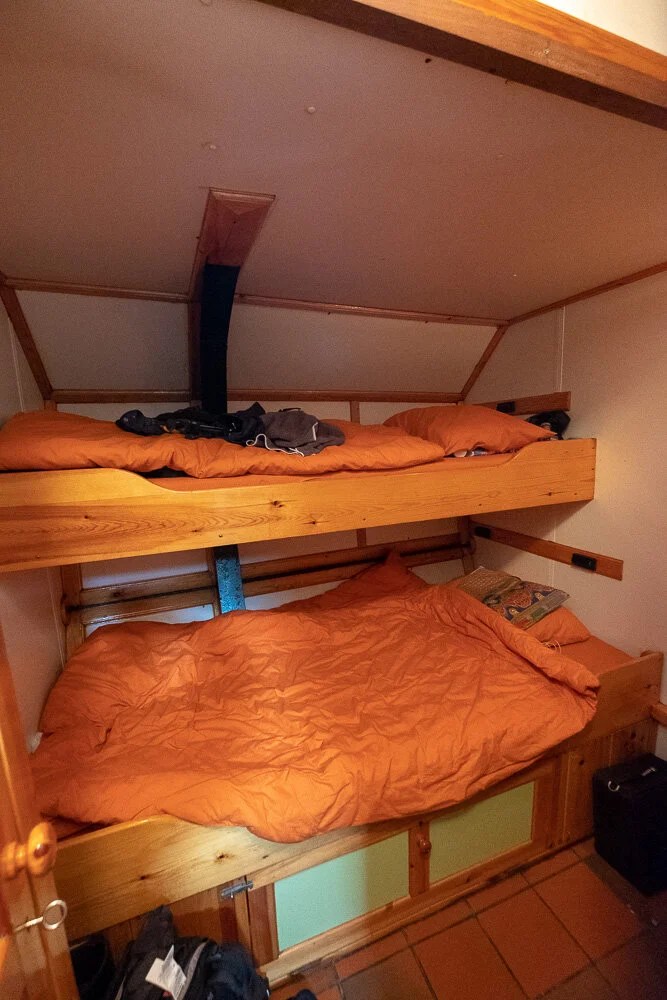
     My cabin. Much darker in reality, I had to bump the ISO to 8000 to get these shots.
    My cabin. Much darker in reality, I had to bump the ISO to 8000 to get these shots.

    The cabins are small, about 2.5 metres by 3 metres and are designed for 2 people in an upper and lower bunk. I’m extremely fortunate that since we are one person short on the voyage, I have a cabin to myself. I’m infinitely grateful that things worked out this way, can’t imagine how two people could navigate the space and store their kit.

    Each cabin has its own bathroom, the bathroom a small room, about the size of a shower stall, is in fact a shower stall with a built-in toilet. There is a drain in the floor of the little booth. All required bodily needs fulfilled in 1.5 square metres!

    Some one asked why I don’t post every day. Easy, there is no internet on board. I have a very good roaming plan with Bell and I use my phone in Hotspot mode as my link to the internet so when we’re in reach of phone coverage, I have internet and can use my laptop to edit pictures and post to the blog. Because there is such good phone coverage in Iceland and the Faroes, even 25k offshore I can still get a couple of bars on my phone, I’m able to post. However just because I have internet access doesn’t necessarily mean that I can post the blog. The second critical requirement is a relatively stable table or desk to work on without fear that with the next roll of the ship, the laptop won’t be thrown across the room. Neither of these requirements was met on our passage from Reykjavik to Torshavn and since we casting off for the Shetlands tomorrow morning I won’t be able to post again until we reach Lerwick in the next couple of days. Winds are supposed to be favourable, but who knows?

    Did some laundry in a bucket in my shower stall this morning, I brought some camping laundry liquid with me, and because its been raining all morning I draped clothing on various deck fittings so that the rain would wash the soap out. Going out now to squeeze everything dry and wait for the sun and wind on tomorrow’s passage to dry everything out.

    I’ll catch up on the other side.

  • Leaving Torshavn, Faroes Monday Sept. 10

    Torshavn on a Sunday is very much like Toronto the Good used to be 50 years ago, nothing open except the odd restaurant and cafe and very few people to be seen. Captain Gijs had arranged for a minivan to take most of my crewmates on a drive around the island to see some of the local landmarks. I pulled something in my hip when we were raising sail and have been managing it with Advils and Tylenol but I didn’t feel up for a long day sitting in a van so decided to stay behind and write my blog and work on some pictures. As it turned out many of the places that the van visited were on Gijs’ sailing itinerary so we will end up visiting them by sea as well as by land and so I won’t have missed anything.w

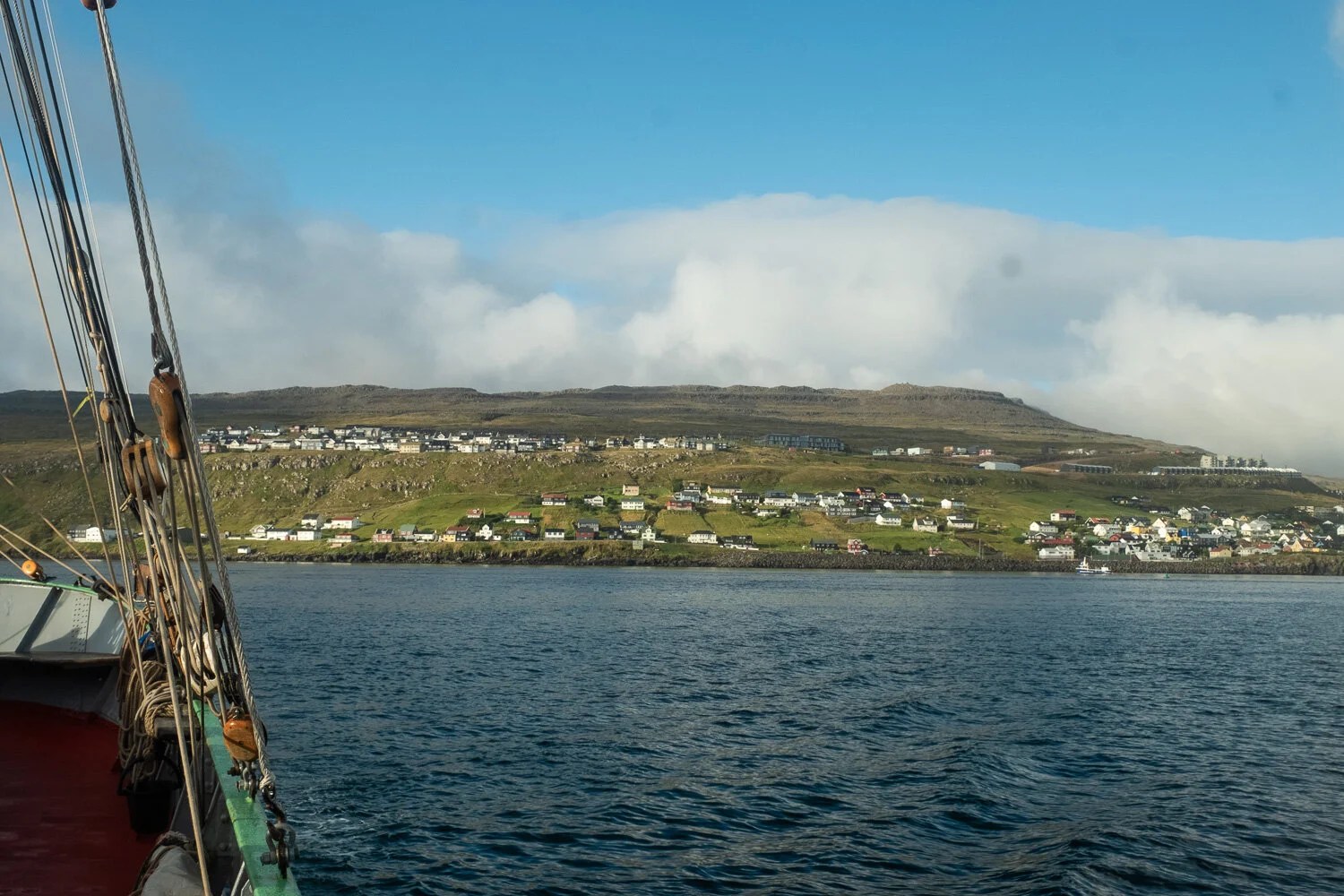
     Leaving Torshavn harbour
    Leaving Torshavn harbour

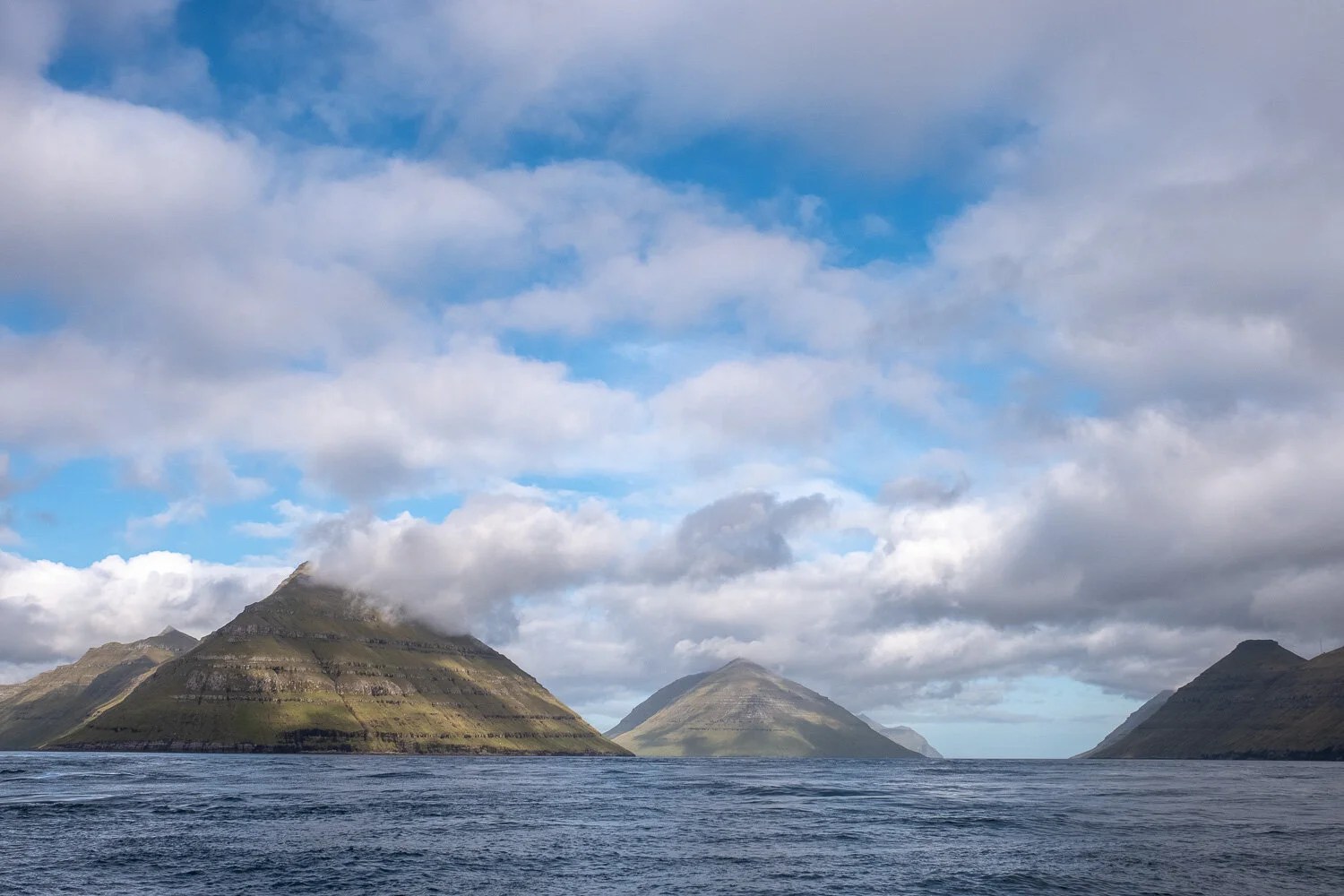
    Dinner and an early bed, fortunately not moving for a change. The following morning, Monday, we breakfasted and then cast off and headed back out to sea to visit another island whose port Klaksvik was our destination and one of the spots the van had visited the day previous. It was a very pleasant 4 hour sail, the day was fine and sunny, and we coasted along on a fairly flat sea until we reached the passage between two islands up which we needed to sail to get to Klaksvik which is situated about half way up the passage. These passages separate a number of long narrow islands, parallel to each other and the passages separating them are anywhere from a kilometre wide to about 5 kilometres wide. The islands are 50 or 60 kilometres long and appear to be folds and ridges in the volcanic rock of which the whole region is composed. Each passage is a tidal race with very strong currents and at the time that we navigated the passage to Klaksvik the tide was running against us. In order to make headway we needed to sail close to the shore, about 100 metres from the cliffs which border most of the perimeter of the islands but it was a struggle against the tide.

    Once docked and after lunch we boarded a small ferry which took us further up the coast to a landing where we boarded a public bus to take us to small town where we wandered the foreshore and the local area before re-boarding bus and ferry to return to our ship for dinner.

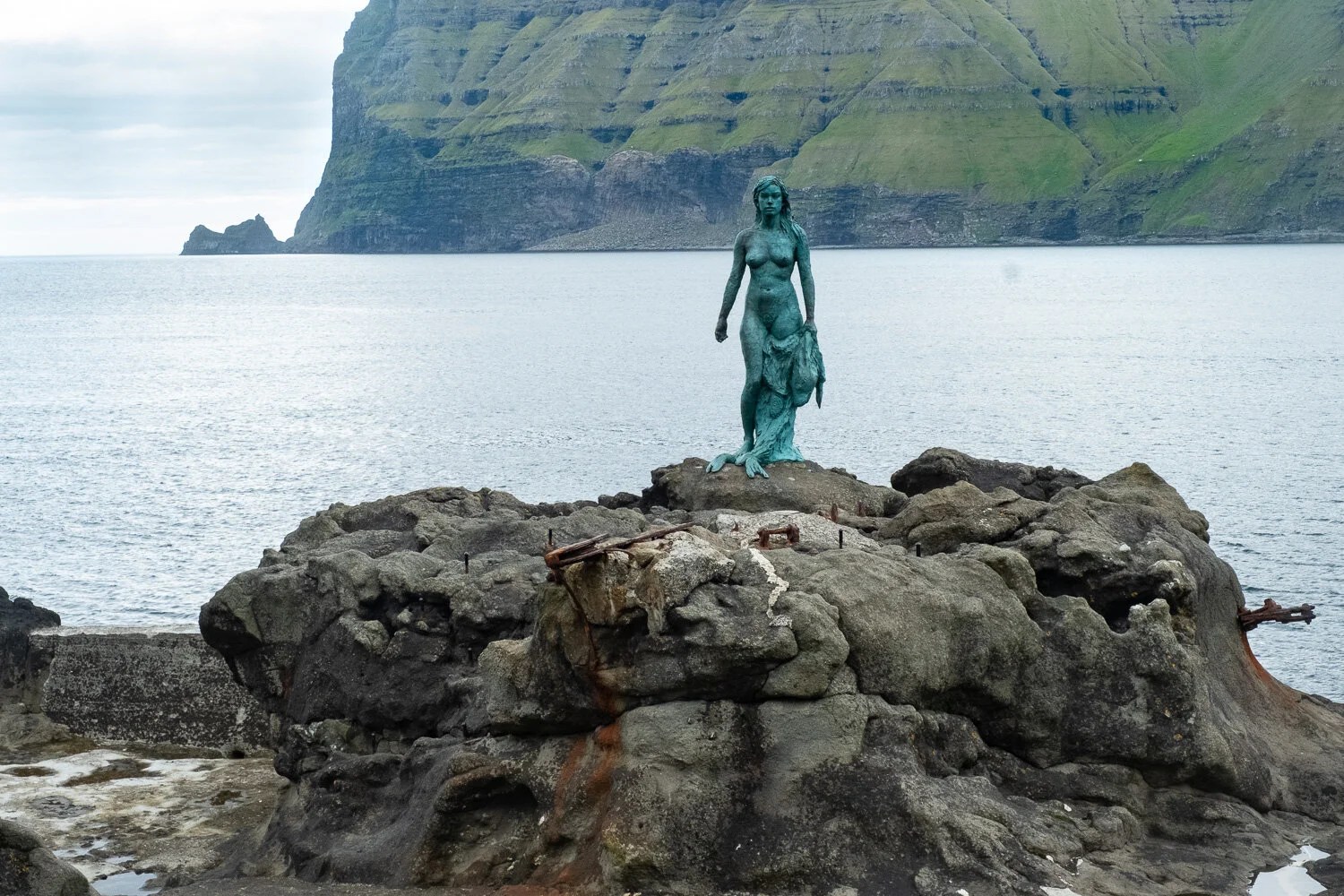
     A statue to a Selkie, a creature who was a woman by night and seal by day who cursed the small town where we hiked, for hunting and killing her seal family.
    A statue to a Selkie, a creature who was a woman by night and seal by day who cursed the small town where we hiked, for hunting and killing her seal family.

    I mention the ferry and bus for a reason. The Faroese nation is composed of a number of islands, 17 I believe, and the nation is bound and knit by a number of transportation and communications links that are designed to ensure that all its citizens have equal access to information and equal mobility. The country has invested heavily in cell technology so that every location, small as it may be, has phone and high speed internet. It has built roads wherever possible, no small task since there does not appear to be a flat spot on any of the very mountainous islands and in our short 30 minute bus ride in one part of one island we drove through 3 tunnels that have been bored through mountains to allow cars and public transit. Bridges have been built to link islands wherever feasible and when communities cannot be reached by road, bridge or ferry Faroese governments continue to provide heavily subsidized helicopter service as public transport for local citizens in remote areas whose cost for the locals to ride is equivalent to a pricy bus ride. A remarkable achievement for such a small nation.

    Another quiet night on a stable bunk and once again on Tuesday morning we cast off to navigate the ship, I have been told by the crew that I have to stop calling it a boat, it is a ship, to Norddepil, a very small community on the same island as Klaksvik but on its opposite side. To reach it we had to sail up the passage and out to sea, round the point at the top of the island and sail down the passage on its other side to reach our new destination. We are here because it is the jumping off point, using the term loosely, to the highest sea cliffs in Europe, about 890 metres above sea level and the hike and ascent of which takes about 7 to 8 hours. Our two very good friends with whom we traveled to Bhutan last year would be in with a shout but given the state of my hip I thought I’d better take a pass. The three permanent crew members and seven of my crewmates joined them and they left after lunch so we don’t expect to see them much before 9 in the pitch black dark.

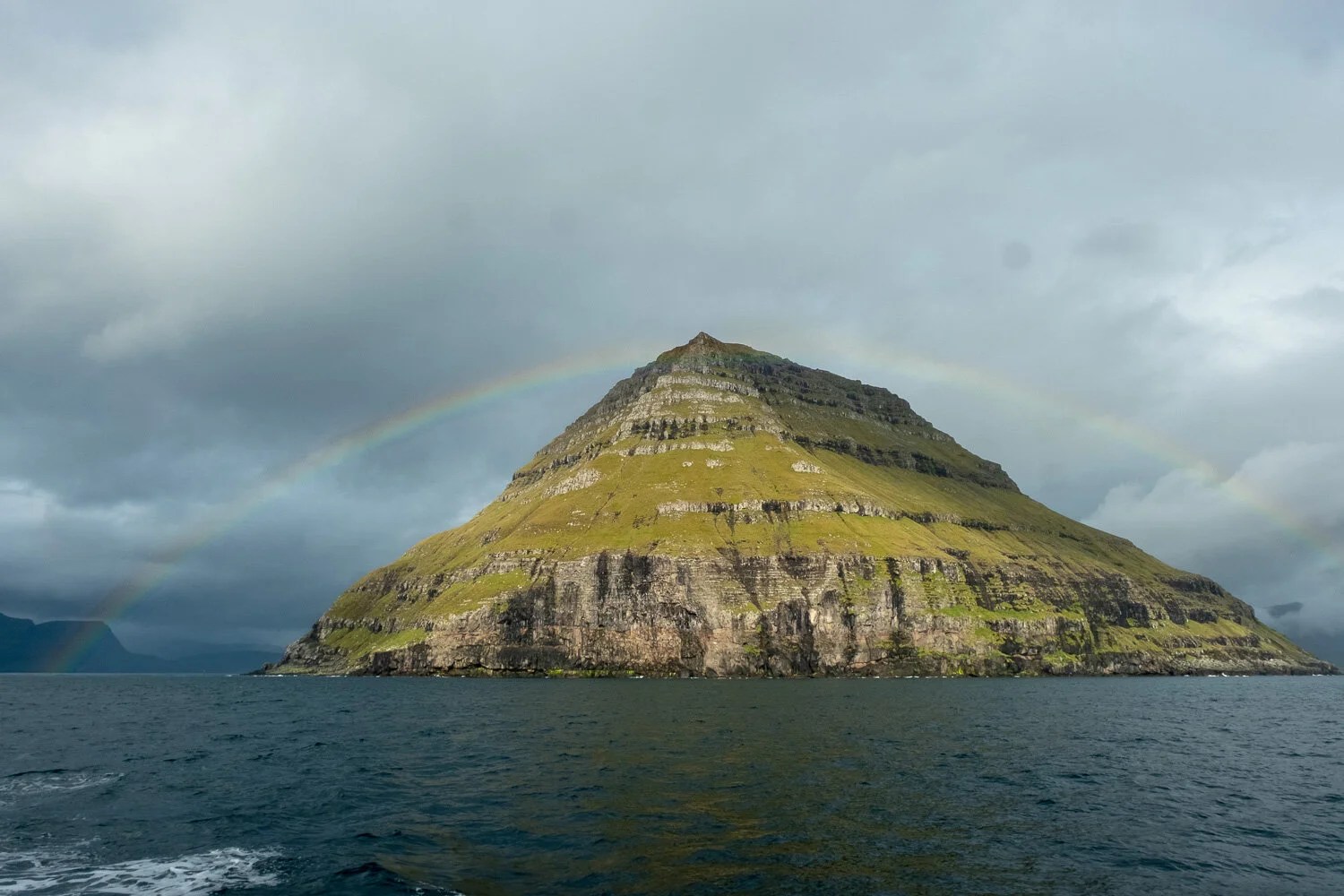
    The passage here this morning was interesting. Another relatively easy sea, mixed rain and overcast with occasional bursts of sun. Another magic moment however occurred when the sun broke through after a rain shower. Off our stern was the complete arc of a brilliant rainbow which rose from the sea and arced over a green, mountainous headland and met the sea on its other side, a designer could not have done a better job of placing the rainbow in the correct orientation; magic! Unfortunately my lens was not wide enough to capture the whole of its arc, but enough to convey the idea.

     Rainbow over headland
    Rainbow over headland

    Coming back down the passage towards Norddepil, a side passage separating another smaller island entered our main passage at a Y shaped confluence and two tidal races met in a turbulent stew of waters. When you are in a tidal race the water can seem oily in areas and in others there are very short, white-capped waves running in different directions. When these two tides met the area where they joined could be seen well ahead, the water was almost boiling and there were a number of large, white-capped standing waves some at right angles to others. We had to pass through this and once entered it took us about 20 minutes to travel about 200 or 300 metres. I marked a spot on shore and lined it up with a spot on the ship and for minutes at a time the ship did not move forward but kept station with the mark ashore. It was almost like the surfing waves that are created for amusement parks where you can surf a wave for as long as you want but never move from the spot where the standing wave is curling. With engines at full power we finally began to make a little headway and finally moved out of the whirlpool. Without tempting the gods, huge fun!

     Entering the passage for Klaksvik
    Entering the passage for Klaksvik
  • Arrived Torshavn, Faroes Sunday Sept 9

    We left Reykjavik on Tuesday night, we have been sailing steadily since then and we arrived at Torshavn, Faroe Islands this morning Sunday at 7am. At 10:30 last night we passed the lighthouse on the outermost Faroe island, whose name I can’t remember, and we were demonstrably in Faroese waters. Our expected arrival time was around 10am, on our watch, but when I awoke at 7 this morning to have breakfast and get ready for my watch I could feel the way coming off the boat so I knew all was good.

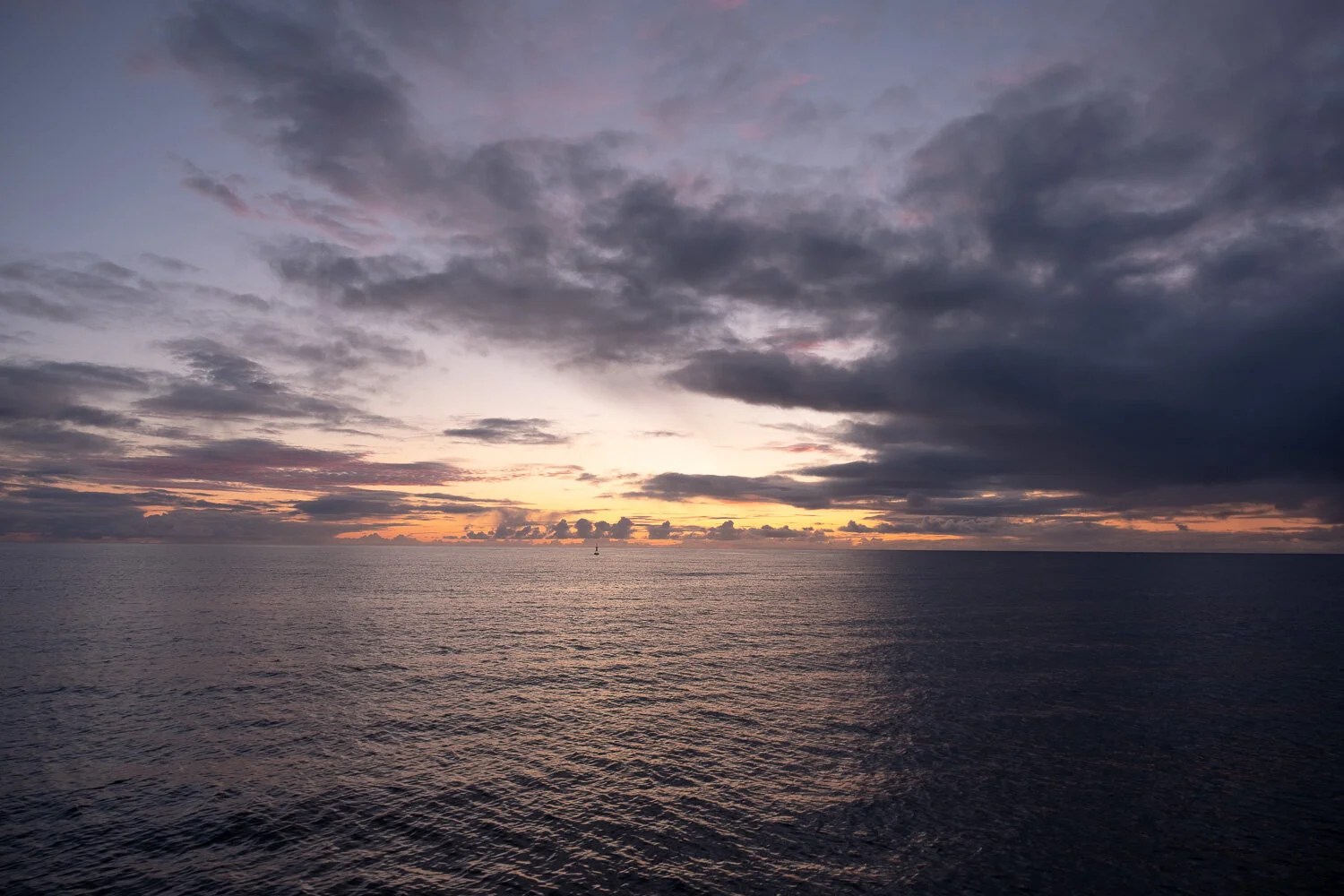
     Sunset off Iceland
    Sunset off Iceland

    It’s been an exciting couple of days sail, most of it spent motor sailing under our mizzen and foresail and with the engine pushing us. After my encounter with the dreaded lasagna on Tuesday evening’s watch I awoke the following morning with sea legs intact and all right with the world. At that point we were under mizzen and foresail, sail having been reduced in the night and with the exception of one brief period under sail without the engine, that was was our rig for the next 4 days. Why under engine power? A storm system was heading from the Faroes right in the teeth of our usual route to the Islands and the captain wanted to sail around it since it was packing serious winds. We would not be able manage the diversion solely under sail power because of the adverse winds without going a long way out of our way so engine power it had to be. However, the sun was  bright  and warm and at that moment the sky was  bright, cloudless and a clear artcic blue, but the swells from the previous night were still very much in evidence so we spent the day pitching and rolling our way to Vestmannaeyjar, an island off the south coast of Iceland. We arrived at 3pm in a small circular harbour with a narrow entrance, flanked on one side by enormous cliffs filled with the nests of screeching and diving birds. The other side of the entrance was a relatively low, hilly piece of land which was not there before 1973 but was created by a volcano which added significant real estate to the island and which helped to enclose the harbour and make it more protected . The island was very neat and trim and judging by the number of very new and expensive cars and trucks, one that was also very wealthy. I heard various stories to account for the wealth, and as far as I can judge it came down to the fact that when Iceland was going to have new fishing quotas imposed a number of years ago, a couple of parliamentarians with family on the island managed to secure extremely preferential treatment for the island, far in excess of what should have been the case, and the whole population of the island, fishermen all, has amassed significant wealth in the ensuing period. Certainly the supermarket on the island is apparently much better stocked with a better range of products than the supermarkets in Reykjavik and boats would rather re-supply here than on the main island. The island was also apparently once the home to Turkish pirates many centuries ago who raided Iceland and stole women and sheep; the things that you hear on shipboard! but I plan to look that up when I have better internet access.

     Off Iceland
    Off Iceland
     Splicing a hawser at sea, First Mate Martin and Sarah our Canadian deckhand
    Splicing a hawser at sea, First Mate Martin and Sarah our Canadian deckhand

    We stayed in harbour, had dinner and off to an early and non-bouncy bunk. The boat sailed at 4am to continue our journey to the Faroes and when I came on deck at 8am for my watch the weather had undergone a significant change, dark, lowering skies, strong winds and the sea now filled with white capped waves. We continued that way for the next day and a half without much change but as we were skirting the northern edge of the weather system it was clear that had we tried to sail through it would have been a very uncomfortable ride. As it was, we were being bounced around about as much as I wanted. On Friday the captain decided that it was worth trying to run under sail and we began what was a very hard piece of work, raising the jib and the main. We did the work at 12pm when the next watch was replacing ours so that there were  two watches on deck to do the work and two watches were needed! The jib was relatively straightforward but the main was a very brute. Because it’s gaff rigged there are two halyards to raise the sail, one attached to the throat of the gaff, the end closest to the mast and another attached to the peak of the gaff, the end farthest from the mast. The two halyards have to be hauled simultaneously and the gaff kept relatively parallel. It takes 2 or 3 on the halyard to haul the gaff and attached sail up the mast up and 2 tailing on to the halyard and belaying it against a cleat between hauls and it has to be done by two teams in tandem one on each of the halyards. In rolling seas and given the weight of the sail and the gaff it was a bastard. I have been working out at the gym 3 days a week for the last 3 months to try and get ready for this trip and triple the amount of time would not have been enough. To get the 2 sails up, trimmed and secured was 45 minutes work and when we were finished I collapsed in my bunk, boots, clothes and all.

    We sailed for about 5 hours but while we were making about 5 knots, we were only making about 2 towards our destination. Since at that point we had about 200 miles to go, it was clear that we could not afford to spend another 4 days under sail to get to what was after all, only our first stop in our journey. So down came the jib and the main and once more under mizzen and foresail we re-started the engine. I for one was not heartbroken, for added to the rolling and pitching experienced under engine power, while under sail was added the complication that everything was now being done at an angle of 20 degrees as the boat heeled. Try that in your spare time!

     Picture of a whale when you only have your phone! Somewhere in there is a fin!
    Picture of a whale when you only have your phone! Somewhere in there is a fin!

    The following day, Saturday, we began to see edges of light on the horizon that broke through the grey dome that we had been sailing under continually for the previous 3 days and the sea began to settle from white capped waves to long rolling swells. Personally I preferred the waves! And so on through Saturday night until our arrival this morning.

    As soon as moored, my first act was to shower since my last contact with water was a shower on Tuesday morning before I left my hotel in Reykjavik. In case you’re wondering why, there are no showers while at sea, in a heeling rolling boat there would be water from one end of the cabins to the next, a slippery and dangerous  situation so showers verboten. And you must also know that to my shame, at the end of my watch at midnight I have been known to brush my teeth, take off my coat and boots fall into bed in my clothes. Not a pretty sight.

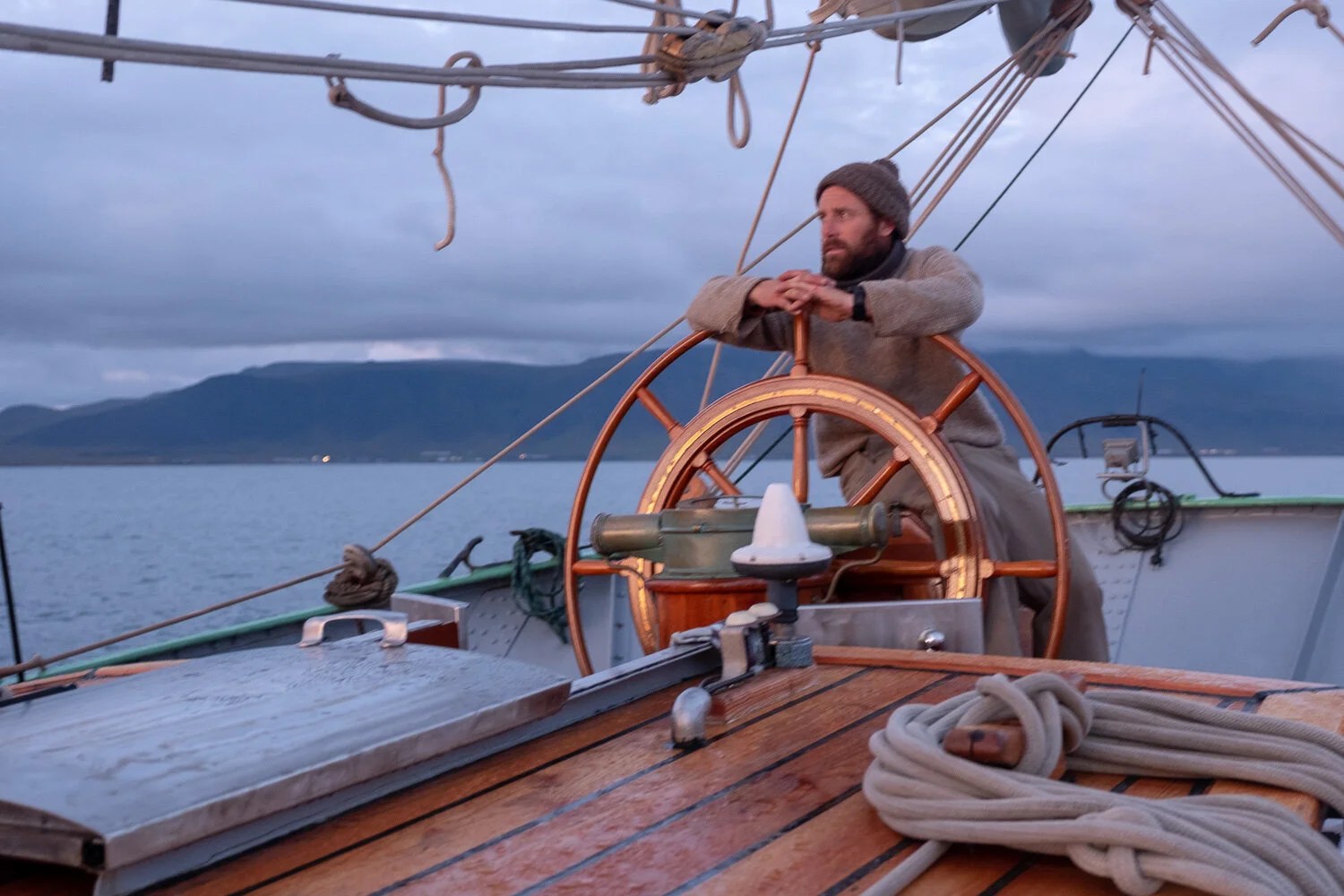
    Standing watch in the 8 to midnight shift was a combination of frightened exhilaration and magic. Our watch is only 3 people, the other watches are 4 people so we started by taking an hour each on the helm and then my French watchmate, Emanuel, the most experienced sailor of the three of us took the last turn. Because it was tiring work on the helm during the heavy weather we shifted to 1/2 hour turns to spread the load a little better and make each turn at the wheel a little easier. I have to tell you that handling the helm on a 35 long meter boat that is bouncing and rolling and being headed by winds and waves is a challenge. Because the boat is relatively big it takes time for a turn of the wheel to make itself felt when changing course and because the pressure of wind and waves is constantly affecting the boat’s course, the need for constantly adjusting the course to stay on your compass heading keeps you fully engaged. If the boat starts to drift off the compass heading that you’ve been given to steer to, and it always will because of variations under the pressure of shifting winds and waves, you need to steer to correct it but because it takes up to 30 seconds for the boat to respond you need to start bringing the wheel back to its point of equilibrium before it really settles on the course you have steered to.  You will have counted the number of spokes of the wheel that you moved so that you can move the wheel back before the turn been completed, and if you get it right, you’re back on course. But of course, you’re not always right, and its very easy to over-correct and over-steer so veering too far to port and then over-correcting too far to starboard and screaming in frustration as the boat refuses to come to the proper course rapidly can become becomes an endless series of iterations as you try and get back on the proper course. The secret is, as it is in much of life, that less is more, since when the boat swings off course and if you are patient and trusting it will often swing itself back to the proper course without any guidance. Knowing the boat and how it behaves and having a feel for the environment and its effect on the boat allows you to have a sense of when to correct the course and when to allow the boat to find its way back. It does take concentration!

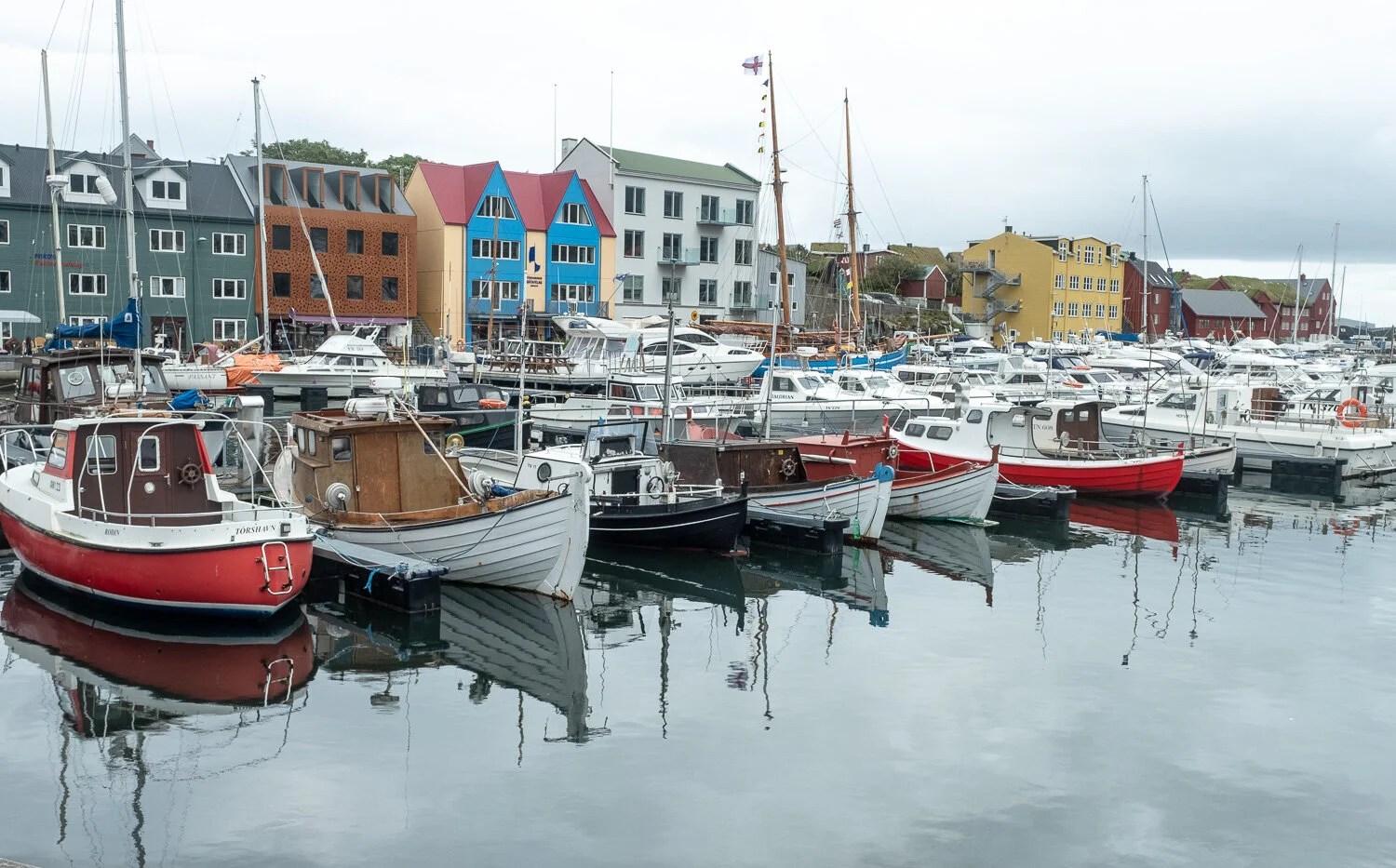
     Torshavn harbour, Faroes
    Torshavn harbour, Faroes

    So what’s it like at the helm on the night watch when the seas are running and the wind is roaring past your ears? Exhilarating and terrifying in equal measure. The roar of the wind, the rain streaming down your face, cold, noisy and pitch black so that nothing on deck can be seen or recognized and the only break of light is the white of the waves and the spray seething along the sides of the boat. The bow rises up on a wave and shouldering aside masses of water crashes down on the other side throwing up a huge spray of white water in which, surprisingly, sometimes can be seen spots and flashes of luminescence from night creatures caught in the wave like trapped, watery stars. Magic!

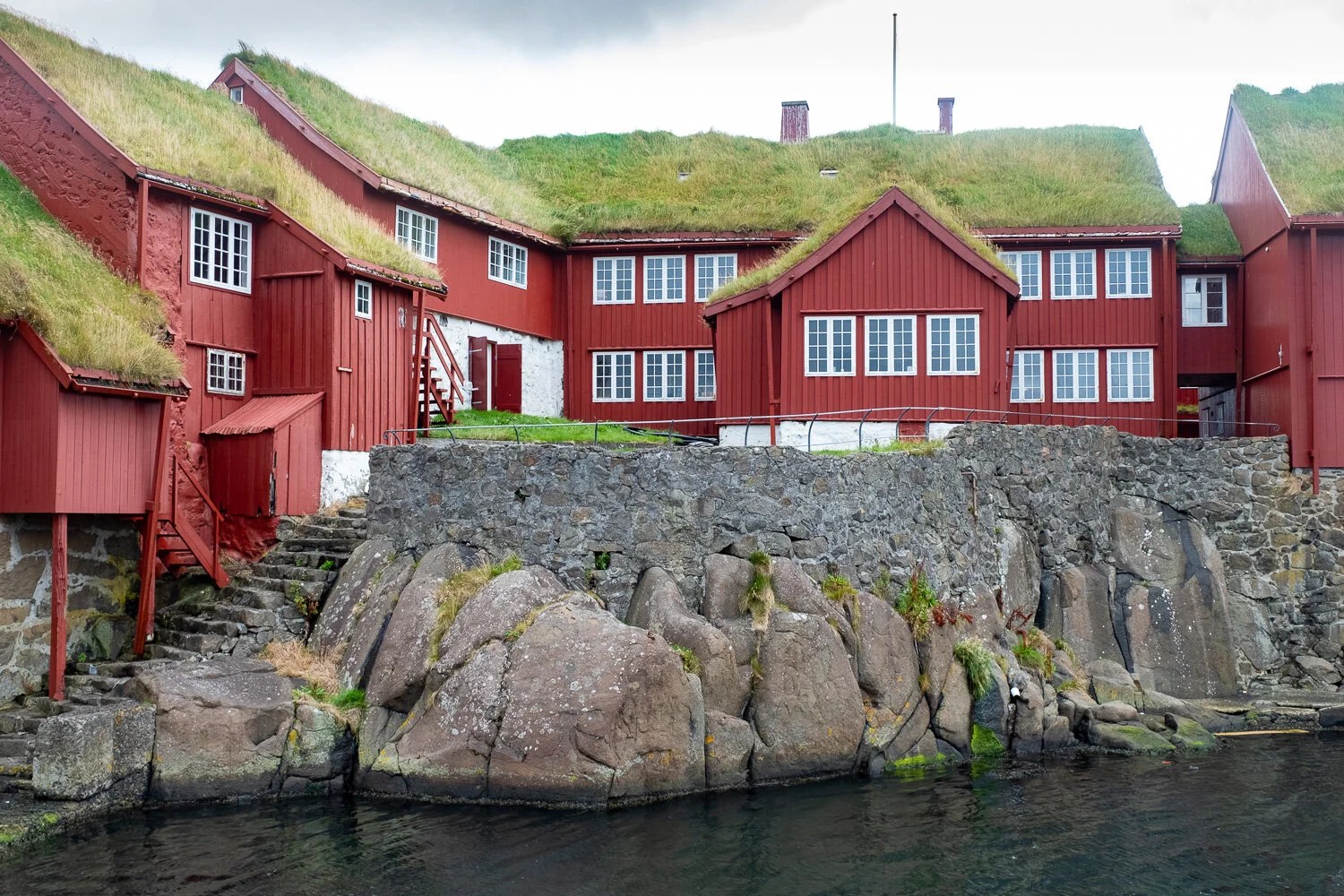
     Grass roofed houses, Torshavn harbour
    Grass roofed houses, Torshavn harbour
  • At Sea – Departing Iceland Sept. 4

    Met the ship at the dock at 6pm along with the other 11 people will be shipmates for the next 3 weeks. A very cosmopolitan group; 6 Dutch, 1 Parisian Frenchman, 1 Australian, 1 Scot, 1 American, and 1 Canadian, me. The captain and the cook are both Dutch, the First Mate is Belgian and the deckie is a young Canadian woman. A variety of ages but tending toward the more senior end of the spectrum and a gender split of 6 women and 9 men. Now, anyone who can tell me the nationality and gender of the red-head will get a prize cheque in the mail.

    Ordinarily the first night of a trip is spent in harbour, getting everyone oriented and settled in, however because there is a south-easterly storm system moving into our area in the next 36 hours, our captain decided to get us underway immediately after dinner to try and put us much distance as we can before it hits. Introductions being concluded and the rules of the boat and a safety drill having being carried out, we sat down to a very rich lasagna and a salad, the lasagna will feature later.

    We were also assigned to our watches, there are 3 watches with 3 or 4 persons to a watch and the watches are 4 hours on and 8 hours off, so in any 24 hour period everyone has 8 hours of watch duties and 16 hours off. Because we were sailing right after dinner, the watch system started immediately at 8pm and I was very fortunate to find myself assigned to that watch. I was worried that I might draw the midnight to 4am or the 4am to 8am watch, so needless to say I’m thrilled as this system continues throughout the voyage.

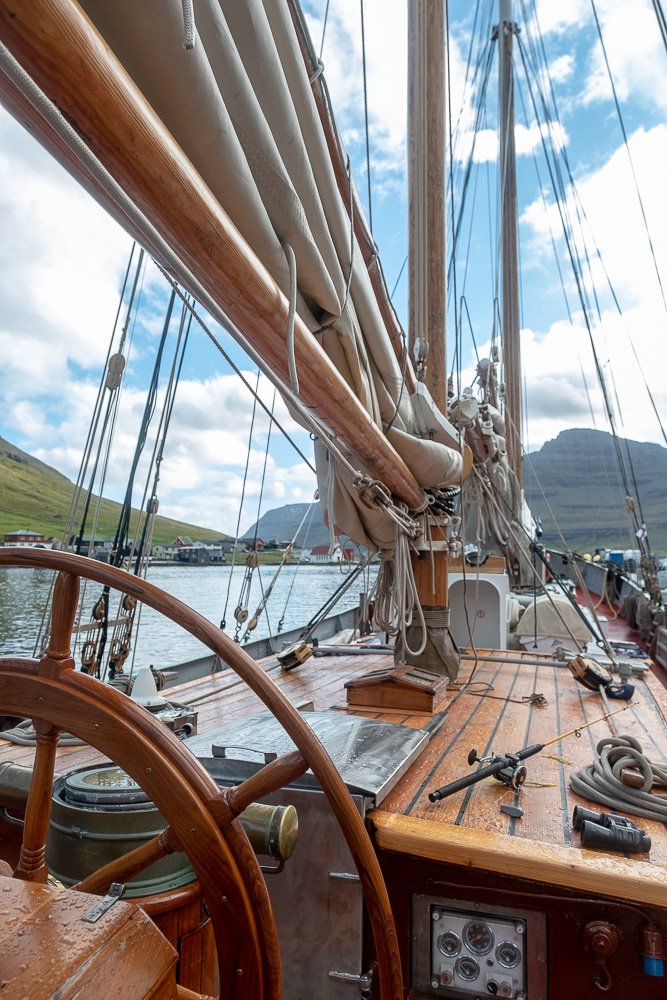
    Immediately dinner was done, lines were cast off and we were away, the task falling to my watch to carry this out, obviously the permanent crew featured largely but in my 3 person watch the Frenchman and a young Dutch woman are experienced sailors and we were able to conduct ourselves quite decently. The more significant challenge however was raising sails,  largely because of the strength involved. Our ship is gaff rigged, which is to say the main and mizzen sails each have a gaff which is a boom to the top of the sail which is required to give the sail its proper shape so that it can power the boat. Most yachts that we normally see have triangular sails so that only the boom at the bottom of the sail as well as the attachment of one side of the sail to the mast are required to give the sail stability, a gaff sail however is rectangular and needs the attachment to the mast as well as top and bottom booms to give it a stable shape. Additionally this is a large vessel so the sails are large and they are made of canvas not nylon. This all adds up to a pretty significant piece of work since the sails are very heavy, it was dark and the gaff must be raised in parallel to the boom since if one or the other ends rises too quickly and takes it out of parallel,  the throat off the gaff can jam against the mast confounding the process. It took 3 or 4 people to raise the sails and without winches, tension them. The jib was much easier as it’s a triangular sail.

     Underway we were sailing on a very lumpy sea, no breaking waves but swells about 2 or 3 metres in height which were coming at us at an angle to our starboard quarter so that when one passed under us or we passed over it the boat both rolled and pitched, remember the lasagna? A number of my crew mates were having struggles below deck, trying to sleep in preparation for their watches and the lasagna was paying dividends. I however was enjoying the ride, the wind was blowing freshly and suddenly the sky was lit with a massive band of Northern Lights, magic. Not to last however; yesterday was V’s birthday and very good friends of ours were giving her a birthday dinner which daughter Di was attending. I was just on the point of phoning her to say hello  and tell them about the Northern Lights when I was asked to talk the helm. Concentrating on steering the heading and looking down continually to check the compass, life lost its bright shine and I felt the revenge of the lasagna begin to take effect. I managed to finish my watch and crawled down to my bunk hoping for a swift death. Pitching and rolling is manageable above decks but below in a tiny, stuffy cabin, orders of magnitude difference. There is a sovereign remedy however called Kwells. If anyone does not know of these pills, get them! They are available in the UK, can be ordered on Amazon and they are as close as anything we’ve come across to manage the dire consequences. I popped one, crawled into my bunk and the world quickly returned to normal.
    Tomorrow we will continue to race the storm and leave Icelandic waters. More to come!


  • Reykjavik Kickoff

    Left Toronto for Reykjavik on Sunday evening, wanting to get to Iceland a day early to find my bearings and get acclimatized. Could have and should have flown Iceland Air but in an effort to burn my remaining Aeroplan points I flew Air Canada, very weird flight. Due to leave Toronto at 9pm and arrive in Montreal with the expectation of a 2 hour layover before the flight to Reykjavik, however the flight from Toronto was an hour late leaving and the airline decided to leave Montreal 30 minutes earlier than scheduled so barely had time to board my Iceland flight before it left at 11. Four hour flight to Reykjavik and a four hour time difference, so we were given breakfast at 1am Toronto time and landed at 3am Toronto time or 7am Iceland time so no sleep Sunday night, glad that I had an extra day to get back to normal.

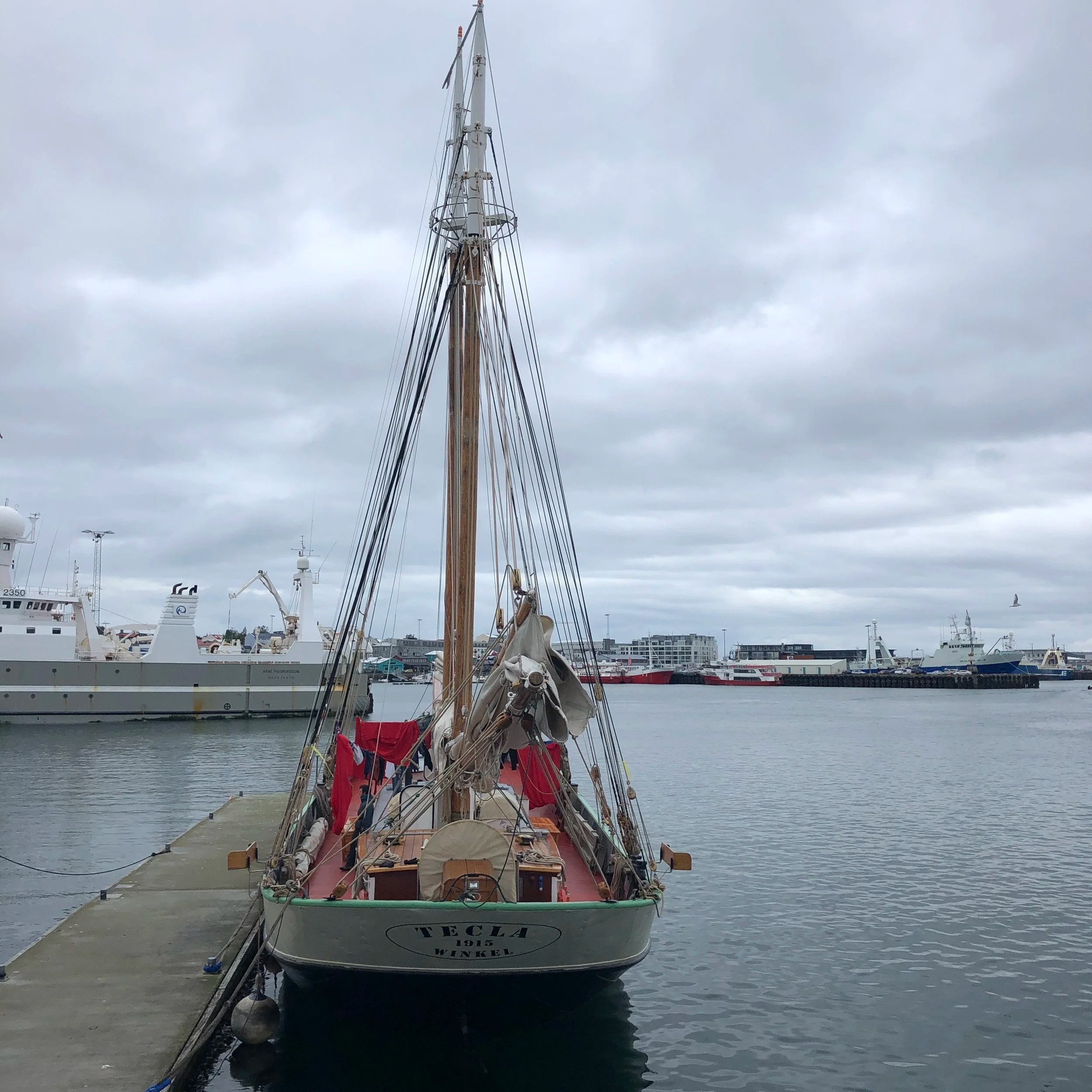
    Spent my day in Reykjavik walking and re-finding familiar places. Having left Toronto in sun and 30 degrees, weather in Reykjavik windy, cold and rainy, great weather for walking however. There is a very interesting and helpful iphone app called MarineTraffic which allows you to find any registered vessel in the world, follow its track and see where it is at any moment in time. Using the app I discovered that my boat had docked, where it was moored, found its dock on Google Maps and walked there to get a look at where I’ll spending the next three weeks. Boat looked like a marine laundry as it got ready for tomorrow’s sail, bedding and blankets hanging from the rigging despite the rain, freshly washed and airing. Very much hope that the weather improves before tomorrow, wet sheets not welcome!

    Good dinner and early bed. Tomorrow the adventure begins!

  • Iceland to Ullapool

    It’s been a while since my last post, March in Kenya to be exact, and I’m going on the road again, or more precisely, on the sea.
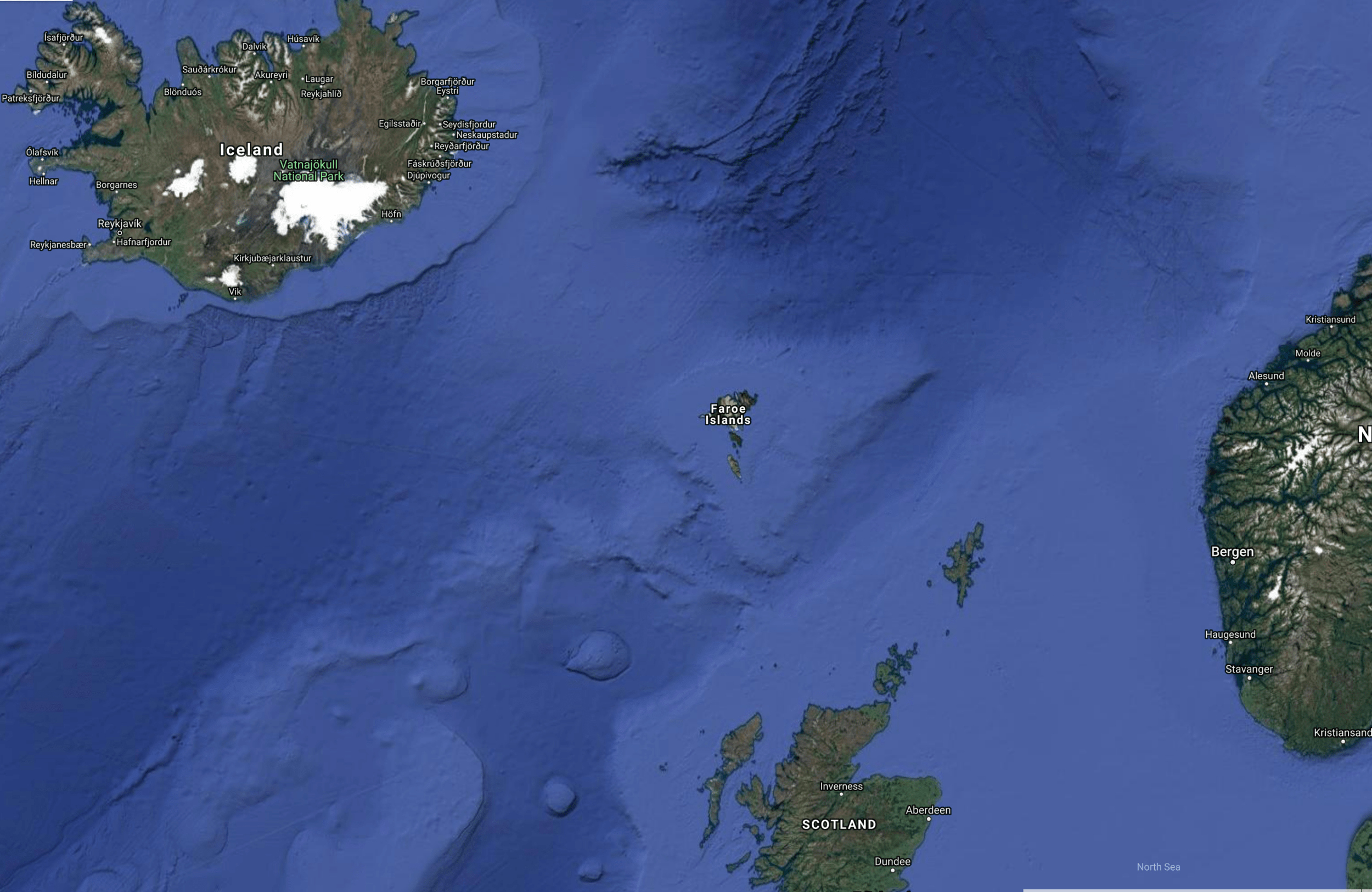
    One of the places that I’ve wanted to visit for a very long time is the Faroe Islands, which for those of you who aren’t quite sure, are located in the North Atlantic, SE of Iceland  and NW of the Shetland Islands which are north of Scotland.
    To quote the Faroe Government website, “Since the Home Rule Act of 1948, the Faroe Islands have been a semi-autonomous region, encompassed by the external sovereignty of the Kingdom of Denmark.
    The country adopts a variation of the Scandinavian type parliamentary democracy, the Løgting, which may well be the oldest parliament in the world. It was brought to the Islands by the Vikings in the 9th century and has continually governed the islands for the last 1100 years. The 33 members are elected for a period of four years by popular vote in the Faroe Islands as a single constituency. Additionally, the Faroese elect two members to represent the Faroe Islands at the Danish Parliament in Copenhagen.
    Although for all intents and purposes the islands are self-governing, Denmark is still responsible for policing, defence and justice.”
    Sounds pretty dry but there is a very rich, interesting history behind the dusty words. The Islands have been continuously settled since the 4th century, initially by Irish monks and later in the following centuries by Norwegians as well as by Irish and Scots. Many of these settlers later fled as the Faroes were subjected to Viking raids in the 9th century. However, many of the Vikings later settled in the Islands themselves and part of that heritage is the formation and development of the world’s oldest parliament.
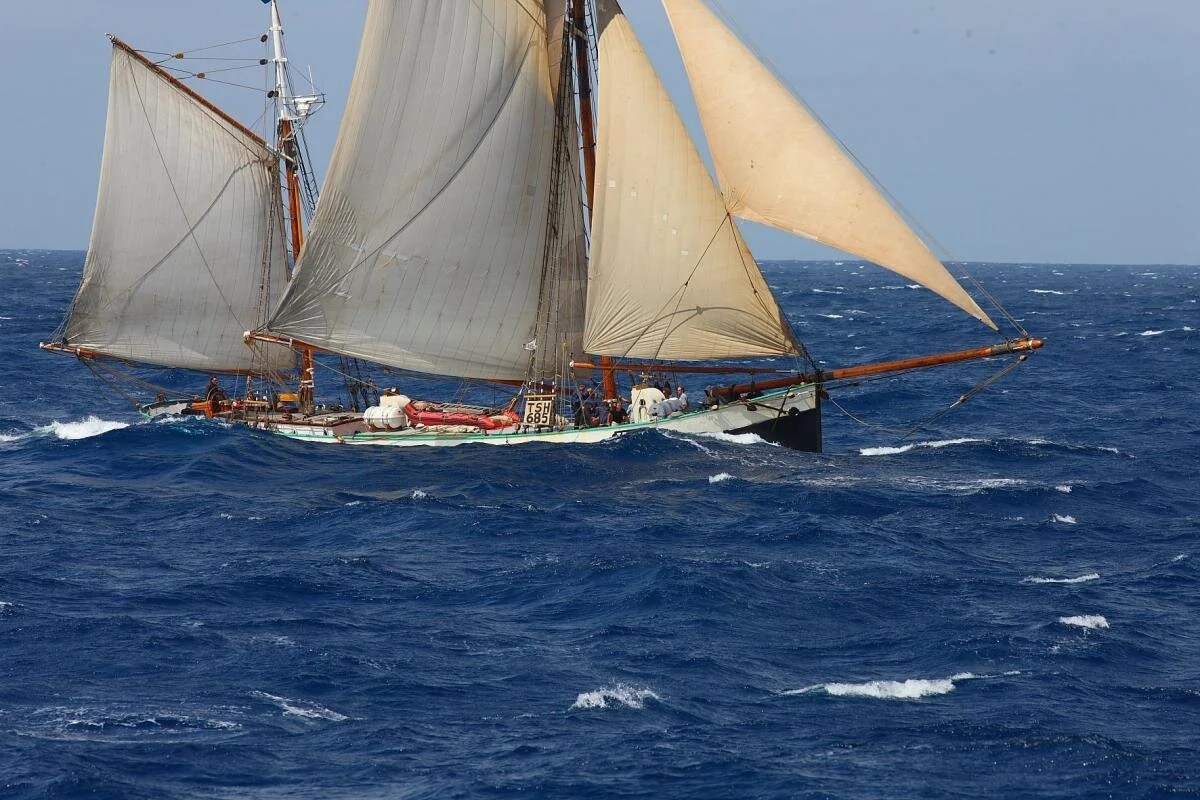
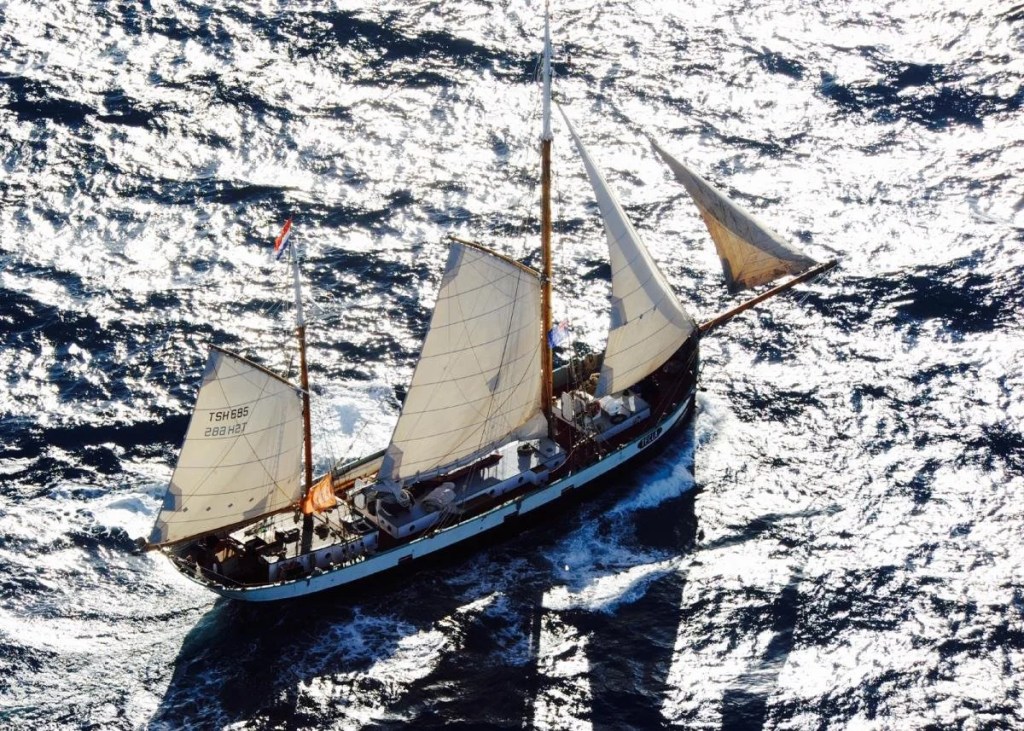
    Virtually cut-off from Europe until the very recent past, the Faroes have created over the centuries a unique culture and cuisine and a very strong sense of their place in the world. I have been fascinated by the Islands for a very long time and I recently decided that it was time to act on my interest and plan a visit. In the course of my research and planning I discovered a sailing organization that acts as an aggregation portal for a number of sailing ships that cruise and sail from and to various locations around the world. One of these, a 35 metre Dutch gaff-rigged ketch built in 1915 as a herring drifter and refitted in the 80’s as an ocean sailer, was sailing from Reykjavik, Iceland to Ullapool in Northern Scotland via the Faroes, the Shetlands, the Orkneys and on in to Ullapool. The voyage is 22 days aboard and while I’m paying for my passage, the 12 of us who have signed on are working passengers and who, with the 4 permanent crew, will be working the boat for the duration of the voyage.

     The Shetlands and the Orkneys are the two little groups of islands to the north of Scotland
    The Shetlands and the Orkneys are the two little groups of islands to the north of Scotland

    I’m very excited, but the North Atlantic in late September is a little daunting. I pick up the boat in Iceland on Sept 3 and we land in Ullapool on Sept 24. I know nothing of my crew mates, though we will be sharing cabins, but that’s part of the adventure. V will definitely not be along on this trip, not hard to understand why, but she will be flying over to Scotland and meeting the ship in Ullapool.
    So, I’m scrambling trying to make sure I’m organized and packing all the right things for a September, North Atlantic ocean sail.
    More to come!

  • Kenya  07/03/2018

    Time has passed and we have left the Mara and are in the village of Shela on Lamu Island, a small but very happening spot in the Indian Ocean off Kenya’s northern coast, but more on this later. 

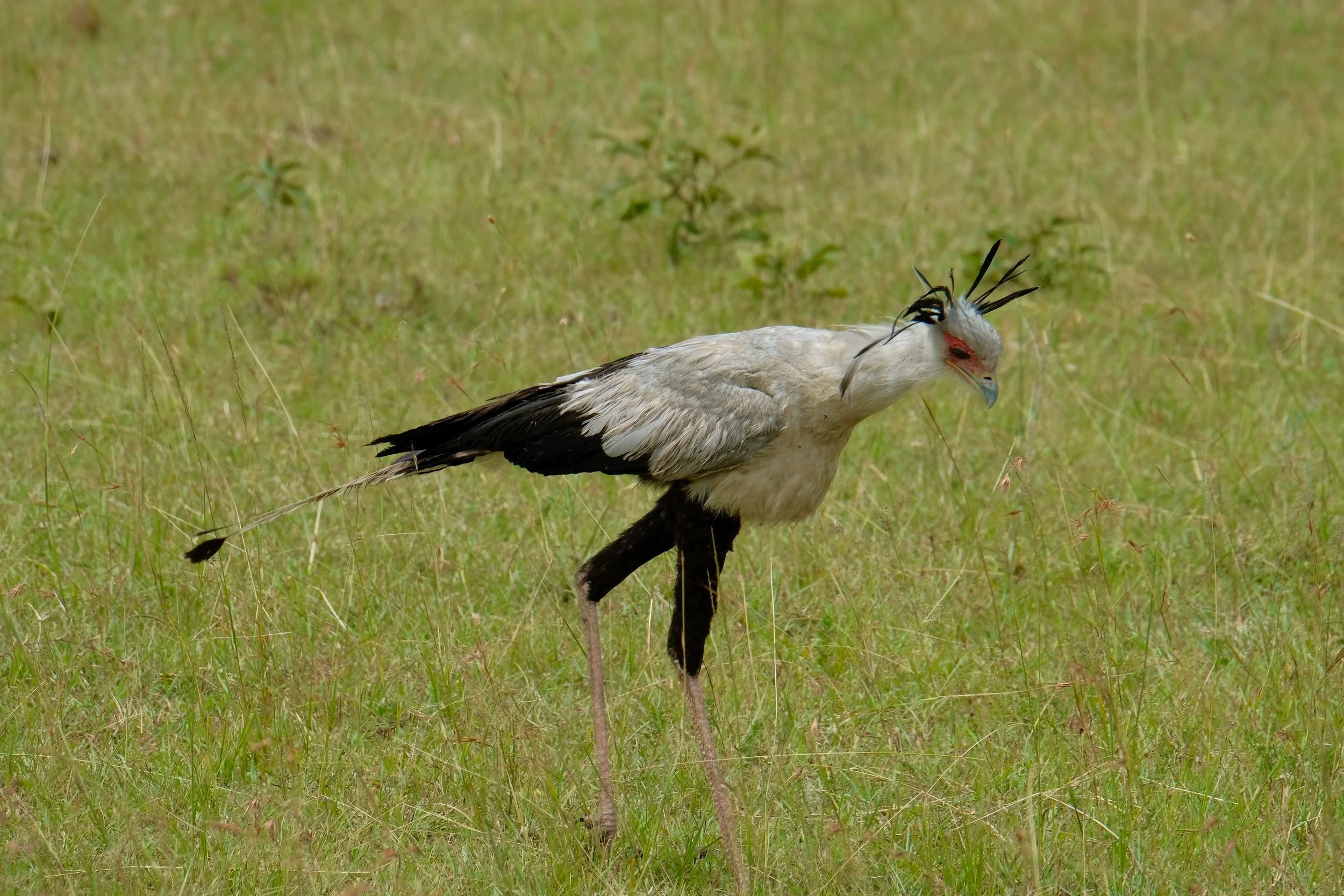
     Secretary bird searching for snakes
    Secretary bird searching for snakes

    Since I last added to the blog the rains appear to have arrived; the rainy season usually begins in late March or early April and we chose our time to come based on arriving before the rains began, while the grass was still short and while the opportunities for observing and photographing were at their best, however…..the rains have arrived. We spent our last week driving into the Park every day as well as spending time in our own Conservancy which meant that most days we were out for 10 or 12 hours in our vehicle and on one occasion we left at 6am and finally returned to the camp at 7:30pm, very long day. On only one day did we get persistent rain in the day but on most days while heavy clouds continually passed overhead, we were only occasionally interrupted with an intense burst of rain lasting 20 or 30 minutes. The long steady rains seemed to time themselves nicely to arrive in the evening and then pour overnight so we were relatively rain-free during the day, but the tracks and trails became very boggy and getting stuck was a continuing concern.

    Guide John, in the course of chatting, mentioned that there was a weekly market held every Thursday in a village about 30k away which was the major market in the region for cows, sheep, goats and vegetables. Couldn’t miss this opportunity so although it had rained heavily overnight we chugged our way over and through stretches of deep mud and mire to the market, took us about 90 minutes to cover the distance, not including the time it took to raise the Land Cruiser on a jack and change a flat tire. One fascinating occurrence along the way; shortly after replacing the flat we saw, about 20 metres off the side of the track, a dead zebra lying on its side. There were no marks or wounds and it must have occurred only moments before as none of the carrion cleanup crew had yet arrived and John surmised snake bite, a black mamba or puff adder. Plowing on we arrived at the market and spent some interesting time talking with cattle owners who all seemed to be friends of John and who were there to buy or sell their animals. All the Masai appear to own cattle, including John and the other men who work at our camp, a Masai without cows seems to be an oxymoron. We were told that the market was smaller than usual since the overnight rain had swollen rivers and creeks and made them impassable for many cattle traders and only those in the local area were able to attend.

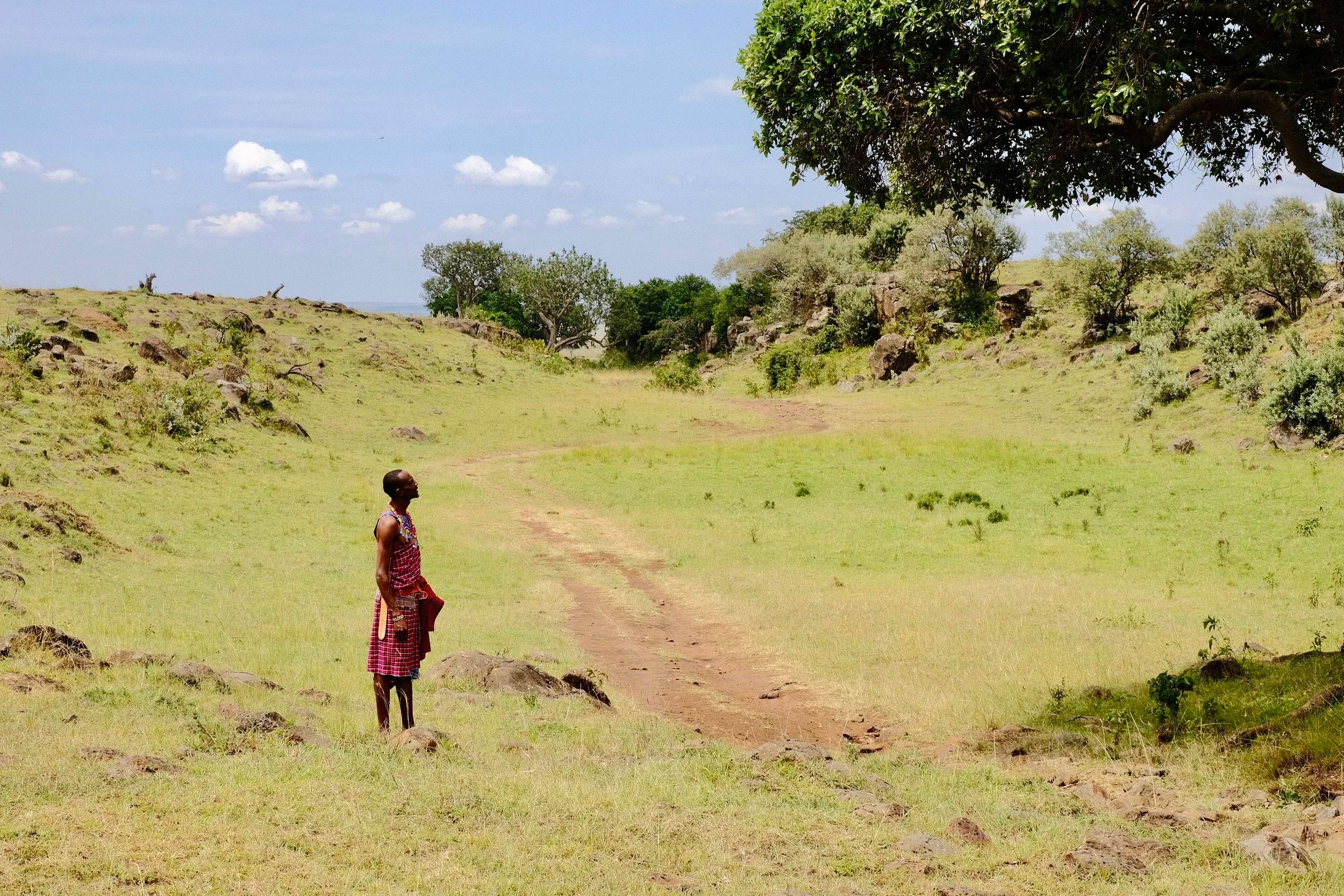
     John in Leopard Gorge
    John in Leopard Gorge

    We are very struck by the Masai, both men and women, who compare very favourably with other tribes that we have met in other parts of the continent. Both men and women are much more soft-spoken, straightforward, open and notwithstanding their reputation for ferocity, surprisingly gentle. Everyone that I talked with about their cows and their animals was happy to chat and seemed easy and relaxed and, I’m trying to find a culturally acceptable way to frame this thought, were very sure of themselves, an equal to all they met. They give the impression of knowing who they are, knowing they are important in their world and not having anything to prove to themselves or others.

    On our way back to the camp a couple of hours later we passed the remains of the zebra, surrounded by 3 different species of vulture and some hyena, and nothing remained but a stripped rib cage, 400 kg of animal completely reduced to bare bones in a couple of hours.

     Elephants climbing the side of Leopard Gorge
    Elephants climbing the side of Leopard Gorge

    Our days in the Park were spent trying to find the 5 cheetah boys, never did, and the leopard and her cubs, never did. The cheetah boys seem to be still in the south somewhere near the Tanzanian border and the leopard has completely disappeared, no one has seen her or her cubs since the day of the hunt and although we stopped every vehicle that we passed and asked for word of the leopard, no one had seen any the family, so we left on our final day without sighting her again. In wildlife photography as in shopping, Moscow Rules prevail!

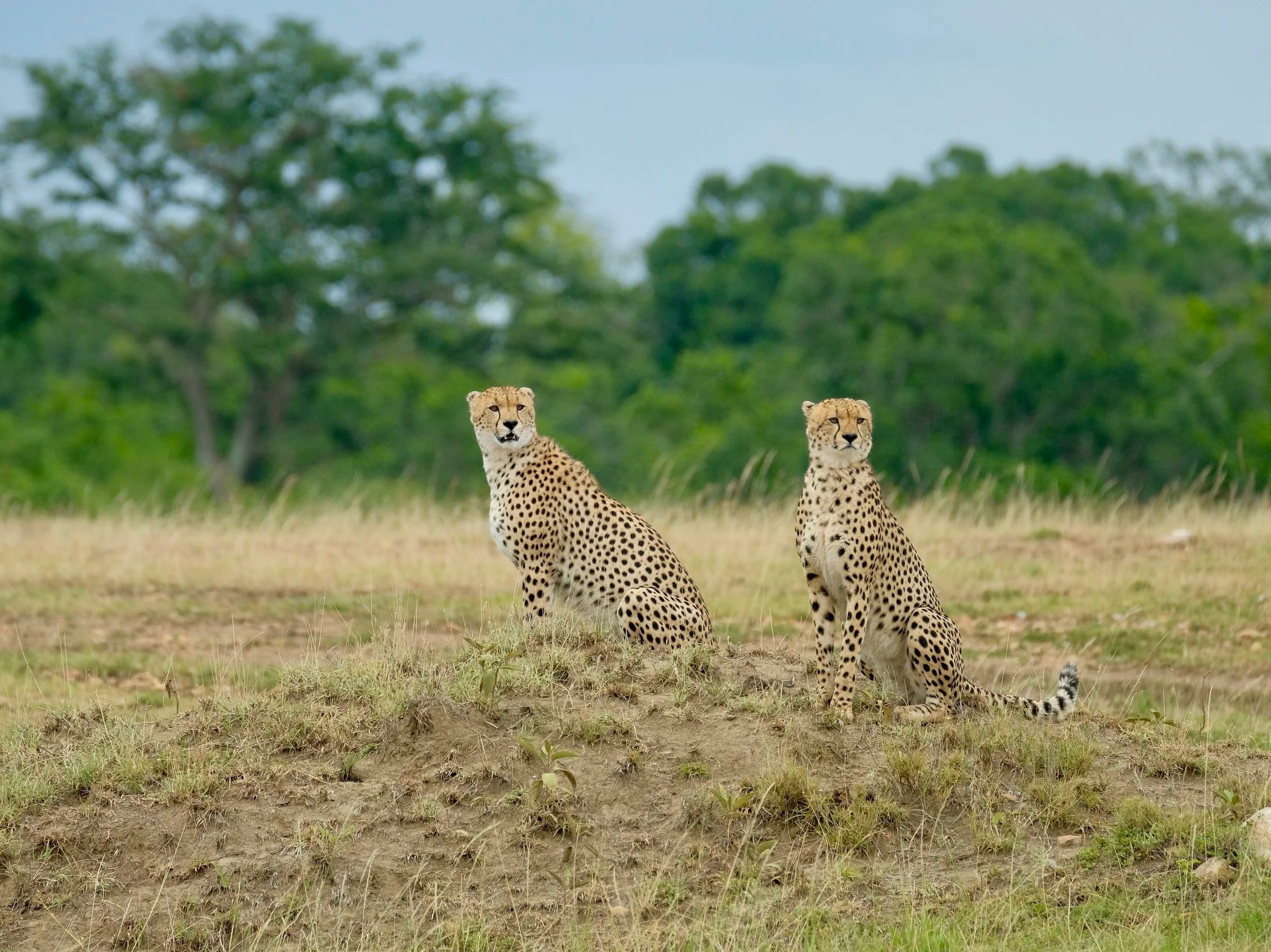
    We did have one extraordinary occurrence however, and one that does not appear to have a happy ending. We drove into a section of the Mara where a mother cheetah and two of her younger children had been seen. By younger I mean possibly 2 years old, certainly old enough that they would normally be kicked out the parental cheetah’s basement and told to go and earn a living. These three had been hunting together and as it turned out mother cheetah was Malika, a very famous cat, and one we had been trying to find when we were here 4 years ago. Malika is very well known as she has overcome some pretty remarkable odds, her mother having been killed when she was still a young cub. This would normally have been a death sentence for her, cubs just aren’t able to survive on their own, but survive she did, partly as the result of figuring out that safari vehicles, far from being a danger to her were actually able to help her. She seemingly had the habit of leaping on to the hood of vehicles to eat her catches while hyena had to stand by and watch, where normally they would have taken any small catches she made and either starved her to death or killed her outright for food. By a variety of wiles she managed to reach adulthood and is known to all the guides in the Mara. In fact the 5 cheetah boys that we have been trying to locate and the ones about whom the BBC is making a film are all Malika’s children.

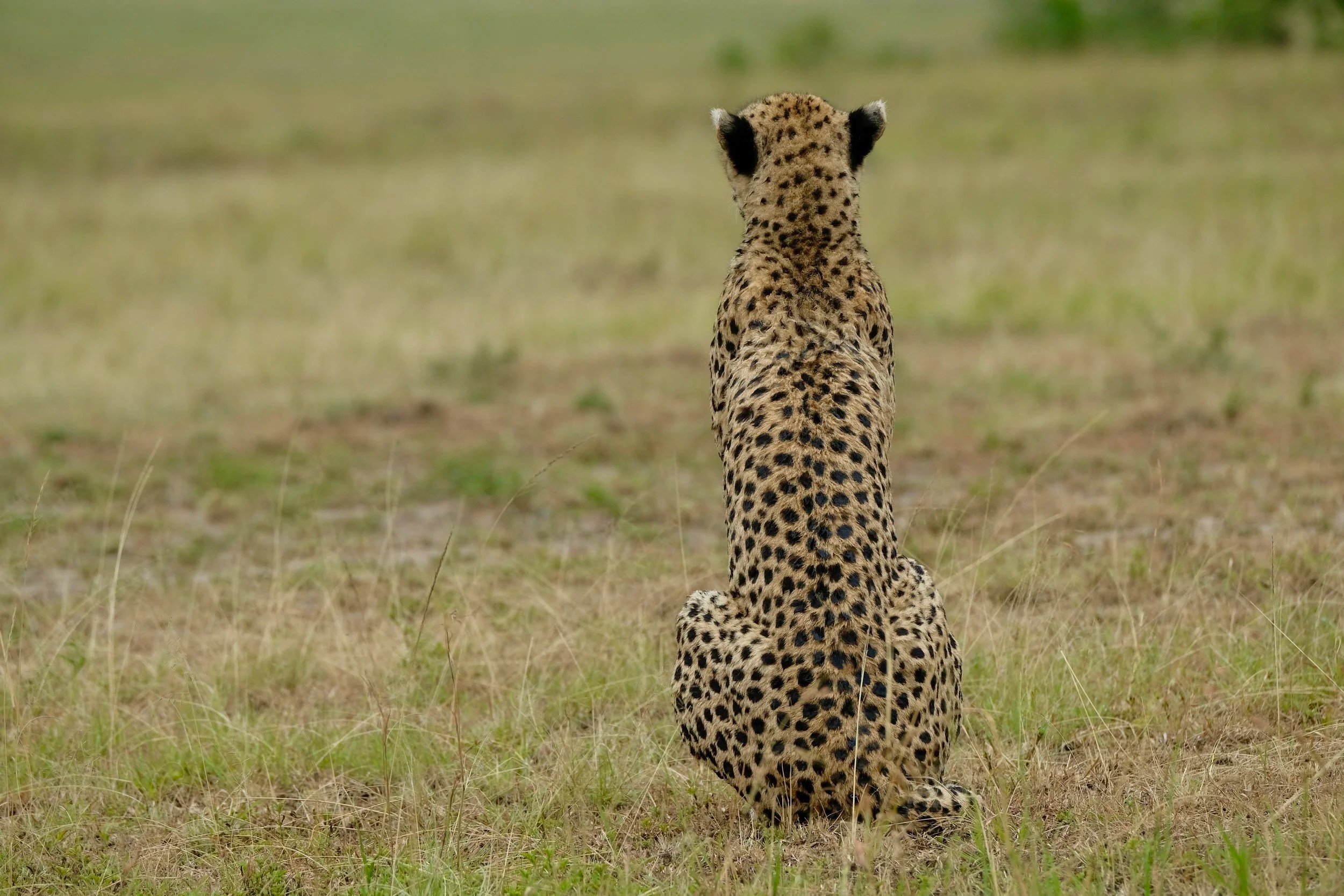
     Malika having crossed the river, sits with her back to her boys
    Malika having crossed the river, sits with her back to her boys

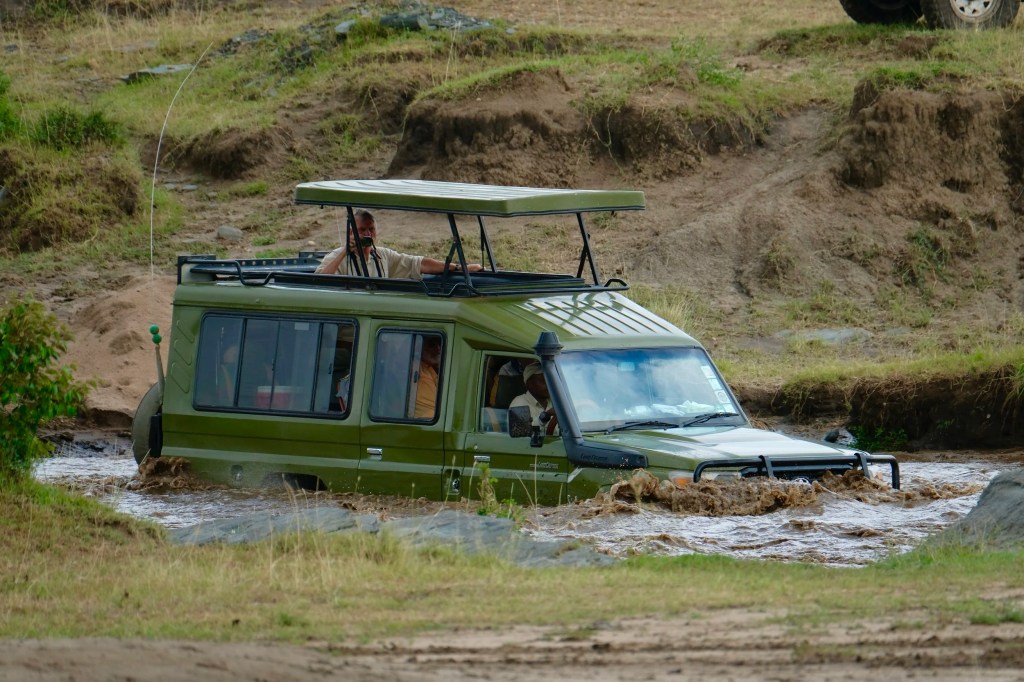
    We had crossed the river the previous day to try and find Malika and the water at that time was over our hubcaps and was running quite briskly but we had no success finding Malika. Next day when John heard that she had been seen in the same area and we arrived at the river, because of the heavy rain overnight, the water was now racing and much higher. We decided to try and cross and the water was now over the hood of the vehicle and seeping under the doors into our car; we were naturally concerned that if we became stuck getting across it would be quite a job to get help pulling us out while the water continued to rise. However cross we did and found Malika and her two youngsters and stayed with them; there was not much game within distance for them and they very surprisingly, but maybe not so surprising given that it was Malika, decided to cross the river and try a new hunting area on the other side. The river was about 8 or 9 metres wide with a drop of about 2 or 3 metres from the top of the bank to the river below and we watched as Malika somehow made the jump and landed safely on the other side. The two youngsters however were very unhappy and could not muster the courage, they continually searched the river bank, ran a little way to the edge and then halted just before making the leap. They then climbed a termite mound at the side of the river bank and yelled to Malika on the other side. She paid no attention to them and sat with her back to them for about 10 or 15 minutes. We during this time, raced back to the other side of the river where Malika now was and waited to see what would happen. When she realized that nothing was going to induce the youngsters to make the jump on their own, she walked to the river bank and found a spot where a small mound of grass earth a couple of metres in length still protruded above the water about a third of the way across the river and stood and growled at them and I guess basically told them to get their furry tails across. So mustering their courage they bounded to the little island and since there was barely room for all four legs, immediately bounced to the bank on our side. The second youngster was not so lucky and fell short of the bank after leaping from the island and barely scrambled out of the water, while being pulled downstream by the river. As the day was drawing toward sunset we left them knowing that now they were on our side of the river we would likely be able to find them the following day. 

     Unhappy cheetah boys calling Malika now on the other side of the river
    Unhappy cheetah boys calling Malika now on the other side of the river

    On our way home the rain suddenly sheeted down in torrents and with all windows and rooftop hatches tightly locked down the rain still managed to seep its way into the truck. It was slightly terrifying to see flat savanna suddenly turn into a lake as far as the eye could see and the tracks and trails become racing streams. Driving was problematic since we couldn’t stop without sinking in the mud and becoming truly stuck. We were also aware that if we had not crossed when we did we would have been stuck on the other side of the river cut off from our part of the Mara and with no way to get back. 

     Pacing nervously before attempting the jump
    Pacing nervously before attempting the jump

    We finally caught up with the 2 cheetah youngsters the day before we left the Mara but no Malika to be seen anywhere. John guessed that she had crossed back over and left the two youngsters, using this as her opportunity to toss them from the nest and make them fend for themselves. We left the following morning to fly to where we are now, Lamu. On our drive to the grassy airstrip in the midst of the Mara savanna, John told us that Malika had not been seen since the rainstorm and the speculation was that she had tried to recross the river to leave the youngsters and the river being so high, had misjudged and been swept away. I asked John to text me if he had any further news, either a sighting of Malika or if her body was found but so far nothing, very very sad.

    So we are now in Lamu and I’ll save my impressions for my next post.
  • Kenya 26/02/2018

    Up at 5:30 and on the road by 6 aiming for the area of the marsh where we had seen the lionesses fighting for the submerged water buffalo the previous afternoon. On the road is a term used very loosely, since there are no roads, as there are no fences, across the wide Mara plains. There are suggestions of tracks and trails, some clearly visible marked by distinctive tracks of car tires where they are frequently used, and others barely visible. In places where the ground is soft after a rain the tracks can be very heavily rutted and everywhere there are rocks and bumps, the natural terrain after all. There are also periodic watercourses, dry at this time of the year, which require nosing the vehicle over the edge and down the rock strewn embankment, across the dry stream bottom and then back up the other side, all of this accompanied by bone shaking bouncing and tossing particularly when at speed. In a day we can cover between 60 and 80 kilometres over 8 hours of bouncing over the plains in search of animals and by the end of a day you are covered with dust over the dirt and bruised and muscle tired from constantly tensing to keep your seat and anticipate the bumps. But then when sitting down to look at the pictures, all worth it when there some good ones.

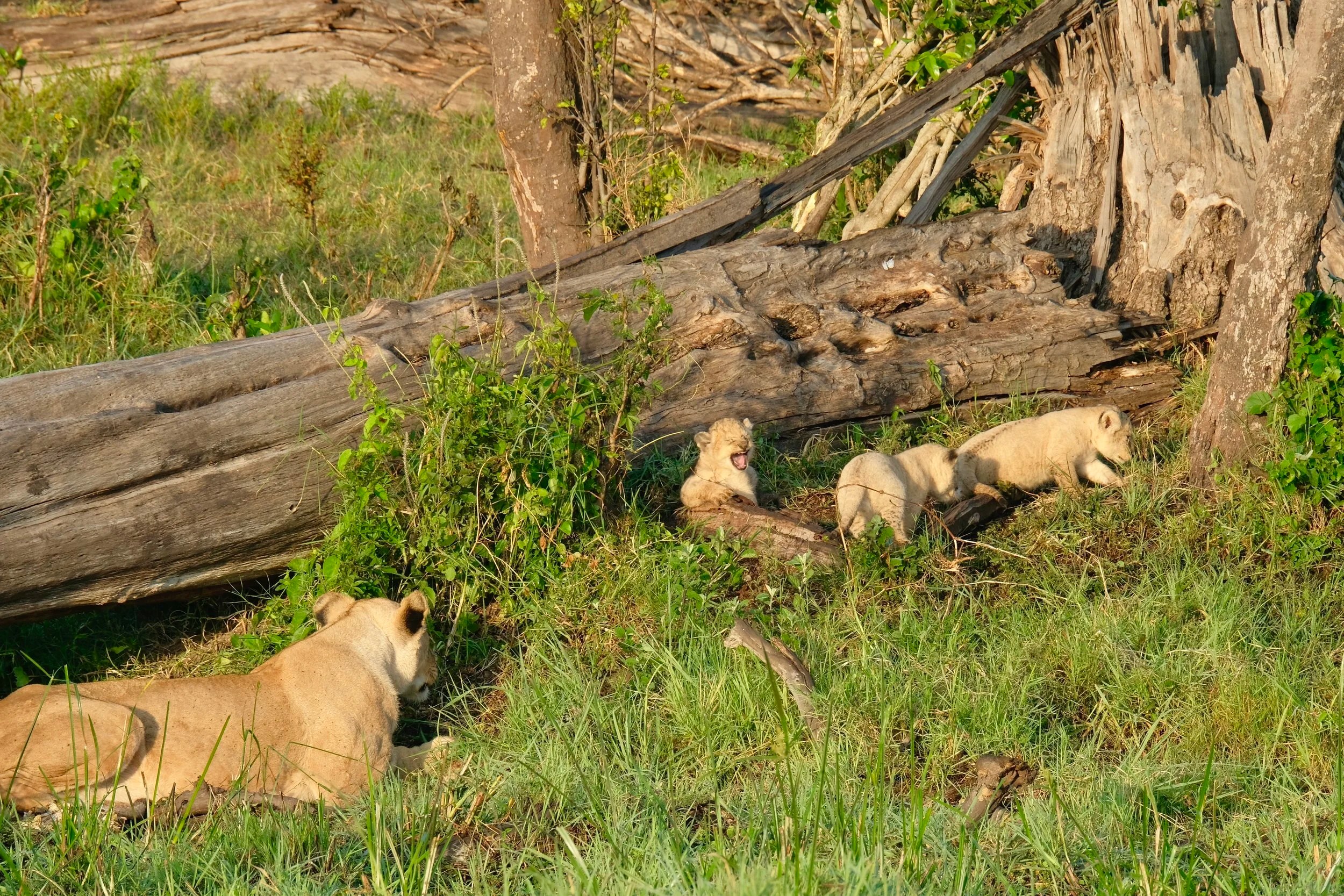
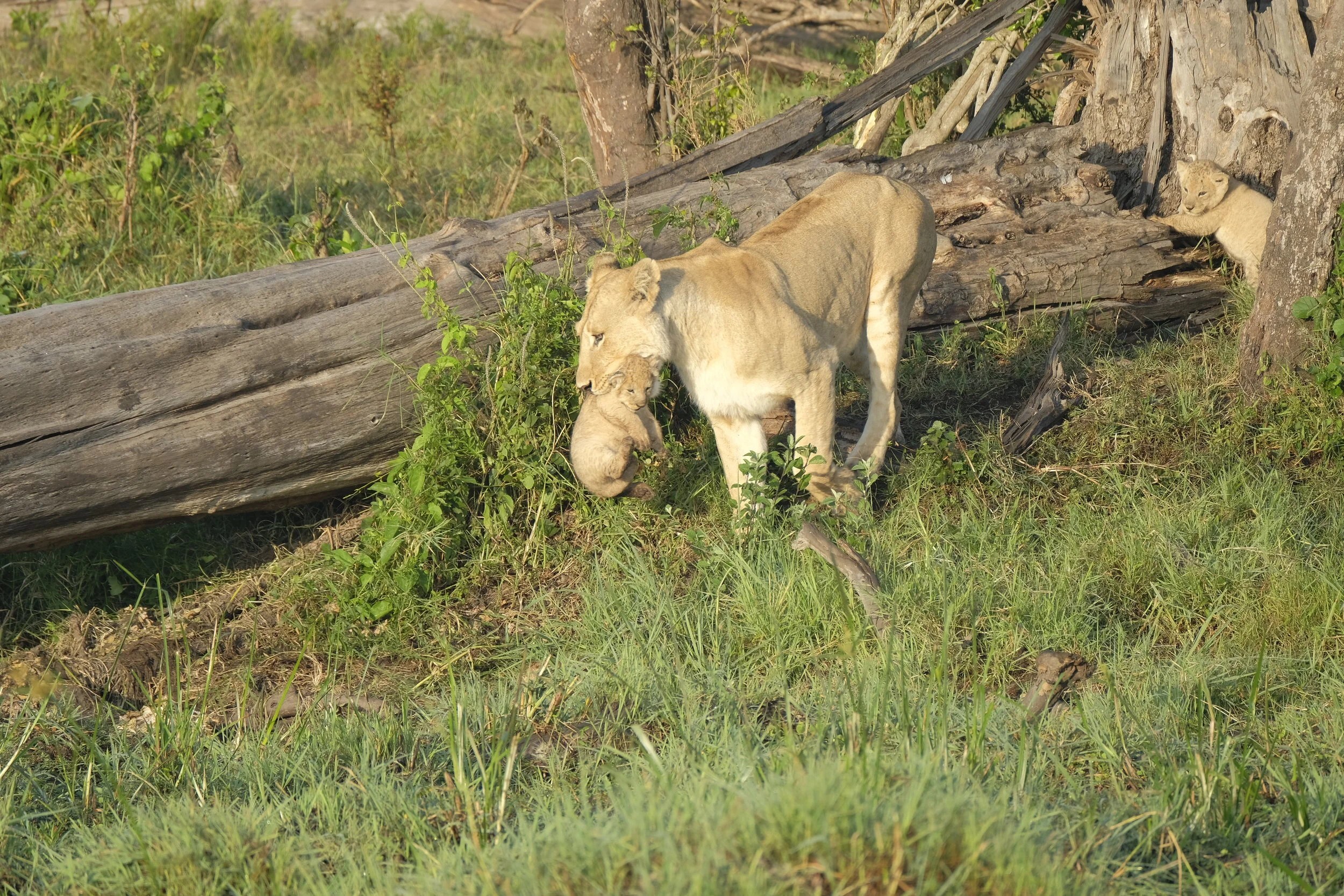
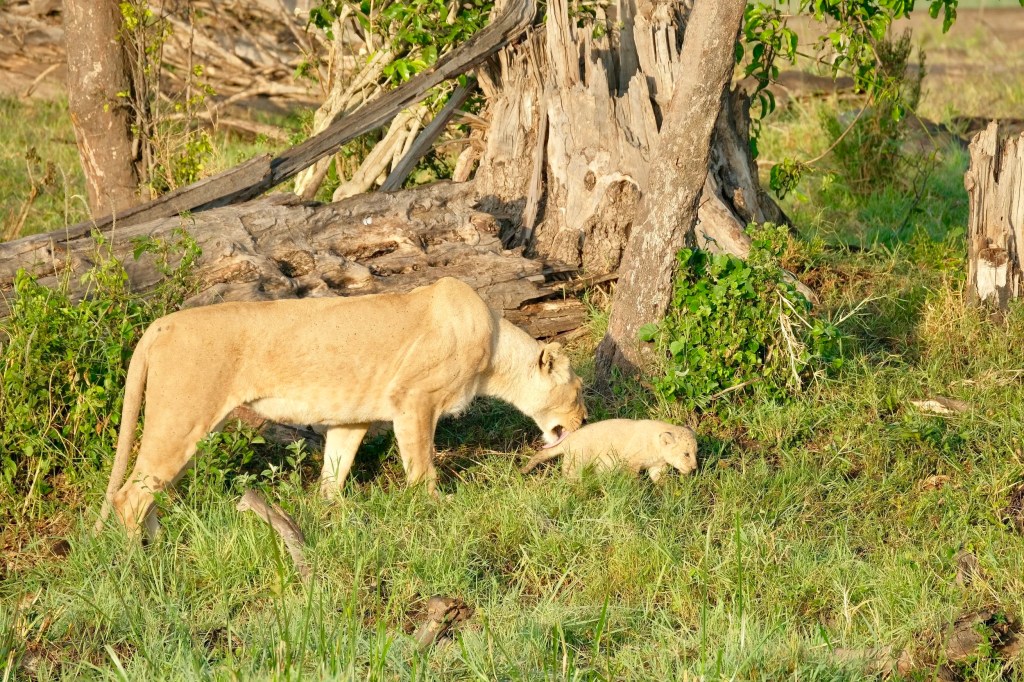
    Before we left the lionesses yesterday we had also heard that there was a lioness with three very young cubs, part of the same pride as the two fighting lionesses, not far away and in the same marshy area. Arrived on the site, we could see that the mother had created a hollow  in some dense bushes right next to the water. Because of the way that she had built and oriented the den there was only one small spot for a vehicle that gave any possibility of viewing the cubs and it was already occupied. We then left and headed back to the camp. We were therefore in a hurry this morning to be the first car on the scene so that we could claim the prime viewing spot. On arrival we were the first, but the lioness had moved the cubs in the night and after scouting we found them about a hundred metres further along the marsh shore. She had found a spot next to the water at the bottom of the bank, and under a large fallen tree so that they were impossible to be seen from above and behind but could only be seen from across about 50 metres of marsh water. We found a wonderful vantage point and spent an hour and a half just watching the mother try and deal with 3 high-octane babes, fat little legs trundling off to seek adventure and tumbling and rolling down the slope and over the fallen tree. They were only a couple of weeks old and still very unsteady on their pins but full of adventure and clearly a handful for a tired mother who had to be on the alert, particularly for danger from above because there are lots of eagles and prey birds in the trees around the marsh and any one of the little guys would have been a tasty breakfast.
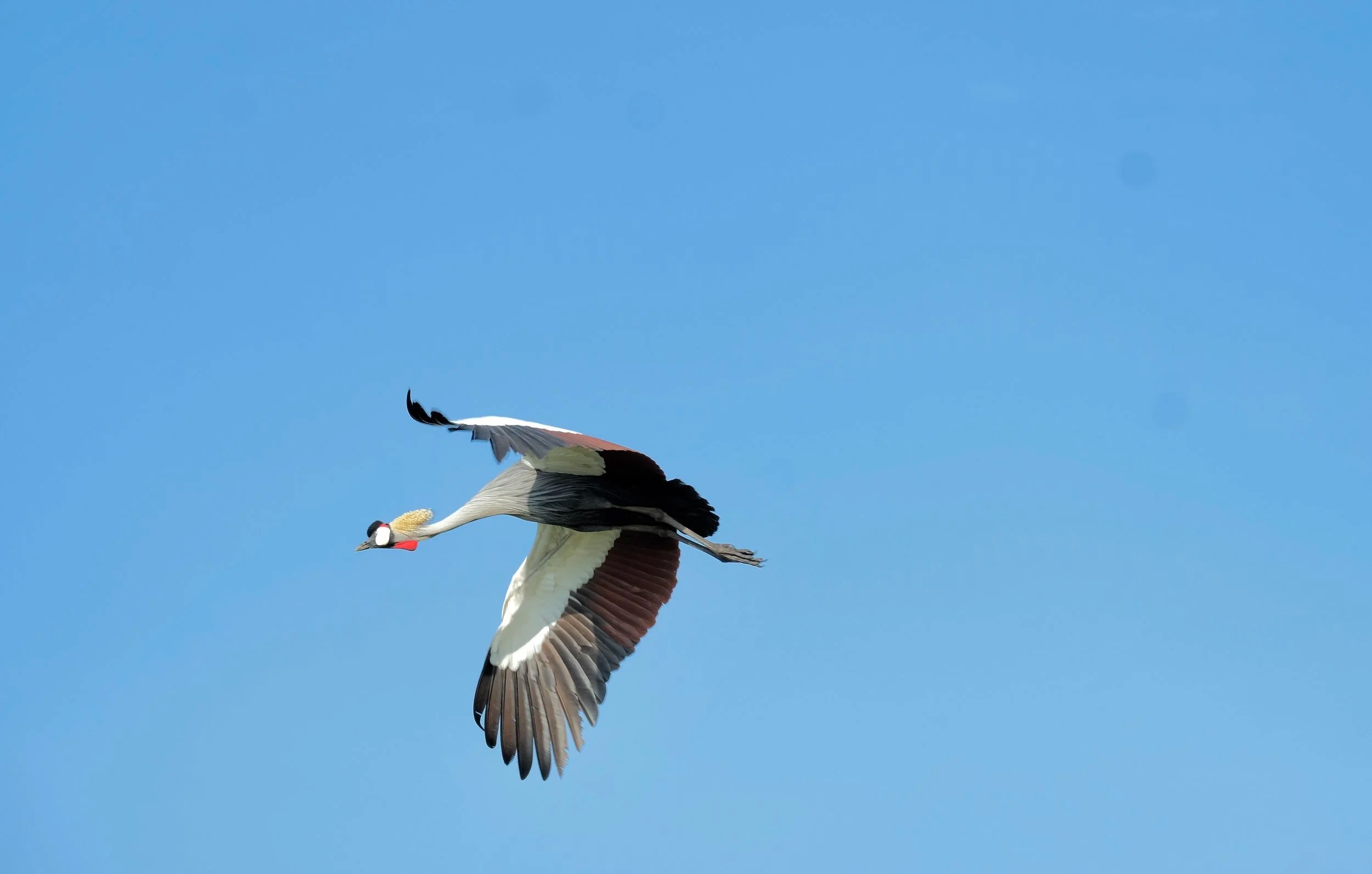
    To put the icing on it, there were suddenly cries from the sky and a troop of Crowned Cranes, my favourites, were flying in and attempting to land at their usual morning breakfast spot and on discovering a lion on the bank were wheeling in confusion, deciding whether or not they should land. Got some wonderful shots!

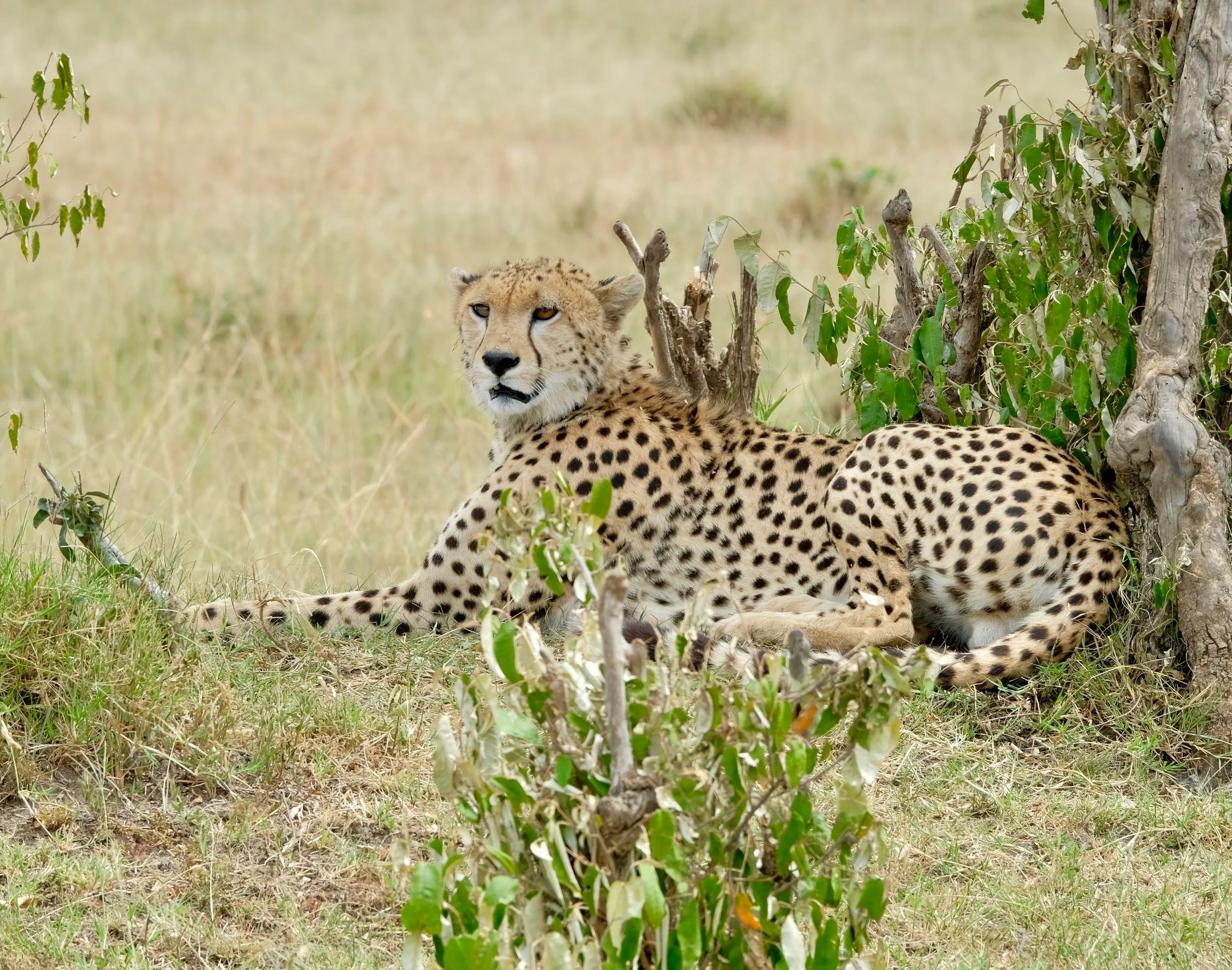
    Then off after cheetah. We were told by a guide we came across in another vehicle that the 5 boys who we were hoping to try had left in the night and were moving south toward the Tanzania border, the Masai Mara in Kenya is the northern triangle of the Tanzanian Serengeti Plain, and were being tracked and followed by the BBC cinema crew. It would have been too far for us to go, spend time and return in one day so reluctantly we decided to look for a couple of cheetah who were hunting in an area about 3/4 of an hour’s drive away. Off we went and on reaching the area, scouted around, driving and looking across the sweep of wide plains through binoculars to see if we could spot any activity. Nothing to be seen but we did come across an &Beyond film crew shooting some promo film for the &Beyond lodges. One of their trucks was stuck, its back wheels lodged in a small cleft in ground, and they were hitching up a tow from the other truck to pull it out. They very politely asked us to get out their shot as they were going to film the recovery effort and didn’t need our help but they did tell us that they had been following a pair of hunting cheetah but had lost them. They had heard however that there was another cheetah about 20 minutes drive away. Off we bounced again and much like the terrain in which we had waited for the 5 cheetah boys the previous day, we found a wide open valley with sloping hills bordering it and under a tree on a mound in the middle the valley was a solitary female cheetah. She was sitting up and keeping an eye on what was happening and it was clear that she was interested in lunch if the opportunity presented. We were able to drive up to within about 20 yards and get a couple of shots but then we retreated up the hill to get out the way as our presence was going to be a problem for her if she decided to hunt and in any event by park regulation you can be fined if you go off trail and we were definitely off trail at that point. There was not much game around and what game there was was fairly high up the hill grazing and too far for her to catch since they all had a huge head start but she was positioned so that the only access to the water hole was past her spot. It was a hot day but she would have to be very patient.
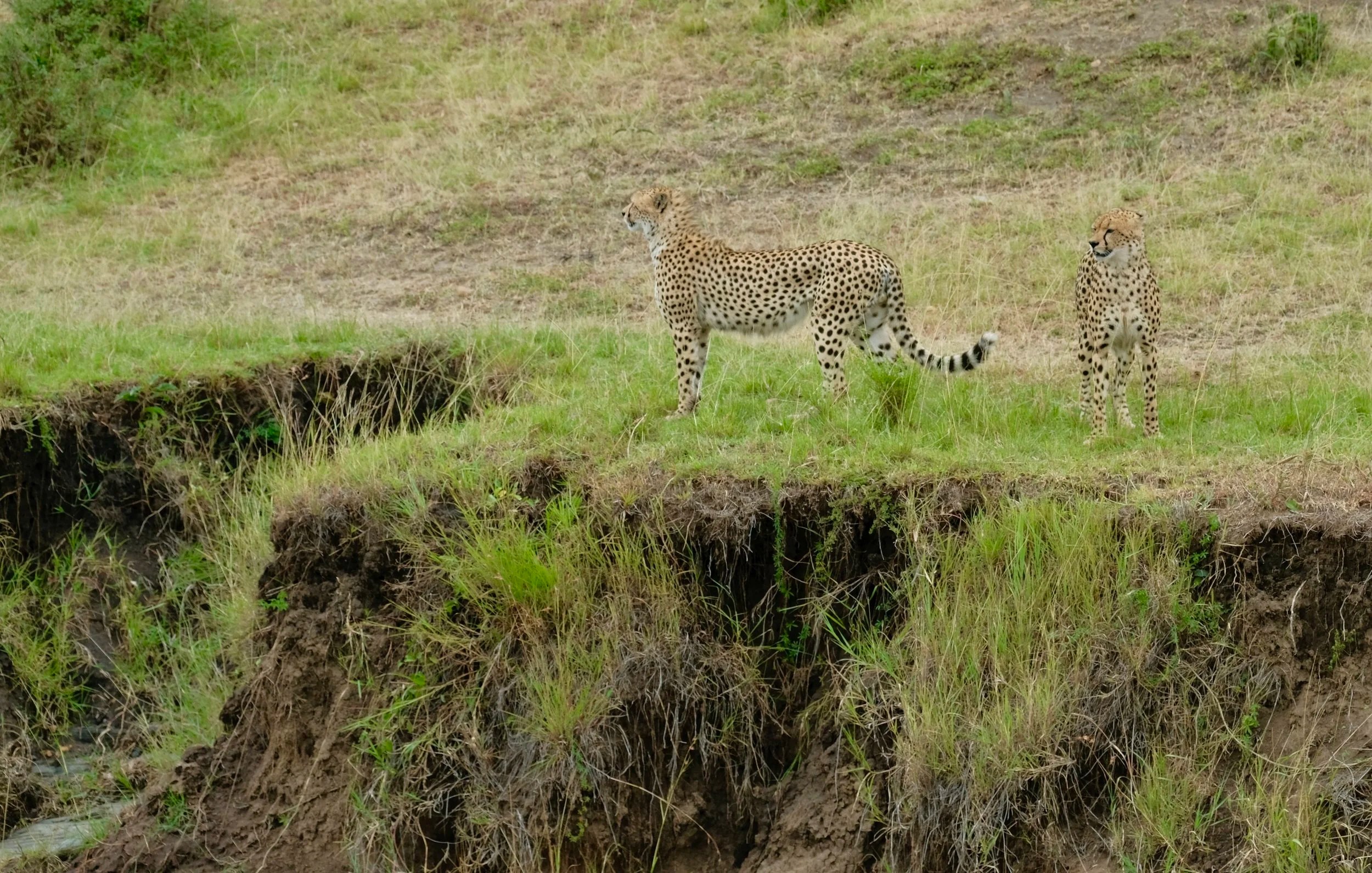
    After watching for an hour and eating our lunch sandwiches in the car, a warthog, a pumba, wandered into the area with a youngster alongside. Her interest was immediately taken up with this and it was clear that given the opportunity she would make an attempt. The pumba wandered up the hillside sometimes approaching the cheetah and then wandering further away, but never close enough for her to act. After another 1/2 hour we decided to move on; nothing was within range of the cheetah and it would likely be later in the day before anyone attempted to use the water hole, we needed to leave the park by 4, it was an hours drive to the park gates and it was now 2. So drove off but deciding to stop by the area where we had encountered the leopard yesterday.

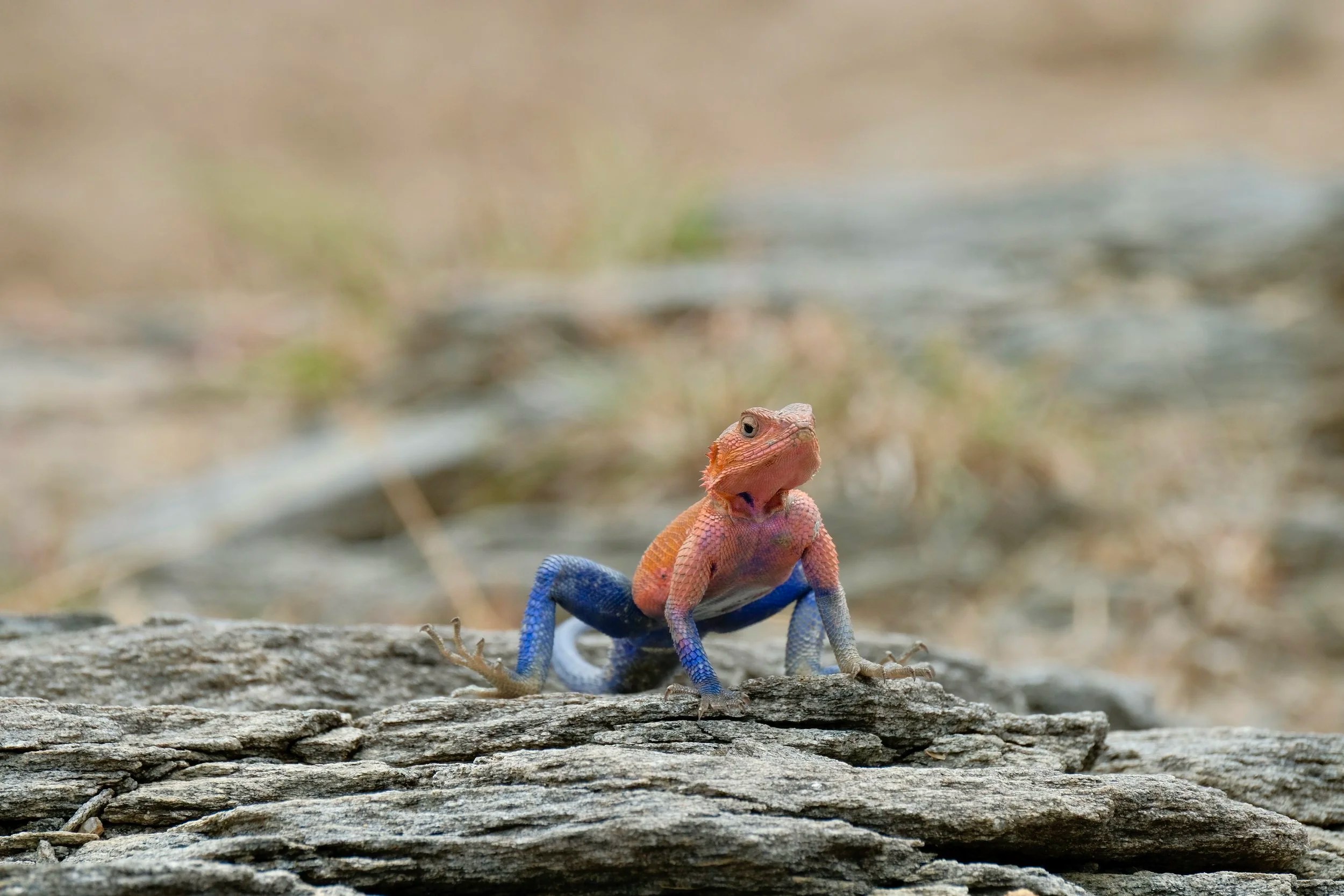
      “Superman” Lizard
     “Superman” Lizard

    The area where we had seen the leopard is a piece of land in the s curve of a small and now partly dry river. The area is surrounded on 3 sides by the trees which flank the river and open only on one side to the larger plains. It is probably 8 or 9 hundred metres in length and 6 or 7 hundred metres wide and is dry hard pan and scrub grass. When we entered the area we found 2 film trucks, one a Japanese film crew and the other an African film crew. The Japanese were the only ones around when we had found the leopard the previous day and were too far away then to be able to film it. Today both trucks were positioned in roughly the spot where the cubs were hidden yesterday and their cameras were pointed at that belt of trees. They told us that the female leopard had not hunted for two days and they were sure that she would be hungry and would need to hunt. They were standing by to film when she did.

    In the centre of the area was a family of pumba, a large male, two females and 6 piglets, a couple of whom were a good sized 20 or 30 kilos. They were grazing on the patchy grass and I was fascinated watching them. They feed in a very curious way, their necks being constructed so they cannot bend, presumably to serve as a better support for their massive and very heavy heads, so that they are forced to kneel on their front knees to bring their mouths close enough to the ground to graze. They look like they are praying as they eat and I watched as the older male went up to each of the kneeling and feeding youngsters and spent a little time grazing companionably with each one in turn. I thought that they had a very poor reputation amongst most people who see them as ugly and shy and they don’t make a very good first, or even second, impression and yet a happy family group, dad spending to time with each of the youngsters, being friendly and supportive.

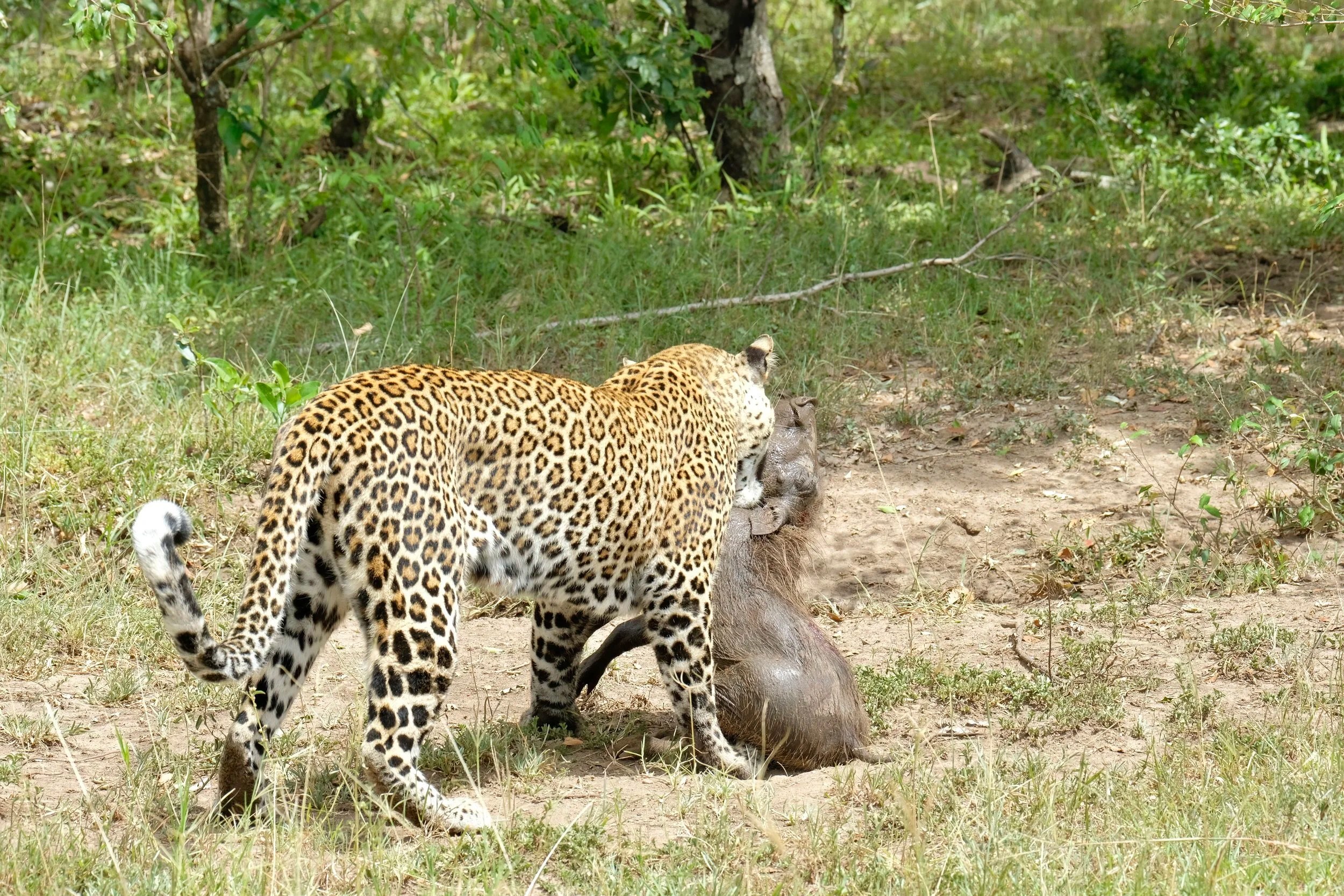
    At this point, our guide John told us that he thought that the leopardess was  going to come out of the far side of the trees and not here where we were, instinct I guess. He immediately started the Land Rover and yelled to the film crews to turn their cameras. At that moment, a movement could be seen on the far side of the area and streaking out of the trees on the far side and angling towards the pumba family, the leopardess charged so quickly that although I ripped off my hat and glasses and grabbed for my camera I could not get the camera to my eye before she charged at one of the youngsters that she had selected. The pumba family scattered, racing for their burrow and a couple managed to get down the hole but the chase, across our front and parallel to where were, was almost over. In the space of 50 or 60 metres the leopardess had caught a youngster, leapt on his back, dragged him to the ground and picking him up in his mouth, notwithstanding that he weighed 20 plus kilos, raced back to the shelter of the trees. Literally in the blink of an eye it began and ended. Not slow, John had us racing over the ground towards where the leopardess had entered the trees just preceded by the male pumba, who I guess was going to take on the leopardess if the issue was still in doubt. We reached the spot in the trees seconds after the leopardess where she stood in an open patch a couple of metres from us with the pumba in her mouth, her sides heaving; the pumba who while still twitching, was clearly finished. The brave male watched for a moment and seeing that it was pointless scurried back to his family. The film trucks had just begun to move over to us from the other side so lost their filming opportunity and because of the speed of the moment and the bouncy race over the ground, shooting was also impossible for me. Nevertheless, a terrifyingly intense primal moment; being somewhat of a sentimentalist I felt for the pumba family, a little crutch at the the side of the fire who has lost its owner, while at the same time being pleased that the leopard cubs were not going to bed with empty bellies.

    We watched the female carry the young piglet into the trees and haul it up into a tree and secure it on a branch above the reach of hyenas who had already had word of what had happened and one of whom was already sitting outside the belt of trees waiting. The tree cover was much too dense for us to get the iconic shot of a leopard next to its kill draped over a tree branch but we did not need it, it was enough to have been there.

    Very tired and sore we made our way back to camp and have given ourselves permission to take tomorrow morning off and sleep in. We’ll begin the process again tomorrow afternoon but we need the morning to rest our bruises and get caught up with more mundane chores.