• Buenos Aires – Monday, March 6

    I write this from my hotel in BA after a couple of days rich with incident as our Victorian predecessors might have said. I’m writing this in haste as I’m leaving shortly for the airport and my flight home but I did want to post an update before I left.
    Interestingly, I’m looking out at my hotel room window at a phenomenon that I’ve never seen quite so well illustrated. The sky is very high and very blue and there are two layers of intermittent clouds clearly delineated. One layer is swiftly passing in from of me from right to left and the higher layer is scudding by from left to right., absolutely diametrically opposite directions but perfectly synchronised as to speeds and directions.

    I started to tell you about my final days on Le Boreal. In my last post I described my first day on SGI on Sunday, February 27. As we were at sea on March 3 when I wrote of these events, what I didn’t say was that on February 27, the captain announced that there was a single case of a crew member testing positive for Covid. This was baffling because we all, crew and passengers, had been given PCR tests and a Negative result was required to enter the ship. This test was in addition to the tests that we all had to take to meet Argentinian entry requirements. For a case to arise after a lapse of 10 days at sea seemed, curious. We were all assured that all steps would be taken, it was only a one off, safety protocols would be increased, etc. This is not intended to make light of it but simply to say that the sense seemed to be that it was a statistical outlier, an anomaly.

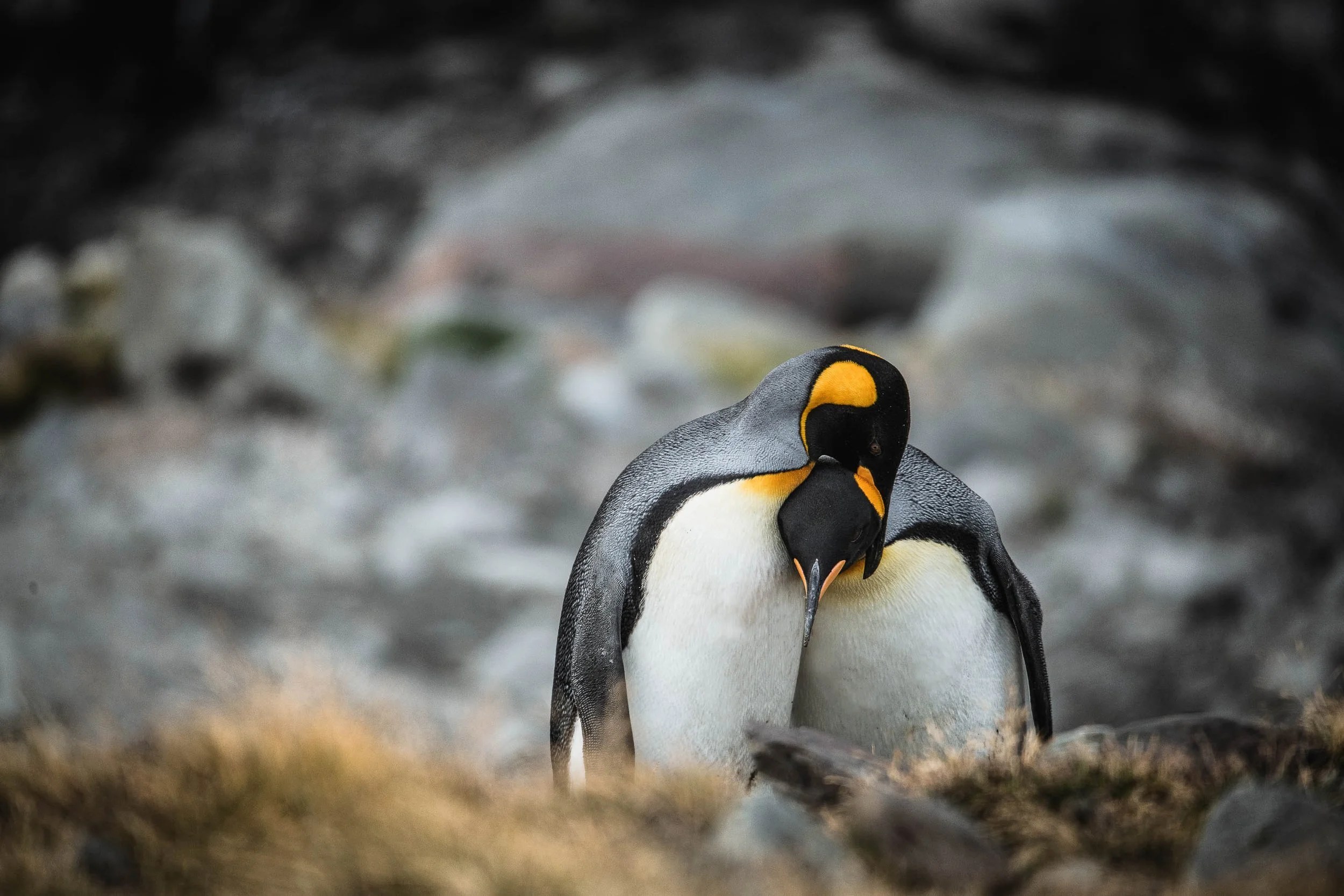
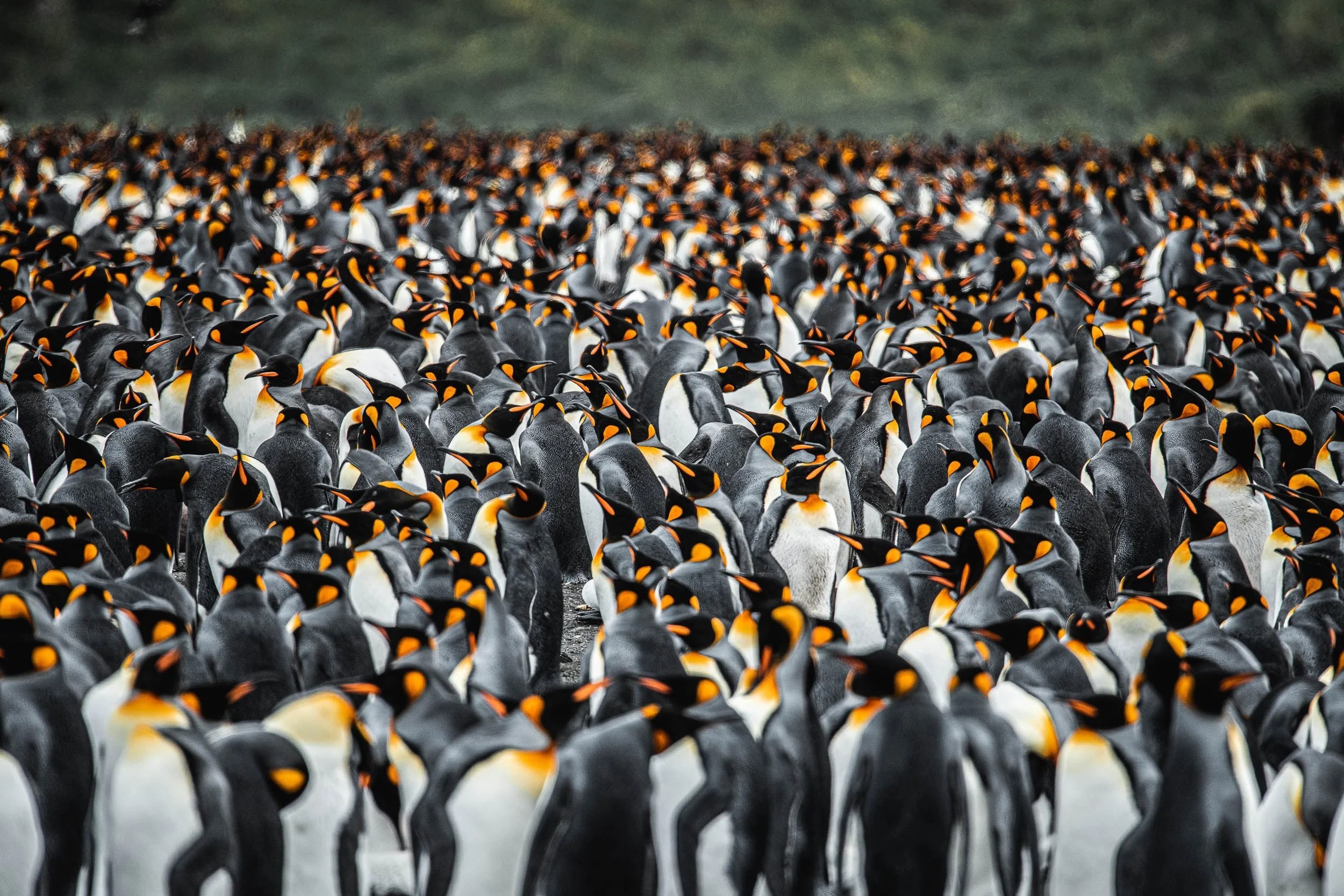
    On the morning of Monday Feb 28 we had sailed to St Andrews Bay, the site of the largest King Penguin rookery in the world, approximately 400,000 breeding pairs! It was equivalent to my first day on SGI but obviously scaled an order of magnitude in noise, density and rapacity of scavengers. Having said that, the penguins whose chorus now rivalled the Mormon Tabernacle Choir, were as friendly, unthreatening and curious as ever. The number of seal pups was also scaled up and they bounded, sniffed us and chased each other in packs, pups is the operative descriptor, well named.
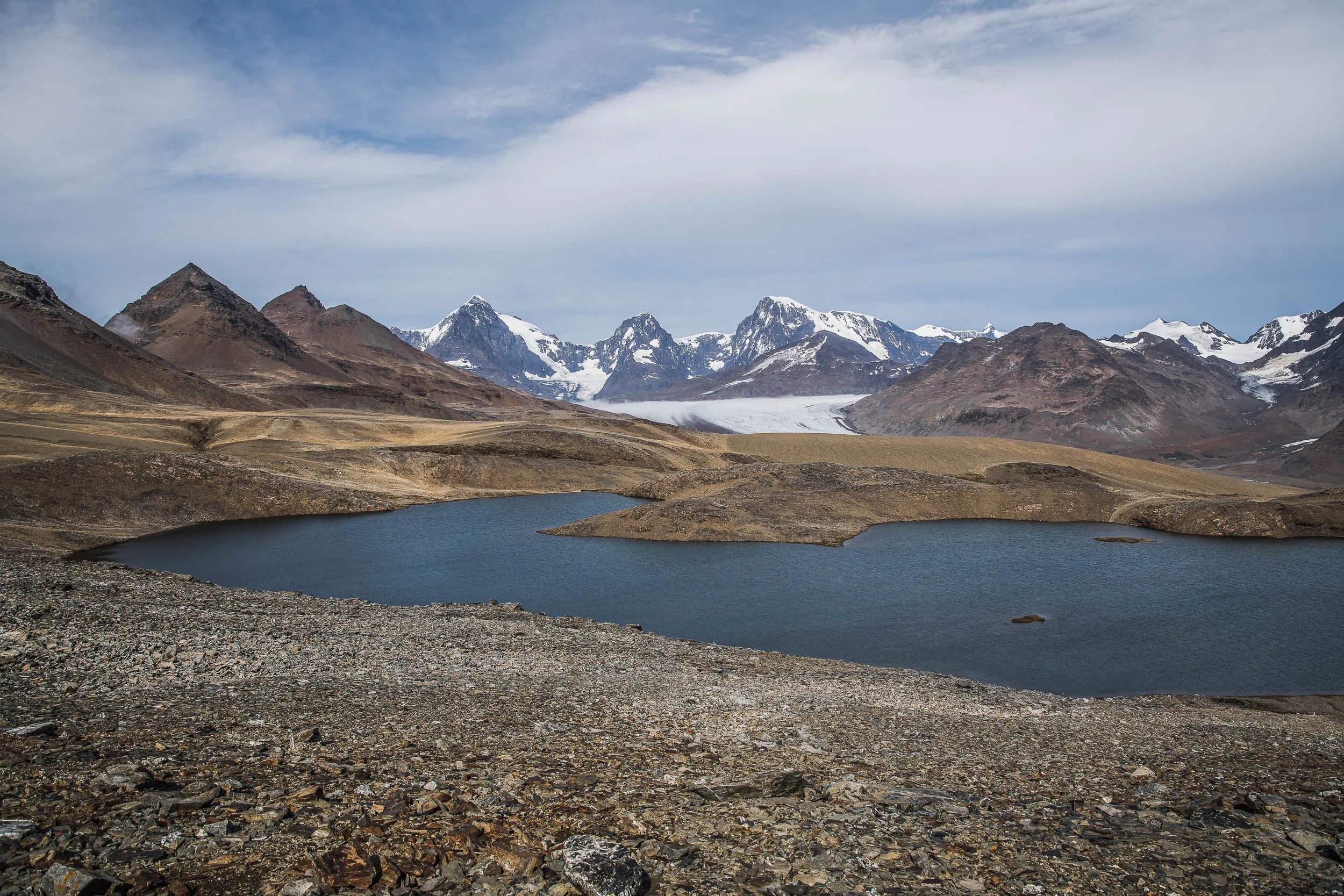
    By the afternoon of Feb 28 the ship had moved up the coast to Grytviken, a well-sheltered bay surrounded by the largest flat sections of habitable land on the island, however there are no longer any permanent residents there. It too was the site of a whaling station, now thankfully abandoned, but one of the most productive and industrialised examples of its type which sadly was in operation until 1966 when there were no longer enough whales left for it be economically viable. As a mind-searing statistic, it was an important cog in the machinery which caught and killed 3,000,000 whales in the 20th century. Because whaling was an industrial process, its activities were recorded as accounting entries in the ships’ books of record and the number of whales killed and processed, 3 million, is definitively known.
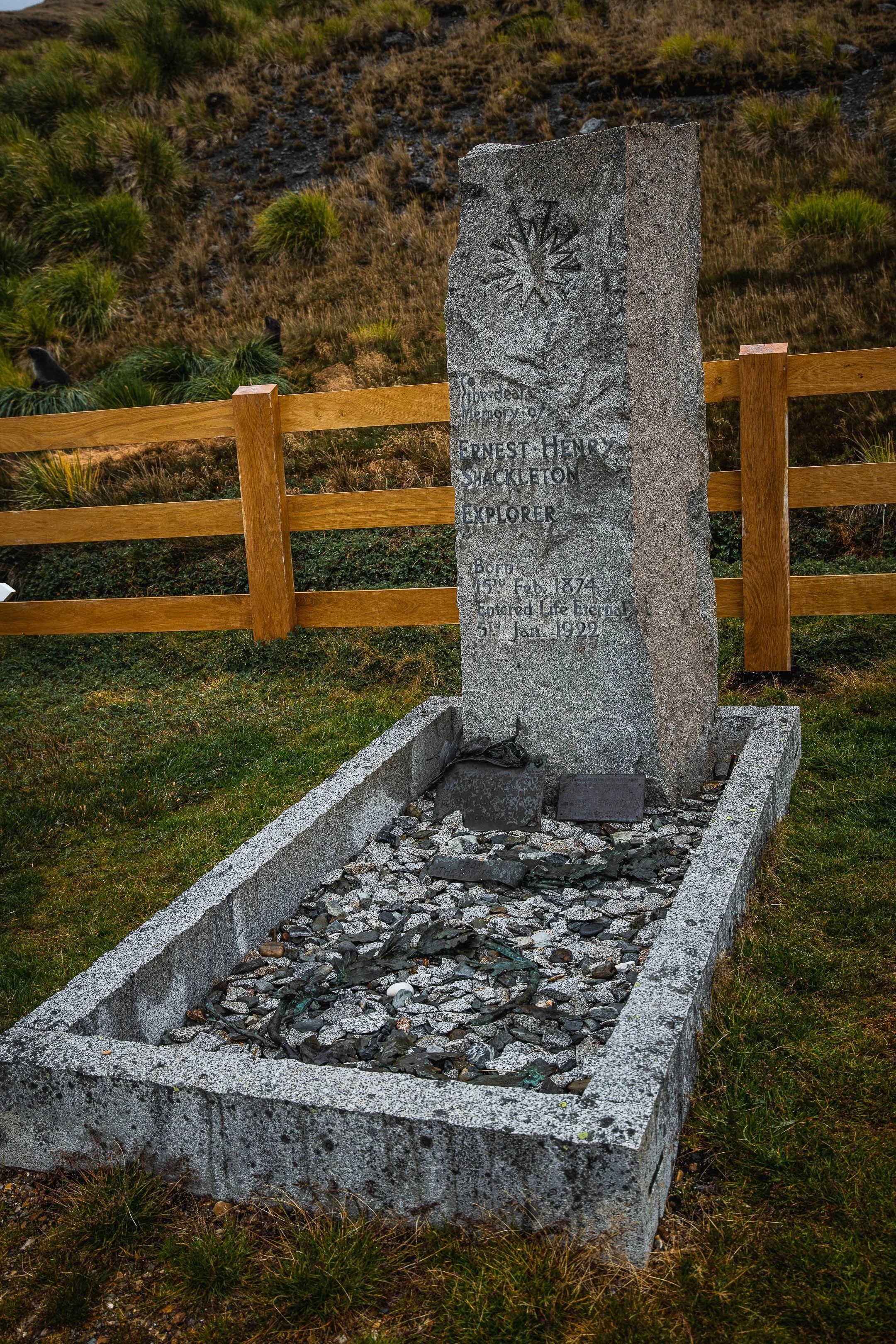
    Grytviken’s other claim to fame is that it is the site of Ernest Shackleton’s grave, in a small cemetery on the side of a hill looking over the bay and a vast distance away, his Irish home. I, and most of my fellow passengers, climbed up the hill to his grave and spent a quiet moment reflecting on the extraordinary life that he lived.

    “He led the Imperial Trans-Antarctic Expedition of 1914-1917. Disaster struck this expedition when its ship, Endurance became trapped in pack ice and was slowly crushed before the shore parties could be landed. The crew escaped by camping on the sea ice until it disintegrated, then by launching the lifeboats to reach South Georgia Island , a stormy ocean voyage of 720 nautical miles (1,330 km; 830 mi) and Shackleton’s most famous exploit.

    In his 1956 address to the British Scientific Society, Sir Raymond Priestly, one of his contemporaries, said “Scott for scientific method, Amundsen for speed and efficiency but when disaster strikes and all hope is gone, get down on your knees and pray for Shackleton.” A worthy tribute to one of the last of the great Victorian and Edwardian gentlemen explorers.

    That evening back on the ship we learned that there were now 5 new Covid cases.

    On March 1, we spent our last day on SGI. We anchored in Fortuna Bay where a number of passengers landed to begin a 6k hike from their landing spot to Stromness, the next bay to the north of Fortuna. As the weather was gloomy, cool and very foggy I did not join them but spent the day warm and dry and battling the last of a vicious cold. The ship then sailed up to Stromness where we picked up the hardier specimens of our passenger list who had completed the hike, raised our anchor and set out for the Falkland Islands.
    The following day, March 2 at sea, the captain announced that there were now 4 additional cases, both crew and passengers. One of the two restaurants was closed, no self-serve salad bar, temperatures were taken before entry to the restaurant and we were encouraged to continue to sit at the same tables and create temporary eating bubbles with the same tables and neighbours.

    On March 3rd at sea, where and when I wrote my previous post, we learned that there were now 3 new cases, again both passengers and crew. We were due to arrive at the Falklands the following day Friday March 4 where we had planned to anchor and land our zodiacs to explore the landscape. Our daily briefings from the captain were de rigeur and were now met with the expected degree of anxiety by many aboard. This day we learned that the Governor of the Falklands had decided, not surprisingly, that we were too great a health risk to his citizens and we were not going to be allowed to land.

     Cape Horn
    Cape Horn

    The picture above is Cape Horn at its most benign!

    The following day March 4 we instead sailed around the islands and in brilliant sunshine and very warm temperatures saw all the places and the wildlife that we did not have the chance to explore from our zodiacs. There was a silver lining however. Because we did not stop at the Falklands we were about a half day ahead of schedule which put us ahead of a storm system that we would have had to deal with had we been able to keep to our original itinerary. In addition, because the Beagle Channel, the body of water between the Southern Ocean and the town of Ushuaia, is east of Cape Horn, we would not in the ordinary course events have had the opportunity to “round the Horn”. Using our day of grace however, we would now sail round the Horn ahead of the bad weather and then head back and up the Beagle to Ushuaia. So on the morning of March 5 the whole ship was tested for Covid, a requirement for our landing back in Argentina on the following day March 6, and then over the course of the afternoon of March 5 we sailed around the Horn in very clement, un-Hornlike weather. Having now officially, if only technically, rounded the Horn we all have the lifelong privilege, reserved for sailors who have made this passage, to wear a gold ring in our left ear and to eat with one foot on the table. I’m not sure V will be thrilled with either of those possibilities.

    Finally, amidst great tension and anxiety, we received our test results on the evening of March 5, 24 new cases of Covid! Thankfully I was Negative hence my rushing to write this before boarding my flight for home. Nonetheless, there are 37 passengers and crew who are now in quarantine in Ushuaia. A fabulous voyage but tempered by a very distressing finale.

    More to come!
  • At Sea – Thursday, March 3

    We have spent the last three days on South Georgia henceforth referred to as SGI. I am writing this a few days later as internet access is very hit and miss. The island is about 165k long and 35k wide. For the most part the island is mountainous, snow covered all year round and the habitable portions are somewhat flat areas between the sea and the foot of the interior mountains. I use the term habitable loosely, since with the exception of a small number of semi-permanent officials, the only inhabitants are sea birds, penguins and seals. These flat areas between the sea and the mountains vary between non-existent to stretches of up to 500 metres or so.

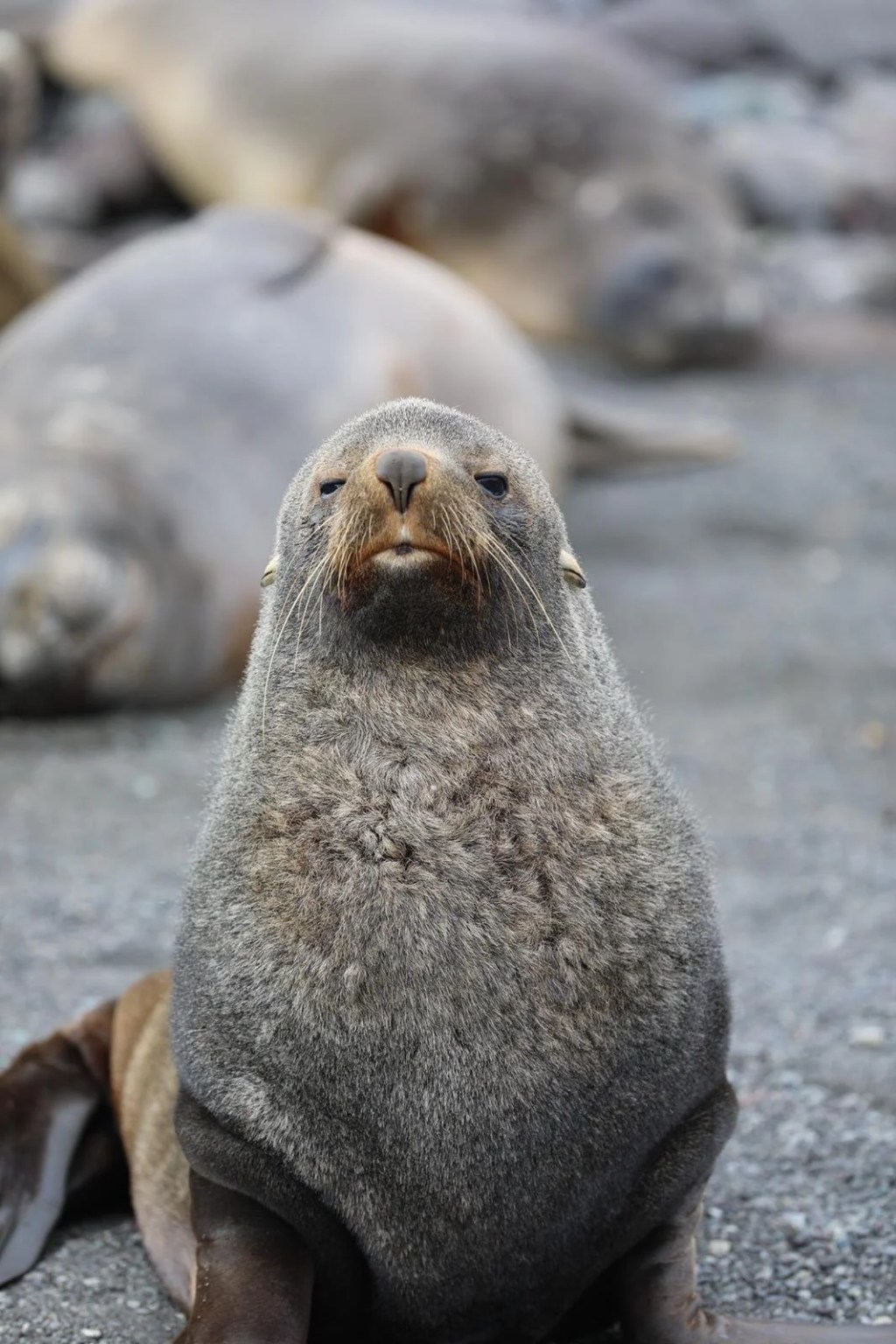
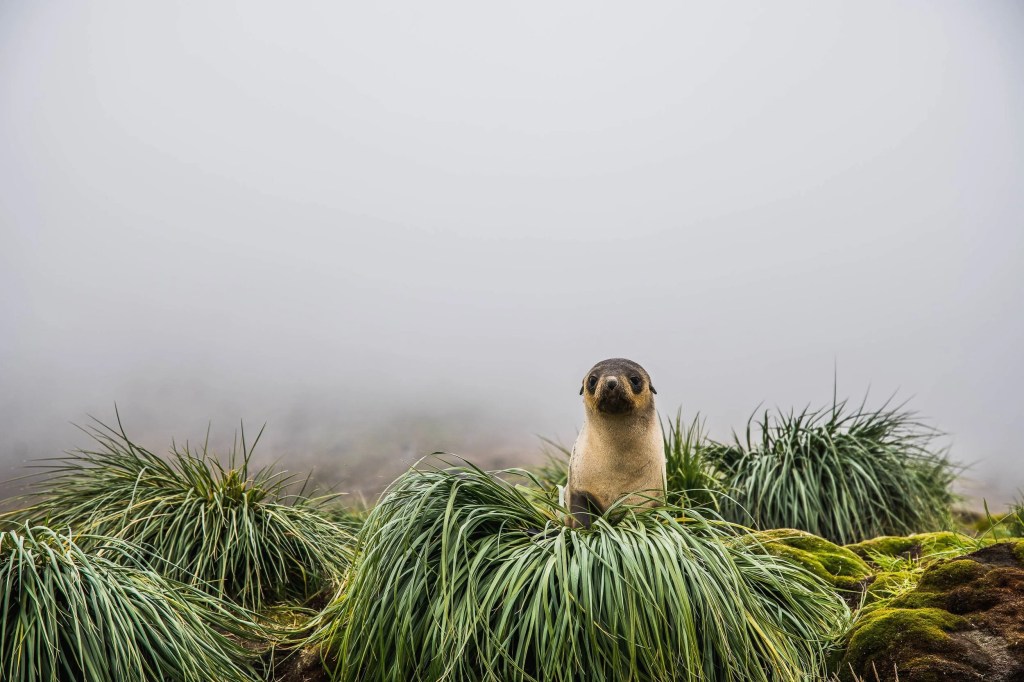
    The beaches are black volcanic sand and moving beyond them, the narrow strips of fields and meadows can be green and verdant as they are now in late summer. Interestingly, we must stay on the beaches and cannot walk on the grassy areas. The reason for this sanction is that these meadows are made up of tussock grasses, each tussock a mound of wiry grass about 1/2 metre high and a metre or two in width, and these are filled with all manner of nesting birds and animals, including seals. I found it very strange and wonderful to see wide fields carpeted with tussock grass abounding with baby fur seals who hid deeply in the grass to sleep or dozens of their fellows chasing each other up, around and over the grassy mounds in a permanent game of catch me if you can. These pups are this year’s cadre of newborns who are building up their strength and agility and getting ready for the long winter ahead. More problematic and very difficult to see among the grasses were huge elephant seals, who can weigh up to 4,000 kilos, another good reason for not walking on the grass!

    I had my first encounter with an elephant seal on our first landing on SGI in Gold Harbour, a bay at the southern end of the island. We are sailing north, up the eastern side of SGI and are planning to make a series of stops on our way up to the end of the island. At each of theses stops we will have the opportunity to land on a new beach and explore the area and see the wildlife.

    Prior to our first landing we were warned in vivid terms not to get within 15 metres of a male elephant seal, who in addition to being massive is very territorial, short tempered and in spite of its bulk, able to move more quickly than most of us can run. After wading ashore from my zodiac, I looked for somewhere I could sit to put my backpack over my shoulders, look around and organise my cameras. I noticed what I took to be a very large mossy rock just at the edge of the beach and was preparing to sit when two things happened in very short order; I saw on my right-hand side the end of the rock instantly swing toward me to reveal a huge, wide-open, yellow-fanged, angrily-bellowing, red mouth and at the same moment Alex, the expedition leader, cover about 10 metres of ground at top speed to grab my arm and haul me away. I was merely surprised but Alex was horrified, shocked, appalled, seeing his career in flames for having allowed one of his guests to be stamped and sealed. As he shakily pointed out, I was lucky that it was not the mating season. Had it been I guess the outcome would have been very different but as it is, I have fused into my synapses, my official welcome to SGI. After that the day was spectacularly uneventful.

    We had been landed in a small suburban wing of a huge King Penguin rookery, the larger portion of which was to be found in our next landing spot, on the following day. Having suggested that it was of minor size and importance is to do it a disservice however. In fact this rookery consisted of about 75,000 King Penguins who appear to be exceptionally blasé about visitors. We were told that we should not approach any closer to a penguin than 5 metres and should respect their personal space. All animals have the right of way here and we were to stop to let them walk freely and stand still if they approached too closely. It quickly became clear that Alex had not briefed the penguins as they would shuffle right up to within a half metre, look up at you, and simply stare. Many of us spent the afternoon playing penguin “Simon Says”, staying very still and waiting for the penguin to look away so that we could move. The baby fur seals did come right up as well but they wanted to sniff shoes and pant cuffs and nibble on laces.

    If a penguin becomes concerned they do let you know. They make a sound whose best description is the sound that is made when you put waxed paper on a comb and hum, an activity that I remember from my childhood but I don’t suppose is still carried on today. If you were then to take the humming, buzzing sound and amplify it, you would get a close approximation of a troubled penguin. At no time during this musical interlude does the penguin run or move off, he or she simply stands still, beak pointed straight up, and carries on with their version of Buddhist throat singing. This can be quickly picked up by neighbours and the resulting chorus can reach quite a volume. Singing rather than defending themselves or escaping sadly explains why millions of penguins were slaughtered for food so easily and with no resistance.

    For all that it is a penguin rookery, it is also a whole Antarctic world and life cycle in microcosm. Scattered at random along the whole beach are fur seal adults dozing, their pups racing around, elephant seals being rocks, skuas and other large large predatory birds hunting and occasionally killing and eating penguin chicks or baby seals, King Penguins, Gentto Penguins, Chinstrap Penguins, waddling along and many types of birds nesting or flying off or defending their nests. It is cradle to grave all in one place, the living mixed in with the remains of the recently living and all seemingly unaware or untroubled by the evidence of our shared mortality.

    So passed our first day on SGI.

    More to come!

  • South Georgia Island – Tuesday, March 1

    When last heard from we were in the caldera lagoon of Deception Island off the Antarctica Peninsula. We chugged away in the evening and overnight reached Penguin Island, another island further North along the Antarctic Peninsula. There is a small colony of gentoo and chinstrap penguins on the island but the weather was bleak and the fog very thick so I decided to rest my kayaking aches and pains and stay aboard.

    Leaving Penguin Island we then spent the next two days and nights sailing north-east to arrive at South Georgia Island on Sunday Feb 27. There are no words to properly describe South Georgia but a good start can be made by looking out a Richard Attenborough video on YouTube called, not surprisingly, South Georgia Island. It is well worth finding and gives a wonderful picture of a unique spot on the planet. It is distinctive for a number of indigenous species not found anywhere else but equally for the way it has risen above its early colonisation and reestablished its ecology and its wildlife.

    The island, uninhabited save for its abundant wildlife, was first discovered in the 1600’s by a Dutch trader/explorer and was left undisturbed until its rediscovery by James Cook in 1775 who claimed it for Britain and who named it for George III, the then reigning monarch. At the same time in 1775 events were taking place in the American Colonies which would lead shortly thereafter to their breaking away from Britain. It’s ironic that George III would lose the American Colonies while gaining a tiny speck of land in the Southern Ocean, a trade that I’m sure he would have happily reversed, or maybe not!

    South Georgia is a faraway place indeed, about 2000k east of South America and about 1500k north of Antartica nonetheless it was well suited as a base for Antarctic exploration as well as for whaling and the fur seal trade.

    After its rediscovery it quickly became a natural resource to be exploited and British and American whalers and fur sealers removed prodigious quantities of those species, an estimated 150,000 whales for whale oil and almost the entire world population of fur seals, to meet fashion’s demands. Because of their tame and trusting nature untold thousands of penguins were slaughtered for food as sailors could walk up to them and kill them where they stood. In return for directly decimating much of the wildlife the sailors introduced rats and other small vermin as well as non-indigenous plant life which could outcompete the local grasses and vegetation and which in their turn have continued the legacy of destruction.

    And so things stood until the very recent past when the government of South Georgia and the South Sandwich Islands, a British Overseas Territory, created a marine exclusion zone around South Georgia to protect the unique marine ecosystem. After years of strenuous work, reindeer which had been introduced by Norwegian whalers for food and sport and which had put pressure on the local ecosystem, were eradicated as well as the rat and cat populations and many of the invasive plant species. This was an enormously expensive set of activities and so to ensure that no invasive species are introduced in the future, the government has made landing on the island a very detailed and exacting process. Every bit of external clothing, coat, boots, waterproof trousers, hat, gloves as well as camera bags, tripods, walking sticks anything likely to come in contact with the ground or the vegetation needs to be vacuumed thoroughly, the treads of boots must be cleaned with a screwdriver to remove any material, velcro fastenings must be pristine, and everything coming in contact with the ground must be scrubbed and disinfected. Velcro is particularly problematic as are seams of clothing, any hidden places where seeds may be accidentally carried to the island and become an invasive species. Camera bags or backpacks may not be put on the ground but must be carried. Getting ready to land is a major project, as it should be.

    All these steps have allowed wildlife populations to re-establish themselves and now the largest populations of fur seals and king penguins in the world roost on South Georgia as well as huge numbers of seabirds, which can now safely breed on the island. Their numbers are so great that at night our boat is required to go into blackout with all windows curtained and shuttered so no light can escape which might attract birds to land on the ship. Each morning any birds that have landed on the boat during the night must be counted and identified and reported back to the territorial government.

    Another claim to fame for South Georgia is its close association with Earnest Shackleton, one of the foremost explorers of the Antarctic who died aboard his ship in South Georgia in 1922 as he was preparing for another expedition to Antarctica. He is buried on the island and his tombstone has become a place of pilgrimage for students of and lovers of Antarctic history.

    I had started to tell you about my visit to the island but got so caught up ints history that I’m afraid I’ve overstayed my welcome, so I’ll save that story for my next post.

    More to come!

  • We are now at sea plowing our way toward the island of South Georgia, as we have been since Thursday evening, with our arrival some time late tonight. More on that in a moment, but I have had a couple of questions from readers of the blog;

    1. Have you seen any other boats since you left Ushuaia?

    Yes, the morning after we left Ushuaia. You’ll recall that we left the harbour in Ushuaia in a hurry last Saturday but what the sleeping passengers didn’t realise was that during that first night our ship received a distress call from a Chilean cargo ship in the Drake Passage to say that she was taking on water, her engine room was flooded and she had lost power. Our captain changed course and spent the last half of the night steaming towards her as we were the closest ship to her location. I awoke just as we came up with her at about 7am, the captain put the boat in very low revs to maintain position and we began the tricky job of trying to get a spare water pump over to her so that she could keep up with the water coming aboard and begin to empty the engine room. It took about an hour to get the pump over and hoisted aboard in 2 metre swells and very stiff winds and while this was happening two Chilean military boats arrived to try and take her under tow. So yes we have seen three other boats since we left!

    2. Have I been seasick during this passage?

    I have been uncomfortable when we were really rolling in the swells but I did have one particularly unpleasant moment, just before dinner after our first day’s sail, the feeling we are all familiar with, cold sweat, dry mouth, a tightening at the back of the throat. I took one of my trusty Kwells pills. I knew if I lay down I’d end up in a pitiful ball on my bunk praying for an early and swift demise, so I went down to dinner instead. I thought that in the worst case it would be better to give my body something to work with, pardon the graphic implication! In any event, had a couple of big glasses of red wine, a rare steak and slept like like sinless babe. For me at least, and counterintuitively, I find that seasickness is much less intrusive on a full stomach. If I don’t eat, hunger pangs and an empty stomach get all mixed up with seasickness and I feel exponentially worse. So best thing to do is just swallow hard and have a good meal! Interestingly, the standard tactic for dealing with sea sickness, looking at the horizon, doesn’t seem to matter, again at least not for me. I can feel queasy and look at the horizon and all it seems to do is exacerbate the nausea. Whereas when I’m in bed at night in my bunk with nothing to be seen, including my hand in front of my face, and the boat is rolling and pitching, I feel as if I’m being rocked to sleep. Part of it may be precisely because I can’t see anything I can’t prepare for the boats motion, not always tensing for the next lurch, so my body isn’t tensing but simply moving easily with the motion. Lots in there for a PhD thesis. By the way, the Kwells medication isn’t available in North America, only in the UK, so I stock up whenever I’m there. I wouldn’t travel at sea without them and they were with me on all my recent sailboat sea adventures. Not often used but a wonderful insurance policy.

    Now, on to my travels. In the finish of my last post I was stepping onto the Antarctic continent. I wandered around briefly but the views and the landscape can be seen much better from the ship so having, like Friday, left my footprint in the Antarctic sands I zodiac’d back to the ship where I tried, singlehandedly, to empty the ship’s hot water shower tank. Shortly thereafter we lifted anchor and headed for Deception Island, a name that anyone who has read Patrick O’Brian’s Aubrey-Maturin series of naval stories set in the Napoleonic Wars or has read any histories of Antarctic exploration, will be familiar with. Once again word pictures since my satellite uplink is much too slow to upload photos.

    Deception Island is the caldera of a sleeping volcano. There have been significant eruptions in past times but the last activity was in 1970 when there were signs of steam escaping from vents in the sides of the caldera. A caldera as I’m sure you all know is the shell of mountain surrounding the collapsed central chamber of an exploded volcano. The magma chamber that sits at the centre of all volcanos is the underground chamber that fills with magma which as it escapes, forms the cone that as it grows become the volcanic mountain. When the pressure of molten rock becomes sufficiently intense the volcano erupts spewing lava until the magma chamber empties and relieves the pressure, leaving behind a very deep chamber surrounded by circular rocky walls. In the case of Deception Island, the magma chamber is far underground so it quickly filled with sea water to form a very large interior lagoon in the caldera, whose bottom is the bottom of the empty magma chamber. There is still molten rock not far below the bottom the empty chamber resulting in periodic warming of the water in the caldera’s lagoon. This lagoon is accessible by sea as there is one passage through the rim of the caldera through which the sea is connected to the interior lagoon. This passage was presumably blown out of the rim of the caldera at the time of the last great eruption and is only about 400 or 500 metres wide, both sides of which are towering basalt walls climbing hundreds of metres up towards the sky. Through this passage we sailed and into the flooded caldera.

    It is a sheltered body of water about 8 kilometres across and sufficiently deep for the ship to sail in. It is an island with history, and not a particularly savoury one. It was, until 1931, the site of a whaling station, which because of its sheltered location in the caldera, allowed whaling ships to bring their whale carcasses to be rendered down to produce whale oil, the best source of oil for lamps for home lighting until gas replaced it late in the 19th century. The station then converted to a factory for skinning and preserving fur seal pelts for fashionable coats, hats and gloves. Between fur seals and whales the factory was part of the complex that reduced whale and fur seals to about 1% of their original populations over the course of 100 years.

    We spent the evening in its shelter. It was a barren, cold, windswept and foggy place. Snow and ice and very little vegetation and nothing on the whole expanse of rock but the remains of the whaling station and its dark memories.

    More to come!

  • Paradise Bay, Antarctica – Tuesday Feb 22

    We sailed from Danco Island in the morning and arrived at Paradise Bay on the Antarctic Peninsula in the early afternoon. Paradise Harbour/Bay is one of only two usable harbours for passenger boats in Antarctica. The bay is surrounded by sharply-edged and heavily glaciated mountainous peaks and massive domes of snow covering the whole landscape.

    There is an option available for those who choose to take advantage of it, of a sea kayaking expedition to explore the bay. I decided to take advantage of it although never having kayaked before. My expectation was that it would be sufficiently akin to canoeing that I would be able to pick it up fairly quickly, unfortunately, not a very well-founded assumption. It certainly looked attractive, gliding smoothly through the water like a seal and communing with nature in all its elemental glory. Plus the sun was shining out of a lapis sky, the first time we have seen the sun since we left Ushuaia, and so feeling doubly blessed I layered up with a merino bottom layer, two more layers and finished with an immersion suit in case of a dunking. The immersion suit is mandatory and needs two people to pull it on, latex seals at the neck and wrists and a number of watertight zippers that can only be secured by a second person. The immersion suit provides no warmth, not its purpose, so while it kept the water out it do not keep out the effects of the wind which seemed to blow right through it. This was not a problem initially but after having worked up a good sweat paddling, the suit ensured that the water inside the suit, my sweat, could not evaporate but it could get quickly chilled by the wind if I sat still for long.

    So to begin my adventure and in blissful ignorance of what was to come, I performed one of those sets of activities guaranteed to remove any last shreds of dignity remaining to one at my age and stage of life. We all retain some desperate hope of appearing elegant and competetant to the rest of the world, so it is fortunate that there were no videos taken of me clambering into the kayak. We were initially taken out to the middle of the bay in a zodiac which towed 4 kayaks and the launching pontoon, the pontoon being nothing more than a sturdy floating mattress about 3 metres long and 2 metres wide. The mattress was tied on to one side of the zodiac and one by one, the kayaks were brought to the other side of the mattress and securely tied there as people climbed into them. The trick is getting from the zodiac into the kayak. This required rolling out of the zodiac, over its side and landing on the mattress, on which because of its flimsy nature, one could not stand but perforce must roll or crawl across to the kayak. The next problem then became entering the kayak, which again meant crawling feet first into the designated seating spot while trying desperately not to tip the kayak and its contents into the ocean or falling in oneself while trying to scramble aboard. Ungainly and awkward does not begin to cover it!

    However once in and away we began the next in a long series of required actions which needed to be mastered, or at least approached within shouting distance of competence. Unfortunately it had not occurred to me to study closely the method of propelling a kayak. For those of you familiar with the process this will undoubtedly sound very ho hum but the cadence of strokes is at a much higher tempo than in a canoe and because in a two seater kayak the two paddlers are much closer together than in a canoe, not being in cadence has the potential to cause many more problems. In a canoe not being in cadence is not a good thing, wasted effort and inefficient progress but in a kayak the paddles can easily collide with each other or become entangled, not good. And the paddling motion is so different, the kayak seat is only a couple of inches high so you are essentially sitting on your tail on the bottom of the kayak with legs straight out in front of you. This position means that every time you move your hips you change the balance of the craft and tip it on one side or another. This requires the paddling motion to come smoothly from the shoulders with no motion possible from the hips to add impetus to the stroke.

    I was fortunate in having a very experienced partner who sat in the rear seat, the captains seat, where she had control of the rudder and set the pace of paddling. It was almost magic, could have been magic with a little more experience, but the scenery was stunning, the light was brilliant, the air was relatively warm, about 2C, the sun was shining and I was paddling a kayak in Antarctica!

    We spent about an hour and three quarters exploring the bay, watching the birds, looking at the landscapes and hoping to catch sight of a whale, which fortunately we did, a humpback rising briefly above the surface about a hundred metres away. Sadly no pictures, I had a GoPro but was just too busy obeying my captains commands to “paddle G, paddle”. I have to confess that I have not been nearly as active during Covid as I should have so was calling into action muscles that I had not pushed to my limit in over two years and I felt it. At points during our journey, as I felt my heart careening along at a furious pace, I thought that it would be poetic justice if the last words I heard on this earth were “paddle G paddle!!”

    Getting back onto the zodiac was even more humiliating as it featured all the steps that I have already outlined but superadded was the fact that my arms and legs were so tired that I could barely crawl out of the kayak and crawl my way back to the zodiac, during which in the course of clambering aboard, I fell headfirst into the bottom of the Zodiac on my back. I could only lie there, in the bottom of the boat looking up at the brilliant sky and laugh my head off.

    The final capping moment was then taking the zodiac to the shore and setting foot on the fabled continent!

    More to come!

  • Since I last posted we flew from Buenos Aires to Ushuaia, boarded Le Boreal and left our harbour mooring like a scalded cat. Our first and probably our biggest hurdle on this trip is crossing the Drake Passage, a two day sail across one of the most unpredictable and roughest stretches of water on the planet. It is the single biggest reason why V chose to miss taking this trip. The Drake Passage is the body of water between Cape Horn and the Antarctic Peninsula and is filled with very strong currents and where weather that can turn savage very quickly.
    We had just missed a large low pressure system that was moving in an easterly direction across the Passage and which had winds gusting to 50 knots and 8 metre seas. As the tail end of the storm moved through there was a quieter interlude with more moderate winds and lower seas but the forecast called for an even bigger low pressure system to move through the Passage late on Sunday. As this was Saturday evening the Captain wanted to move as quickly as he could to get as close to our destination as possible before the weather changed for the worse. Accordingly we made all speed to leave the harbour in Ushuaia and begin our passage.
    By quieter interlude I mean relatively speaking. The Drake is described as having two states, lake and shake and while we were in the lake mode we still had 2 to 3 metre swells and a stiff wind that blew the tops off the waves. There is no joy in swells, the vessel rolls and lurches and while we were making good speed it was a classic moment of “one hand for the ship and one hand for yourself”. Getting sea legs was a priority but there was no time for their gradual development, we were thrown into the deep end and there were lots of green gills.
    Late on Sunday the winds really began to pick up, the seas grew much higher and the swells were replaced by waves whose tops streamed away behind them, blown by the wind into long frothy white streamers. My cabin is on Deck 4 and from my balcony floor to water level is probably 7 or 8 metres. During the night there were crashes as waves broke over my balcony and crashed onto the balcony doors. This persisted all through Monday until we arrived at Deception Island in the South Shetland Islands, just off Antarctica. The captain moved the ship into a sheltered bay and dropped anchor, expecting to wait out the storm and begin our Antarctic expeditions the following day, today.
    The winds however, even in the shelter of the bay were gusting between 55 and 60 knots (60 knots is 110 kmph) tilting the boat on an angle and dragging our anchor. We therefore lifted the anchor and moved out into open water where with the engines running we could manoeuvre the boat and keep the ship head to wind, effectively heaving-to. This we did overnight and today we arrived on the Antarctic Peninsula with the winds now substantially reduced and the sea as flat as its ever likely to get. Zodiacs heading out this afternoon for our first landing on an Antarctic beach.
    We have not had any sun since we left Ushuaia, unbroken and very low clouds and everything lit by pearly grey light. The landscape is almost a black and white picture with the occasional flash of blue from rifts in glacier ice on land. Looks very much as I expected.
    Since our only connection to the internet is via a satellite uplink whose speed would make a tortoise look like a racehorse, I’m unable to include any pictures. These will have to wait until we are within range of a cell tower, possibly on the Falklands, so until then you will have to put up with my attempt at word pictures

  • In Buenos Aires – Feb 18, 2022

    The last time that I posted it was to describe a complicated three part trip that we were planning to take beginning this month. At that time Omicron was just beginning to make its presence felt but not so severely that I imagined it would put the trip in jeopardy . Since then Omicron gathered strength and forced the cancellation of my drive up the Carrtera Austral from the bottom of Chile up to Santiago and then the Peruvian adventure with V.

    The initial part of the journey, an 18 day Antarctican sailing trip out of Ushuaia , is still a go however and right on the deadline for confirming the trip I decided to take the chance and now I’m here in Buenos Aires after an overnight flight. I’m in my hotel awaiting my next flight to the boat, a flight which requires a 4am wakeup call in order to make the plane. Small price to pay I guess.

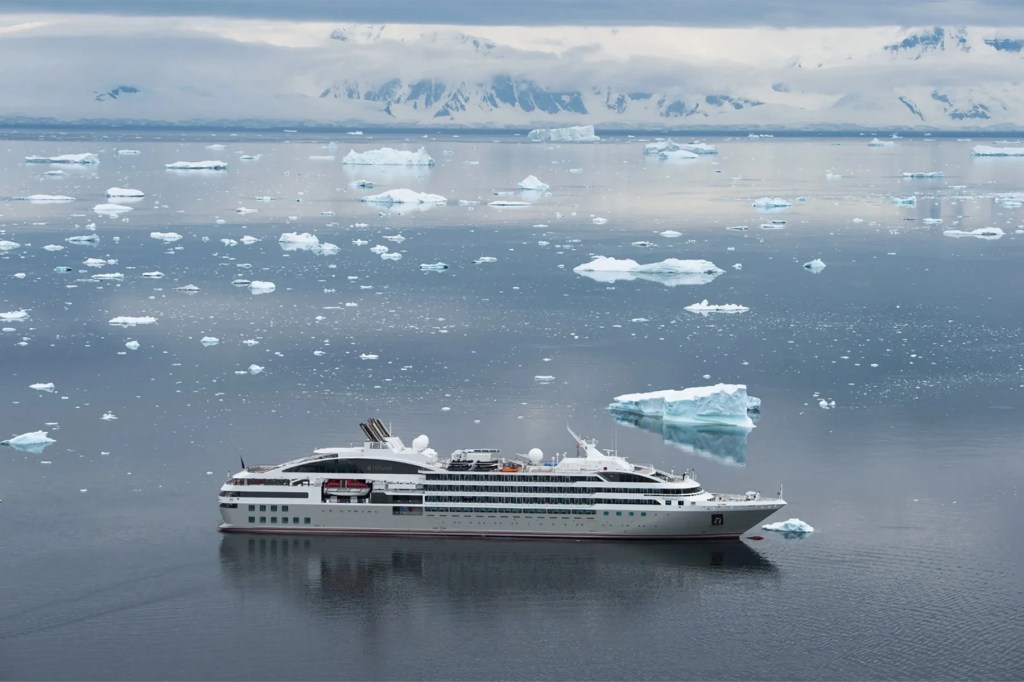
    Needless to say I’m very excited, have been wanting to find a way to do this for a very long time. The trip will be on board the Ponant line’s ship Le Boreal, a relatively small boat with about 200 hundred passengers in which V and I previously sailed along with very good friends E and C about 6 years ago. At that time we sailed from Svalbard along the edge of the Arctic pack ice to Greenland which we spent some time exploring, and then on to Iceland. The boat was wonderful, very comfortable and small enough that it did not feel that it overpowered the places that we visited. Much of our time was spent on Zodiacs and wondering around the landscape, always with armed bear guards posted conspicuously to let us know if any polar bears were in the neighbourhood. Based on our experiences at that time I’m sure that this will be a happy combination of adventurous and comfortable, comfortable not being a description that I would necessarily apply to my last 2 or 3 sailing passages.

    My real dream was always to sail to Antarctica but, not to spoil a pun, at my age that ship has most definitely sailed. And sadly, I will be flying solo, V in this instance having decided that discretion is the better part of valour. Not a happy sailor, V was not keen to temp the Drake Passage and the Southern Ocean and has left that for me to handle on my own.

    Now I’m awaiting my the results of my second PCR test in the last 72 hours, a test whose results will determine whether or not I’m able to join the boat. Assuming that I’m cleared to go aboard. I’ll join Boreal tomorrow and we leave for the Drake Passage tomorrow evening.

    I’ll post whenever I can find a signal to upload my posts. More to come!

  • Lorem ipsum dolor sit amet, consectetur adipiscing elit, sed do eiusmod tempor incididunt ut labore et dolore magna aliqua. Ut enim ad minim veniam, quis nostrud exercitation ullamco laboris nisi ut aliquip ex ea commodo consequat. Duis aute irure dolor in reprehenderit in voluptate velit esse cillum dolore eu fugiat nulla pariatur. Excepteur sint occaecat cupidatat non proident, sunt in culpa qui officia deserunt mollit anim id est laborum.

  • Lorem ipsum dolor sit amet, consectetur adipiscing elit, sed do eiusmod tempor incididunt ut labore et dolore magna aliqua. Ut enim ad minim veniam, quis nostrud exercitation ullamco laboris nisi ut aliquip ex ea commodo consequat. Duis aute irure dolor in reprehenderit in voluptate velit esse cillum dolore eu fugiat nulla pariatur. Excepteur sint occaecat cupidatat non proident, sunt in culpa qui officia deserunt mollit anim id est laborum.

  • Lorem ipsum dolor sit amet, consectetur adipiscing elit, sed do eiusmod tempor incididunt ut labore et dolore magna aliqua. Ut enim ad minim veniam, quis nostrud exercitation ullamco laboris nisi ut aliquip ex ea commodo consequat. Duis aute irure dolor in reprehenderit in voluptate velit esse cillum dolore eu fugiat nulla pariatur. Excepteur sint occaecat cupidatat non proident, sunt in culpa qui officia deserunt mollit anim id est laborum.