• Catching up

    It’s been a long time without posting an update. My New Year’s resolution was to keep the blog updated and add three new posts a week; given that it is now March 1 and this is my first post, you can imagine the state of the rest of this year’s resolutions.

    My most recent posts (last August) were about our Arctic trip which was very special, one of the better trips we have taken and one that I think will be used as a yardstick against which we will measure future trips. I hope to complete the unfinished posts and images for the rest of that trip when I can make some time and get them up on the site. I’ve had a number of emails enquiring if the ship sank with the loss of all hands since the posts stopped abruptly off the coast of Greenland; I simply got overwhelmed with activities and finding the time to keep the diary going was difficult. The intention was always there however.

    On our return fall was very busy, starting with the Cabbagetown Arts Festival where I was displaying some new works, including a number from the Arctic trip. I have been finishing my prints in a new format, face-mounted on acrylic which really makes images pop and for some subjects gives a bright luminous feeling to the image. I tried these out for the first time at Cabbagetown and sold a number of pieces so am very pleased with the results. If you have not seen my photos, including the new acrylic versions, they are on display at www.gfitzgeraldphotography.com or click the link My Photographs in the top menu bar of this page.

    In the 12 months prior to last fall we had been traveling pretty steadily, Northern Argentina for a couple of weeks just before last Christmas, Ethiopia and Kenya for a month in March, Switzerland for a conference in June and Spain for a conference in July and then Norway and the Arctic in August. So it was really pleasant to unpack and just settle in for a couple of months but there was a backlog of things that had fallen in arrears and lots of new things to take their place; the To Do list never seemed to get any shorter.

    Leaving 2014 behind there were, as usual, ambitious plans for 2015 but reality has long since set in. I will be pleased if I can finally get the blog in some sort of scheduled order and there are a number of photo projects that I have been working on that I’d like to advance but they move slowly. I continue to try and convince myself that procrastination and delay are critical components of the creative process but my protestant training fails to be convinced so low-level guilt is the steady background noise that accompanies my day.

    However, we are working on our 2015 travel plans and I leave for a photo expedition to Skye, Lewis, Harris and northern Scotland in three weeks and will be gone for a couple of weeks. I will be posting notes and the days shots as I go. Immediately on my return V and I leave for a couple of weeks in the Oaxaca region of Mexico which I’m really looking forward to. We have not been in that area for about 10 years and we really enjoy the old colonial cities in the centre of the country much more than beaches and the much more touristy coastal cities. Weather in the mountains will be warm in the day and cool at night and photo ops should be very good.

    Summer will be busy getting ready for a couple of art shows and in the fall we are planning a month in Namibia and southern Africa. So a busy year in store and the blog will be active.
  • Scoresby Sund and Ittoqqortoormitt 16/08/14
     Scoresby Sund and Ittoqqortoormitt
    Scoresby Sund and Ittoqqortoormitt

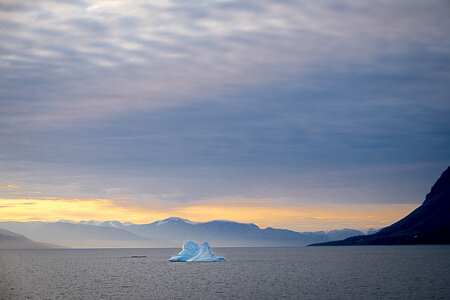
    Overnight and this morning the ship sailed further down the east coast of Greenland and entered Scoresby Sund, the largest fjord system in the world covering about 38,000 sq kilometers and whose arms at times extend about 350 kilometres inland from the coast.

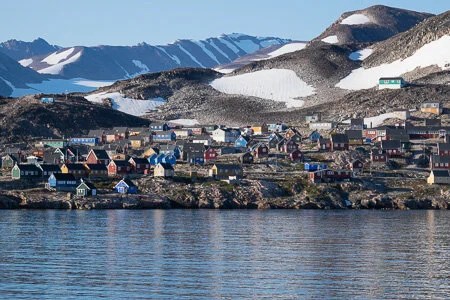
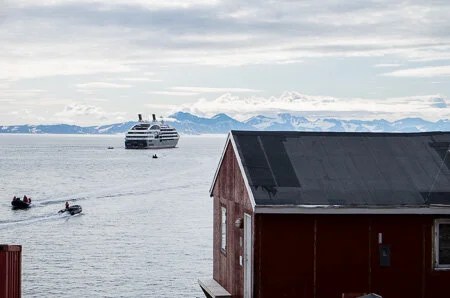
    We will be visiting the Innuit village of Ittoqqortoormitt a hunting community perched at the edge of the fjord and numbering about 450 people. They town’s dock is not large enough to accommodate our ship so we will have a wet landing on zodiacs to the shoreline in front of the town.
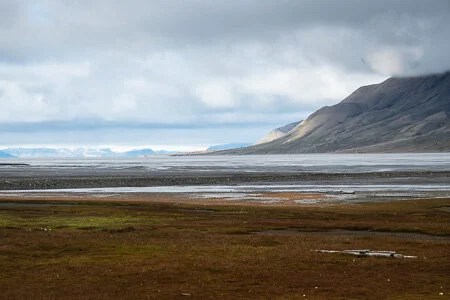
    A very pretty little community, small wooden houses brightly painted in blues, greens and reds perched on the edge of the fjord and at the foot of the ever-present snow-capped mountains. We are a rare sight for the inhabitants since the town is supplied by only 2 supply ships a year, one in June at the beginning of the short summer and one in September at the beginning of winter. Apart from that 2 or 3 small expedition ships, much like ours, stop off over the summer and sometimes leave them some food supplies. Everything that a town needs, from food to furniture and from fuel to vehicles to clothing and appliances comes in on these two supply boats and when something runs out they do without it until the next boat.

    The fjord is frozen over for 9 months of the year and they receive about 7 metres of snow a winter so no vegetables or fresh produce can be grown and their hunting is for food, not for commerce or export. Their major catches are seals, the occasional walrus, polar bears and musk ox all of which are eaten. They used to tan and export the skins of the animals that they killed which helped bring money into the community but because of the reluctance of fashion to use fur the pelts of all the animals they shoot for food are now thrown away and the tanning and export trade is no more. A shame and not responsive to simple solutions.

    There is virtually no topsoil in the area, simply the rocky terrain on top of which the houses are built. The cemetery digs out a number of graves in summer with heavy machinery while they are able to do so and these are used during the winter by the community since it would be impossible to do this work in the winter. They also import the soil they need in winter to fill in the graves and for the portion of the funeral when the priest reads the ‘ashes to ashes and dust to dust’ portion of the service, so that the priest and the family will actually have some dirt to throw on the coffin.

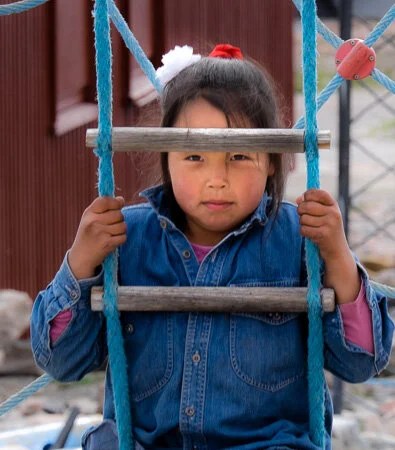
    An interesting walk through town and a chance to chat with a number of people who spoke English.

  • Greenland and at sea 15/08/14
     Humpback's flukes
    Humpback’s flukes

    Arrived this morning in Kejser Franz-Josepph Fjord, East Greenland  and we have sailed from 80 degrees North at the top of Spitsbergen to 73 degrees North at our present location. Because we are 7 degrees farther south we are once again seeing sunsets at about 11:30 pm and sunrise at about 3:30 am.

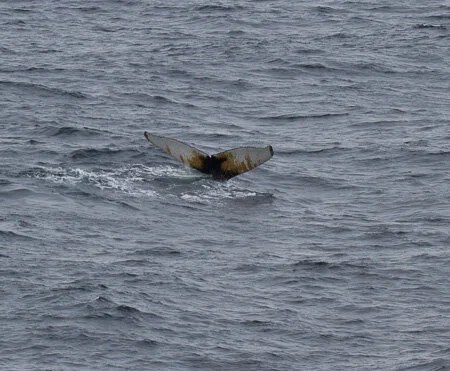
    The intercom went off at about 6:30 this morning, a call from the captain to tell us that a school of humpback whales were swimming and feeding around the ship and so we tumbled into our clothes and up to the 6’th level deck where there is an Observation lounge area surrounded on three sides by floor to ceiling windows and access to the open deck. Wind was chill and the temperature about 3 or 4C, frigid. Whales would spout and rise to the surface, breathe and sink back into the water, 1 or 2 at a time and about 200 or 300 metres off the side of the ship. They would rise and sink unpredictably so it was hard to know where they would come up and since they spent only seconds above the surface of the water, it was hard to know where to point the camera. When one was spotted by the time they were located in the viewfinder, they were gone.

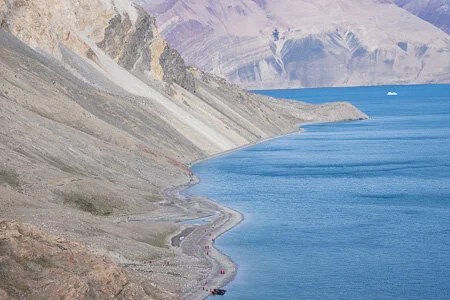
     Ymer Island, highland plateau looking down on the beach below. Tiny red dots are fellow passengers walking on the beach
    Ymer Island, highland plateau looking down on the beach below. Tiny red dots are fellow passengers walking on the beach

    Dressed warmly and in the zodiacs at 10 for a trip to Ymer Island in the fjord. Rough shingle beach and for those less energetic it was possible to stroll along the shore but because it was cold and overcast, there was not much to see. Just above the level of the beach the ground rose sharply into hills and highland plateaus that surrounded the island. The other option for the more energetic was to climb the rising hills and walk along the highlands to a path back down to the beach about a half kilometer away from the boats and then walk back along the beach to the zodiacs. We chose the latter course, but even though it was very chilly we soon became very hot on the climb and even though we were dressed in layers it was a moot point whether it was less burdensome to carry coats etc or simply to wear them. Since we needed our hands for balance in the climb we wore them and were hot, sweaty and chilled by the top of the climb.

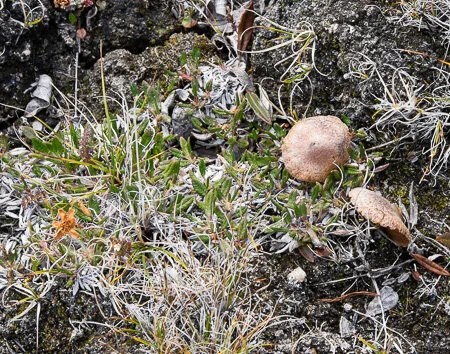
     Mushrooms and tundra flowers
    Mushrooms and tundra flowers

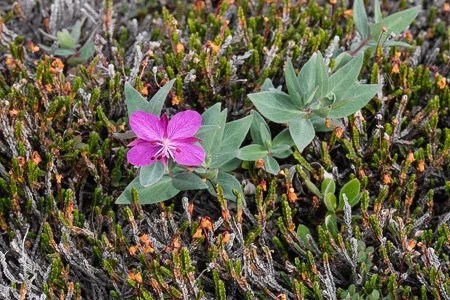
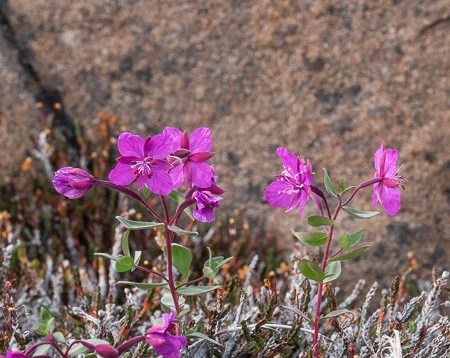
    No animal life to be seen and wide sweeps of tundra stretching to the snow-covered mountains that surrounded the fjord on all sides. Fascinating to see the  small, brightly coloured tundra flowers hugging the grpound and nothing growing higher than a couple of centimeters including dwarf arctic willows that spread along the ground, like vines rather than trees and whose branches are only 40 or 50 centimetres long.

    Surprisingly few birds, but several varieties of mushrooms pushing through the boggy ground. Slogged our way up and down the landscape, our boundaries, as is always the case on these walks, defined by bear guards armed with high-powered rifles who mark out the perimieter of our allowed territory. They are scattered on points of high ground and form an arc about a kilometer or two in diameter within whose bounds we can safely walk.

     Tundra flowers
    Tundra flowers

    I climbed a rise marked by a flag, put there by the bear guards and which I expected to mark the path back down to the beach. The downward sea-facing slope seemed very problematic as a pathway but I scrambled and slid my way down and came to a sheer drop into the sea about 25 metres below. It was very apparent that the flag did not mark the path to the beach but rather the farthest extent that we were allowed to explore in our walk so I scrambled back up the scree to the top of the rise huffing and puffing and soaked in sweat as I watched the zodiacs begin to load and motor back to the ship.

    Not a happy moment but found the path back to the boats and sodden with sweat climbed aboard a zodiac and headed for a very hot shower.

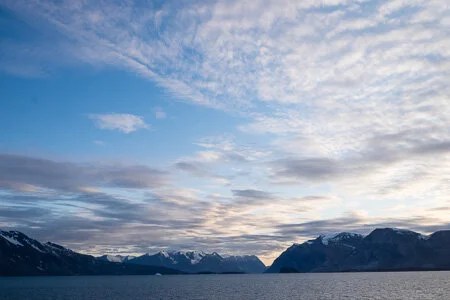
     Evening light on the fjord
    Evening light on the fjord

    The boat sailed deeper into the fjord over lunch and by late afternoon we were once again on the zodiacs and headed for a very small and rocky island in a bay surrounded by glacier-covered mountains and whose waters were full of ice bergs. Afternoon was a small version of the morning, rocks, tundra, arctic flowers and mushrooms but without its intensity as we were constrained to a much smaller area of exploration and consequently much easier on the nerves and sweat glands. Back to the ship and my third shower of the day.

  • At sea 14/08/14

    Sailing through the Greenland Sea. Very relaxing day capped by a special Chef’s dinner. 6 course dinner and wines to match; after a day of relative inactivity, more than we wanted to face but we soldiered through it.

  • At sea 13/08/14
     Le Boreal bridge
    Le Boreal bridge

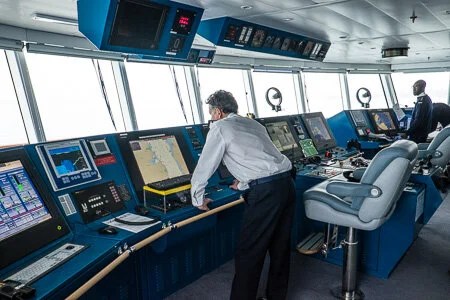
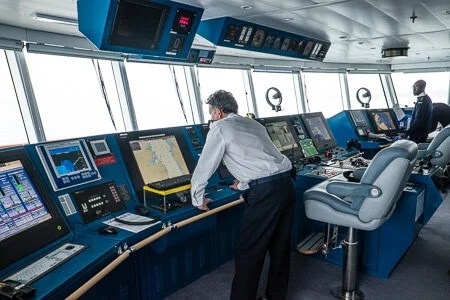
    We were expecting to cross the Greenland Sea today and arrive at our destination in Greenland tomorrow afternoon but when we looked at the chart of our progress on the tv in our cabin, we had sailed for a considerable distance during the night but had then doubled back on our track and taken a different route and were only now beginning our crossing. V and I went on to the bridge after breakfast to find that the captain had not been to bed the previous night as the original course had taken him into very heavy ice after about 4 hours sailing. He could find no way out and was forced to retrace his course and find a more southerly route which we were now taking, the result of which was that he had not slept for 36 hours and we will not now arrive in Greenland until late tomorrow evening. From our point of view no hardship as we have two easy days to relax, catch up on photo editing and bring the blog up to date.

     Midnight sun on water
    Midnight sun on water
  • Spitsbergen and at sea 12/08/14
     Mother bear
    Mother bear

    For the first time since we left Longyearbyen, awoke to heavy fog and the ship moving very slowly as it threaded its way among ice floes. We had been scheduled to stay aboard this morning while the ship reached the southern edge of the Arctic pack ice, which is starting push down at the end of summer. We were to have worked our way to the most northerly point in the voyage, slightly north of 80 degrees, while we tried to enter the strait between Spitsbergen and the large island to its east. The expedition staff during this time had gone out in a couple of zodiacs to scout for sightings of polar bear or anything else that they could find that would be interesting for us to see. The belief was that this was highly unlikely since the fog had formed a cloud cover about 10 metres above sea level and we sailed in a world in which visibility was limited to a clear circle at sea level but was solid fog as soon as you climbed to the higher decks in the ship.

     Cub
    Cub

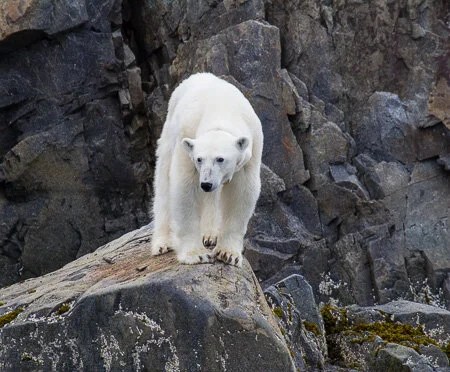
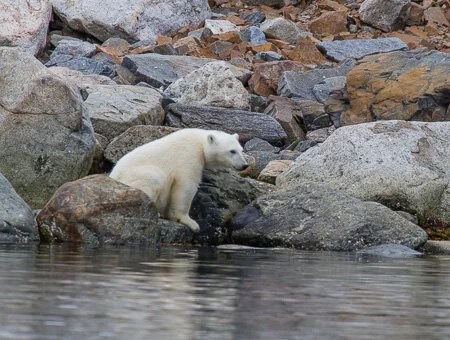
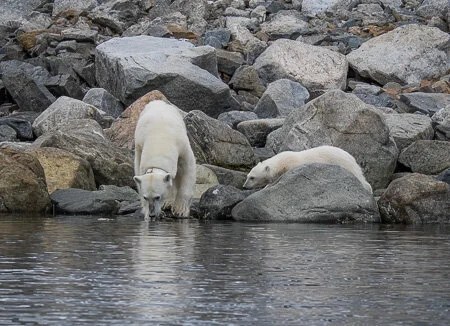
    However, the ships radio came on to let everyone know that the team had spotted 2 polar bears on a stretch of shoreline a couple of kilometers away from the ship. The ship anchored and we all climbed into our zodiacs and headed for the sighting area and what led to one of the highlight moments of the trip. The mother and her year old cub were dozing among some rocks slightly higher than the level of the sea and only a couple of metres inland. We approached to about 25 metres from the water’s edge so as not to spook them and sat in our boats and watched the two of them relax and move slowly around, unfortunately partially hidden by the rocks. The best was yet to come however and the mother began to amble along the shoreline, followed by her cub. We drifted along with them and they reached a small point where the rocks jutted out into the water. The mother bear walked to the end of the little spit right out to the water edge while she sniffed and searched, clearly trying to find something that she believed to be there. The cub during this time was sitting in the rocks where his mother had told him to stay and waited ’til he was called. Our boats were directly offshore in front of them and about 20 meters away so we had an unobstructed close up of them for the half hour that we spent watching them. Fabulous!

    In for lunch and excited chatter from all on board, both about the experience but equally trying to understand how the scout team had found them amongst the miles of fogbound islands and ice floes that fill the sea where we are sailing.

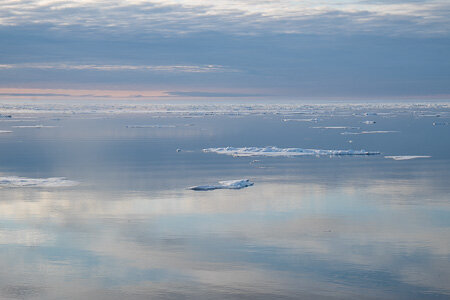
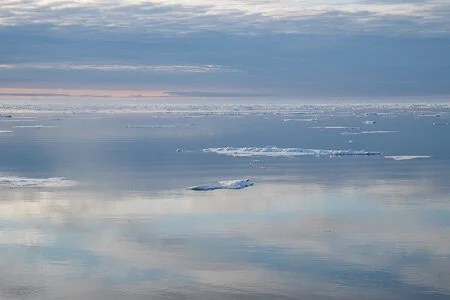
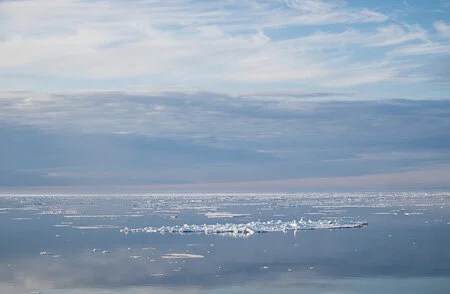
    We are now at the southern edge of the pack ice and the captain is trying to pick his way through so there will be no more zodiac excursions until we reach Greenland in 2 days time. In the meantime, the fog is clearing and it’s a beautiful scene, limpid light on the water and the ice and the sea flat calm.

     Blue whales
    Blue whales

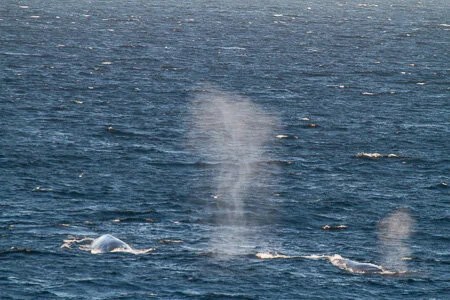
    After dinner out on deck to watch the light on the water when there was a large fluke smacking the water and two fountains spraying into the air about 300 metres off the ship’s side. Two whales, a mother and her youngster had broken the surface, smacked their flukes and then re-submerged, only their backs showing. Amazingly they were blue whales, which the ships crew only rarely see, and the marine biologist on board says that he has never seen a blue whale show his flukes as apparently they only show their backs above water.
    Factual note: blue whales are the largest creatures that have ever lived, bigger than any dinosaur. They can be 30 metres long, as long as 3 school buses and can weigh up to 200 tons, their tongue alone weighing 17 tons, their heart the size of a VW, and their aorta large enough that a human can crawl through it. Amazing that we had a chance to see them as they have been hunted almost to extinction.

    To bed with the ice very heavy around us.

  • Spitsbergen and at sea 11/08/14

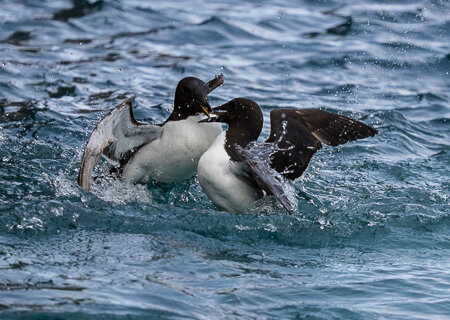
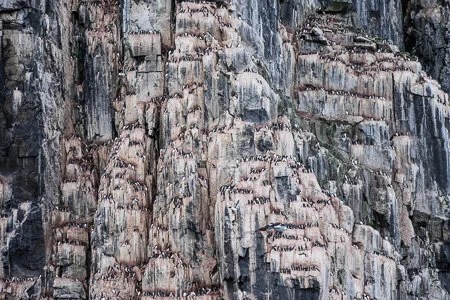
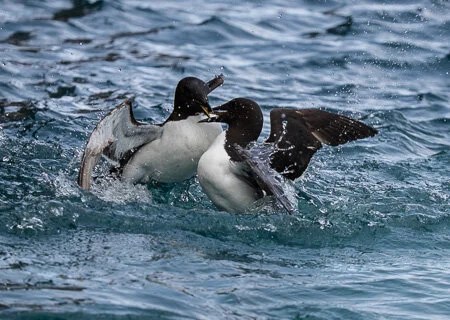
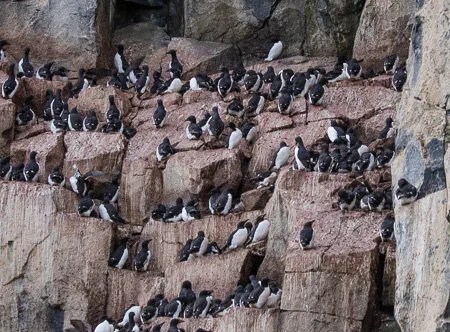
    Le Boreal sailed all night and when we awoke this morning we were greeted by grey skies and a sullen sea. During breakfast the ship anchored and at 10 we dressed very warmly and loaded the zodiacs for an hour and a half trip to a long section of very high cliff faces rising out of the sea and the nesting grounds for thousands and thousands of guillemots, a chicken-sized black and white bird. As we approached the cliffs the air was filled with large numbers of birds swooping from the cliffs and filling the air around us as they dove into the sea to fish,  taking their catch back to their chicks poised on ledges. The smell was overpowering even in the windy open ocean and we were warned not to luck up, particularly with open mouths.

     Guillemots roosting
    Guillemots roosting
     Battling guillemots
    Battling guillemots

    Every ledge was packed with as many birds as it would hold and there were no nests in evidence, rather the birds lay their eggs, which are small and pointed, on the bare rock ledge. A mating pair produces only one egg per season because in the restricted space that they battle for and occupy that is all that they are able to incubate and again because of space restrictions they incubate the egg like a penguin, in an upright stance with the egg between their feet and covered by the feathers on the bottom of their chests. Because of the shape of the egg, pointed at both ends, it spins in a circle if it is pushed or jostled and does not roll as would a hen’s egg and thus fall off the ledge.

    The chicks, well before they are able to fly, throw themselves off the cliff into the water where the male spends the next two months with them, as they paddle their way south to warmer waters while the chick grows and molts into flight feathers and learns to fly. Not sure where the females are during this process but was politically correct enough not to ask the question or to make any comments.

     Not an inch of space...
    Not an inch of space…

    In a patch of very steep green grass halfway up the cliff side between two towers full of bird ledges we spotted a bright white arctic fox trying to find ledges within reach where he could take the chicks and eggs. Don’t know how he got there and how he planned to get out since the patch of grass was at a 65 degree angle and at the bottom end fell 25 metres into the sea and at the top end was a sheer 25 metre cliff face up to the top.
    Much more successful hunters were gulls who would swoop onto a ledge and eat eggs or chicks and we saw several gulls swallowing chicks whole. We were told the survival rate in any year is about 20%.

    In for lunch and after we had shed all of our layers of wet outer gear and boots and spruced ourselves the captain announced on the PA that two polar bears had been spotted and those who were interested should don their heavy weather gear for the zodiacs and muster for embarking. Grabbed cameras and binoculars re-dressed in all of our layers and headed for the zodiacs.

     Walrus sleeping in piles
    Walrus sleeping in piles

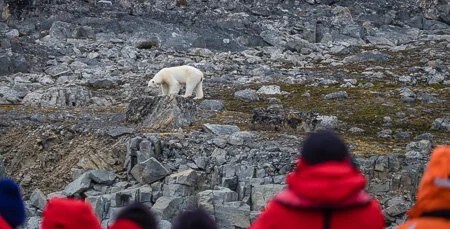
    After a boat drive of a kilometer or so we came up to a small rocky island, its centre a small raised plateau about 5 metres above sea level and covered with grasses and mosses. 2 bears, a mother and a very large junior cub were at the centre of the island, about 100 metres from our position and appeared to be grazing. Strange behaviour but summer is not a good time for polar bears as their main food source, ringed seals, is not accessible since the bears reach them on the sea ice that forms in winter but at this time of the year the sea ice has melted at this latitude. We could only guess whether they were eating berries from low shrubs or eggs of arctic terns who nest on the ground. Too far away for good shots without a large telephoto which I did not bring on this trip due to weight restrictions.

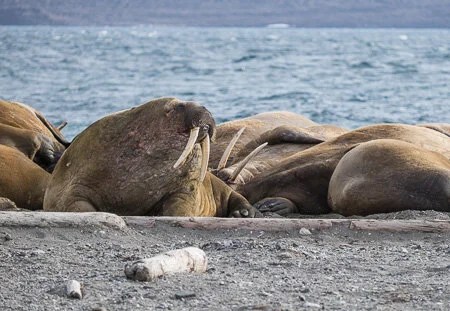
    After lunch, during which time the ship sailed into a large fjord, we boarded zodiacs for a very large peninsula, barren and treeless with a long, sandy spit of land at its end which was a haul-out for walrus and indeed when we arrived there were about 15 large males sleeping in a pile. Watched them for about an hour but little signs of movement as they slept the afternoon away and as we shivered in the howling wind with a temp below 0C.

  • Spitsbergen and at sea 10/08/14
     Liefdefjorden
    Liefdefjorden

    Have been heading steadily north since we left yesterday’s glacier excursion, sailing up the west coast of Spitsbergen and heading for some fjords at the top of the island at about 79,50N. Should be above 80N latitude by tomorrow or only about 600 miles from the North Pole.
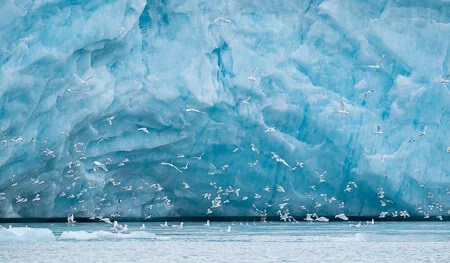
    After breakfast dressed warmly and loaded our zodiacs, temp about 3C and a chilly wind blowing. Drove through Liefdefjorden, a very large bay filled with ice floes and surrounded by ice covered mountains and large glaciers emptying into the sea which are calving icebergs into the bay. Hope to see one of the icebergs break off and land in the sea but don’t want to be too close, water not conducive to leisurely swimming.

     Seagulls and glacier
    Seagulls and glacier

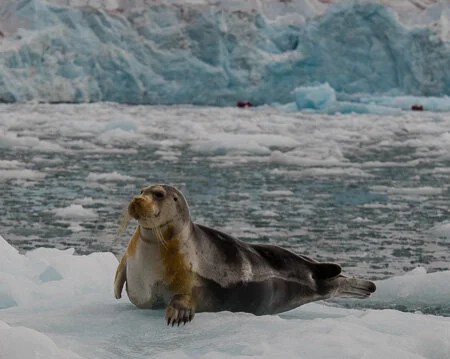
    Some bearded seals on ice floes and many birds. We did not land and disembark but chugged around the bay and along the face of the glacier and weaved our way through the ice floes. Interesting and very good light but with the wind from our passage in the zodiac, very cold.

    Ship sailed for another fjord while had lunch and a repeat performance of the morning. Cold, bright and a bay filled with glaciers and ice floes. We should be very grateful for our weather so far, as it has been very bright and while not clear blue skies there have only been broken, scattered clouds with great light on the mountains and the ice.

    At dinner Virginia spotted two whales a couple of hundred metres off the side of the boat, the word spread and the captain maneuvered the ship to try and stay close to them. They were minkie whales, not one of the biggest species but wonderful to see them broaching and blowing huge plumes of water out of their blowholes. As an aside, minkie whale was on offer at one of our Oslo restaurants and while I am adventurous when it comes to trying new foods, I was not tempted. Independent of its culinary virtues, I have ethical concerns about killing and butchering whales for food. Yes, it is relatively easy to find inconsistencies in my position, and there are lots of arguments that can be made for the other side, don’t care not going to do it.

  • Ny Alesund and at sea 09/08/14

    Breakfast in the buffet restaurant, lots of smoked salmon on offer so smoked salmon, plain yogurt and fresh fruit will be how I start my days on this trip; can’t imagine anything better. As long as there is smoked salmon on offer I will never starve and in fact I will be able to get it at all three meals so intend to put the theory to the test.

     Ny Alesund, Spitsbergen
    Ny Alesund, Spitsbergen

    Ship docked this morning in Ny Alesund, the most northerly settlement on Spitsbergen at 78,50 N latitude. One small, unpaved road leading from the dock which forms the main street of the town and which, much like Longyearbyen, is mainly composed of research scientists and fisher people. Mode of transport in summer seems to be bikes and like Longyearbyen there are signs warning about bears just at the town limits, which in the case here are about 150 metres from the waterfront. We are in treeless tundra and it’s fascinating to see someone climb on his bike, strap a rifle over his shoulder and ride off. Walking is restricted to the rough gravel roads and tracks in town as the tundra surrounding the town is the site of many scientific experiments, which we can apparently contaminate by walking. The town is also the site of the most northerly post office in the world so we all stopped and bought post cards and mailed them with their special post mark.

     Ny Aleson, Spitsbergen
    Ny Aleson, Spitsbergen

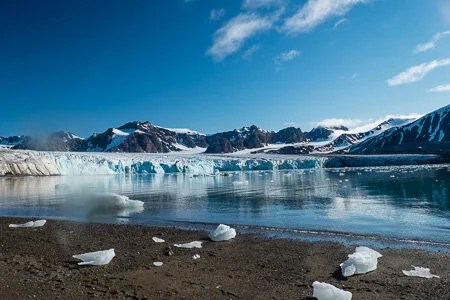
    Our first zodiac run this afternoon after a lifeboat drill and getting our parkas and boots sorted. Temperature about 7C so very pleasant and a bright sun overhead. Clothed ourselves in layers and in parties of 10 climbed aboard our zodiacs for a walk on the beach of an enclosed bay, Fjortende Julibreen or 14’th of July Bay, where the ship is anchored, surrounded by mountains and a very large glacier which empties into the bay. On shore warm enough to shed outer layers and walk to the face of the glacier on the beach around the bay. Took some glacier shots but not very interesting, large wall of ice rising up from the water’s edge but no sense of scale, tried to capture some of the people who had climbed the glacier and who were walking along the top but they were as small as ants and could hardly be seen. Simply huge.

     Le Boreal
    Le Boreal

    A&K Expedition crew are numerous, very knowledgeable and very helpful. We are encouraged to invite any whose area of expertise is one in which we are interested to join our table for dinner and the 4 of us have decided to invite the ship’s marine biologist to join us when he is available.

    The ship’s captain is also very pleasant, charming and very, very French and who is accompanied on this trip by his wife and his two young teenage kids. Has a reputation as someone who loves to see whales and who will throw all prior plans overboard and pursue any whales that are spotted so that everyone can see them. He also has an open bridge policy so guests are given access to the bridge at any time to watch the ship’s nerve centre at work.

     Fjortende Julibreen
    Fjortende Julibreen

    Breakfast and lunch in the buffet restaurant and dinner in the formal dining room. Meals very good and menus very interesting.

  • Oslo and Longyearbyen, Norway 08/08/14

    Up at 5:45 and down to breakfast at 6:30. We are leaving at 7:30 for the airport and because of the limitations on luggage, both checked and carry-on I have been a little concerned that I’d be paying overweight charges, given that we are allowed one carry-on weighing 8 kilos and I have three filled with cameras and electronics weighing 15 kilos. However in the scramble to load 180 of us on two planes, that seemed a trivial matter compared with checking us all in and loading us so, all was fine.

    2.5 hour flight to Longyearbyen on Spitsbergen, the largest island in the Svalbard Archipelago where we pick up the ship at 78 degrees longditude.

     Cabin, Longyearbyen Norway
    Cabin, Longyearbyen Norway

    Longyearbyen is the major settlement and the capital of the Svalbard island group which is Norwegian territory but self-administered by a Governor who lives on the island. Some mining on the islands but lots of research stations owned and staffed by various countries and an indigenous population of 450 living in pre-fab wooden buildings along two streets. Signs are posted at the edge of town on each of the couple of roads leading into the countryside, composed of a red-bordered triangle with a polar bear painted in white on a black background. Seemingly one can walk in town without any problem but anyone moving past any of these signs is responsible for their own safety and is required to carry a rifle in the event of encountering a polar bear. Shooting a bear is a huge no-no, the gun is for frightening them off, but in the last extremity the guns are allowed to be used for self-protection. Any time a bear is shot, the local police and government take possession of the bear’s remains, an autopsy is performed, an inquest is held and if it is determined that the bear was killed unnecessarily, a very large fine is levied.

     Tundra, Longyearbyen
    Tundra, Longyearbyen

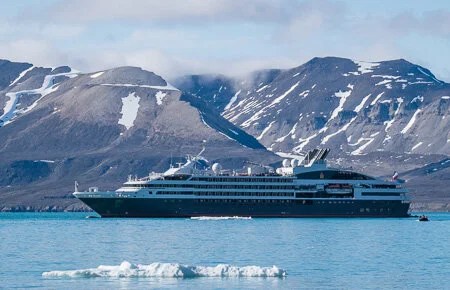
    We boarded our ship, Le Boreal, French registered and crewed, in the afternoon and we are very impressed, never having taken a sailing trip before. 6 decks with a formal dining room on the 2’nd deck and a buffet dining room on the 6’th. We are on the 4’th deck, in the last cabin amidships on the starboard side and our cabin has floor to ceiling windows and a sliding glass door out a balcony with a couple of comfortable chairs. Don’t think it’s likely to get much use as it’s about 4C but nice to have such a great view. Ship is new, only 4 years old, and is very comfortable, stylish and luxurious.

    Hopefully our cabin is well-positioned for any eventuality, amidships to minimize motion since V is concerned about mal de mer and on the starboard side as this should be looking landwards for most of our cruise.

    Brief cocktail party and then dinner in the more formal dining room with Chuck and Eileen with whom we’re traveling. The expedition cruise is organized by  Abercrombie and Kent and everything laid on including all meals, wines and bar items so thankfully our credit cards will get a rest after the punishment they took in Oslo. French boat so food and service very good particularly wines and cheeses but the chef also runs a very good kitchen and menus look to be inventive and interesting.

     1 AM, Arctic Ocesan
    1 AM, Arctic Ocesan

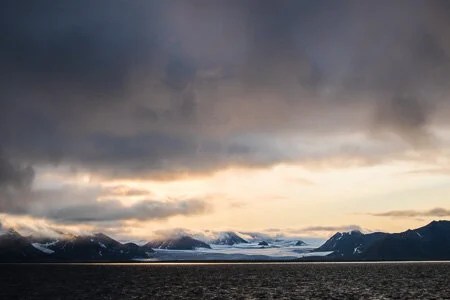
    Before we left Toronto I looked up sunrise and sunset times as I wanted to plan how early I would need to get up if I wanted any sunrise shots but the app that I use kept giving me the results of 00 for all the dates we’re on the trip. I couldn’t make any sense of this and assumed that maybe the database did not contain any data for this part of the world. I now understand the answer; there is no sunrise or sunset at this latitude, the sun shining brightly for the full 24 hours. After dinner, up to the 6’th floor observation deck with my camera and a stunning sky and a pearly light on the mountains on our starboard side and the sea, mill-pond smooth and luminescent. Light as bright as late afternoon and at bedtime we pulled the blackout curtains tight across the windows but the room was still very bright. Fell asleep and then leapt up at some point during the night convinced that it was the afternoon and that we had slept the morning away, but when I looked at the clock it was only 3:30 am and the sun still quite high in the sky.